Book of the Week, memoirs, reviews

Book of the Week: Year of the Fat Knight

My final BotW of 2019 continues the Year of Non-fiction, except this is one from the to read bookshelf and not from the library. If you’ve missed my look back at my reading obsessions over the year, you can find them here, and also my best books of the year. Coming up tomorrow, instead of the stats, is my look ahead to some new books coming in 2020. The stats will follow later in the week. Because I’m that good to you. Anyway, to the review.

Year of the Fat Knight on a bookshelf

Ever wondered what it takes to be an actor? Or more particularly if you’ve got what it takes to be an actor? You sort of half think it might be an easy life right? Wrong. Over the course of this book you watch (in your mind’s eye at least) Antony Sher agonise over taking a part, preparing for the part and playing the part. And as you read, you realise all the hidden hard work that goes into crafting a performance, an interpretation of words on paper.

The Fat Knight of the title is Falstaff, one of Shakespeare’s iconic creations. But not, as Sher muses, one that The Big Names often play. He muses that there are traditionally two tracks for Shakespearean actors – one leads to King Lear, via Macbeth and Hamlet, and the other to Falstaff (via parts like Bottom) and that never the twain shall meet. But here is Sher – who famously played Richard III as a young man (which Sher also wrote a book about) and who I saw play Macbeth just after the turn of the century* – considering an offer, from his partner (now husband) no less, to play Falstaff. Illustrated with Sher’s own drawings, it’s fascinating and eye opening and incredibly readable. Sher’s husband is Gregory Doran, a director who at the start of the book is just taking over the helm at the RSC so as well as the musings on Falstaff, you get a peek behind the curtain at the RSC and in the world of theatre generally. The two are named as a power couple in the media in a couple of lists during the book, which perplexes Sher but reminds the reader that there are fairly large stakes here professionally. The production – and Sher’s performance – were a success but that never feels anywhere near certain as you read it.

I raced through this and although I didn’t see the productions of Henry IV Sher is writing about, I have seen a couple of the others that are mentioned in it and have seen some of the other actors in other things which made for an added bonus as a theatre nerd.  I don’t know that you need to be a theatre nerd to enjoy this though – I think you just need to be someone who is interested in process and creation.  If you’ve ever wondered how a production of Shakespeare is put together, whether the actors really understand what they’re saying and how they create a character, this would certainly interest to you.  But if you’re a creator of something else, I think this would be worth a look as well – and you can compare your process in your field to this.  I’m sure you’d get something out of it.

I had this on the shelf – I think it came from a work book sale a year or so ago (it came out in , but you should be able to get hold of a copy fairly easily from a bookshop with a theatre section.  Mine is a hardback, but there is also a paperback edition now. If you want to buy online, may I suggest you go direct to Nick Hern Books, the publisher, where the price is within pennies of that of Amazon as I write this and will undoubtedly benefit them more direct.  They’ve got 20% off everything at the moment – so in one of life’s more predictable moments, I ordered myself Sher’s other two books on acting – the aforementioned Year of the King and his latest, Year of the Mad King about King Lear – when I went to check this out.

Happy Reading and Happy New Year!

*Gosh that makes me feel old saying that, but although the turn of the century automatically makes me think of the start of the 20th century, we’re far enough into the 21st now that I probably should get used to it.  I saw Macbeth with Sher and Harriet Walter at the Swan in Stratford sometime around 2000 – I still have the poster somewhere, but I’m not getting it out to check!

Book of the Week

Book of the Week: The Crime at Black Dudley

Long term readers will be aware of my love of Golden Age detective fiction, so it may not be a surprise that this is my choice this week.

Cover of The Crime at Black Dudley

Yes, I’ve finally managed to read the first Albert Campion book.  And no, I didn’t realise when I was reading it that I had read it before and just not made a note of it. I’ve written about the series before – and you can definitley see why those Wimsey parody conclusions were drawn.  In this Albert is a side-character who you never really get to know (but want to know more about) as he helps unravel what is happening.  The main characters here are George Abbershaw and Meggie Oliphant, who find themselves caught up in the mysterious death of the host of a house party that they’re attending, and then imprisoned at the house by forces who believe they have stolen something valuable. Like many of the later novels in the series, it’s more of an adventure-thriller than a murder mystery and there are mentions of things that crop up again in later stories.

If you like this sort of caper, it’s a good example of its type.  If you have an interest in the era and the genre, it’s definitely a good one to have read.  I enjoyed reading it for more than just the thrill of filling in part of of the Campion story that I was missing. But, like so many first in serieses, it’s not the best of the character – I think I would still tell people to start with Sweet Danger or the Tiger in the Smoke.  But if it comes your way, do not turn your nose up at it!

My copy came from the library, but you should be able to get hold of any of the Campion books fairly easily – the ebooks have been published by Vintage in the UK relatively recently and the series is still in print in paperback.  On top of that you can often find them secondhand in the book section of the charity shops

Before I go, I should give an honourable mention to Christmas Secrets by the Sea though – a late entry into the festive reading stakes.  As you may have seen in the comments from last week’s Week in Books, I quite liked this and wanted to like it more.  I didn’t think you understood the heroine well enough until quite late on and I also I didn’t didn’t think the resolution did everything it needed to. But it was still better than a lot of the Christmas books I read this year…

Happy reading – and as it’s Christmas Eve – Happy Christmas.  I hope Santa brings you all the books you asked for!

Book of the Week

Recommendsday: Tuesday Mooney

As mentioned in yesterday’s BotW post, I had trouble choosing a book this week and so as a bonus, you get a Recommendsday post about my second choice. Yes it was that sort of a week and I’m that sort of person – when I find good books, I want to tell you about it!  It’s also slightly confusing, because this has a different title depending on which part of the English-speaking world that you’re in – hence the fact that the title of the post is just Tuesday Mooney!  If you’re looking for it on Goodreads, you’ll find it as Tuesday Mooney Talks to Ghosts – which is what I listed it as on the Week in Books post and that’s what it’s called in the US, but in the UK Katie Racculia’s third novel is called Tuesday Mooney Wears Black.  Now I’m not sure that either title really gives you a sense of what the book is really about, but I think the artwork on the US version is more indicative so that’s what I’ve gone with for the first picture.

US cover of Tuesday Mooney

Tuesday Mooney is a research wizard. She works at a hospital, digging into the lives of the rich to try and find the information to get them to donate money. But she has a secret. When she was a teenager, her best friend disappeared and she’s never really got over it.  She’s a loner, who never really lets anyone in to her life – even her best from Dex (short for Poindexter). But she loves puzzles and secrets and when an eccentric millionaire drops dead at a fundraiser she’s working at, she’s drawn in to the Edgar Allen Poe-inspired contest he’s from beyond the grave to give away some of his fortune.  She’s also drawn into the secrets and rivalries of two of Boston’s richest families and her life may never be the same again.

UK cover of Tuesday Mooney

This is a gothic adventure caper with a prickly heroine and a set of secondary characters that just win you over. It’s also quite hard to describe without giving away spoilers and it doesn’t really sit in any one genre particularly easily. It’s a mystery, it’s an adventure, it’s a thriller. It’s got ghosts in one of its titles, but it isn’t really a paranormal or fantasy novel. It is clever and incredibly readable and I just loved it. I’ve never read Kate Racculia before, but I’ve just bought one of her earlier books because I liked this so much.

My copy of Tuesday Mooney Talks to Ghosts/Wears Black came from the library, but it’s available on Kindle and Kobo for £2.99 as I write this.  The paperback isn’t out in the UK until February, but you can preorder on Amazon, or buy it in hardback (on a different listing on Amazon) in the American edition.

Happy Reading!

Book of the Week

Book of the Week: The Bromance Book Club

Well where to start.  You saw the list yesterday. it was long. There was good stuff. You might have expected the pick today to be the Gail Carriger – and I do love her, but I’ve written a lot about her already and you really need to be reading those in order, so go back at least as far as Prudence first, maybe even Soulless. But this book, the very last one I read last week was my favourite. I had trouble stopping myself reading it when I had to go and do other things. Like eat. Or get off the train.

Cover of The Bromance Book Club

Gavin Scott has messed up. His baseball career is on a high, but his marriage has fallen apart. The night of his biggest career triumph was also the night his relationship came crashing down when he discovered his wife Thea had been faking it in bed. He reacted badly and now she wants a divorce. Gavin doesn’t though – he wants his wife back. Enter the Bromance Book Club – a group of really quite alpha guys who have fixed their own relationships with the help of a seemingly unlikely source: romance novels. With the help of the book that they’ve picked for him Gavin starts to try and rebuild his marriage. But will he manage to follow its instructions – and does Thea even want to try again?

“The point is to fit the lessons of it into your own marriage. Plus, that’s a Regency, so—” “What the hell is a Regency?” “That means it’s set in eighteenth-or early nineteenth-century England.” “Oh, great. That sounds relevant.” “It is, actually,” Malcolm said. “Modern romance novelists use the patriarchal society of old British aristocracy to explore the gender-based limitations placed on women today in both the professional and personal spheres. That shit is feminist as fuck.”

This was so much my jam. I mean really, really good. I mean if that quote doesn’t sell it to you, then I don’t know what will. Gavin is a great hero – he knows he’s messed up, he doesn’t know how to fix it and he hasn’t realised that more is wrong than just the bedroom issue.  His pro-sports career gives him a legitimate reason to have not noticed some of the stuff that’s been bothering Thea – and once he realises what’s happened, he pulls himself together and makes changes to do better and be better.  Thea is an attractive heroine – she’s a young mum who’s given up a lot because of her husband’s career but who still has goals and ambitions.  You understand why she reacts the way that she does and why she feels so strongly. She’s changed herself so much to fit in with Gavin’s life and the players’ wives and she wants to find her own identity again.  It’s wonderful to watch it all unfold.

The only thing that I didn’t like was the resolution to the bedroom side of the story.  Nothing really changes really in *what* they’re doing in the bedroom – so you don’t really understand orgasms weren’t happening during sex for Thea in the first place – or why she started being able to come again. Other reviewers have also spotted this – and I think it has bothered them more than it bothered me – but it is annoying and also troublesome. In a book which is mostly about Gavin learning to listen to his wife and to be a better partner, there’s no conversation about how to fix this at all – but hey presto, it’s fixed because the rest of their relationship is fixed.  That’s not how it works. It didn’t ruin my enjoyment of the book, but it is a shame and an opportunity missed.

I’m having a real moment with contemporary romance right now and struggling a bit with the historical stuff (apart from a few reliable authors) but this was such a great combination of the two.  It’s also got a great cast of supporting characters with the other guys from the book club – the Russian with the digestive problems, the playboy who flirts with every woman he sees.  Thea’s sister Liv was a bit of a tough sell for me at times, but as you lean more about the sisters’ childhood you understand why she is like she is.  I’m looking forward to her getting a book of her own – because this – praise be – is the start of a series.

My copy of the Bromance Book Club  by Lyssa Kay Adams came from NetGalley, but it’s out now in ebook – it’s a bargainous £1.99 on Kindle and Kobo at the moment.  The paperback comes out in the UK at the end of January.

Happy Reading!


book round-ups, non-fiction, Recommendsday

Recommendsday: Rich People Problems – Non-fiction Edition

Regular readers of the blog may be aware that I’m somewhat fascinated by the interwar period.  I love Golden Age crime novels, like my beloved Peter Wimsey, one of my all-time favourite novels is Laurie Graham’s Gone With the Windsors and I’ve read a lot about of some of the notables of the period  – some of which I’ve written about here before – like Flappers, Bright Young People and Queen Bees.  And after a recent jag of books about the era (and slightly beyond), now seemed like an ideal time for a bit of a round up of the best bits of the non-fiction.  You’ll hear more about the fiction anon…

Empty Mansions by Bill Dedman and Paul Clark Newell JrCover of Empty Mansions

This is another one of those books that I’ve wanted to read after I saw the author interviewed about on the Daily Show before Jon Stewart left and have recently got around to reading (see also: Jim Henson) and it is really something.  Huguette Clark died in hospital in 2011 at the age of 104. The fact that she died in hospital is about the only “normal” thing about her life. She was worth $300m. She’d been in the hospital for 30 years. She hadn’t been photographed – in public at least – for nearly twice that. Pulitzer prize-winning journalist Bill Dedman and one of Huguette’s cousins, Paul Clark Newell Jr, look at her life, her family’s fortune and why she retreated to the confines of one room (and progressively smaller one at that) of a hospital for so long when she had apartments and riches that most people can only dream of.  And it’s one hell of a ride.  I read it as an ebook, which is good because it’s long and dense and has footnotes that you might want to flick back and forth to. As well as being fascinating it leaves you with lots of things to ponder – why did she retreat from public life in the 1930s? Was she exploited by the hospital or her carers? And what do people who have made huge fortunes owe to the people and the towns they made the money off? Well worth a look.

The Riviera Set by Mary S Lovell

Hardback of The Riviera Set

Want to know how the French Riviera become the playground of the rich and famous?  This book will tell you.  Lovell’s book starts by introducing you to Maxine Elliott and showing how she established herself as one of Edwardian society’s notable hostesses before building Chateau de l’Horizon, the modernist villa at the centre of the book.  Between the wars, Maxine’s house hosted all the notables of the time – the Churchills, the Windsors, Noel Coward and more – and after the war it transitioned into a party house for the Hollywood set under the ownership of Aly Khan.  I learned new things about some familiar faces from the interwar years – as well as being introduced to a 50s and 60s jet-set that I wasn’t really very knowledgable about.  This mixes royal history, political history and Hollywood history as it shows how the Riviera evolved through the years – although it stops well before the coast became the exlusive playground of oligarchs and the super rich.  Very readable and just gossipy enough. I liked it so much it’s still on my downstairs shelves, nearly two years after I first read it.

Chanel’s Riviera by Anne de Courcy

hardback copy of Chanels Riviera

Once you’ve read about Maxine, go straight on to Anne de Courcy’s new book and see what happened to the Riviera when the Second World War hit it.  The Lovell – which focuses on the villa and the rich – covers the World War Two in one chapter, mostly about how everyone got out.  Chanel’s Riviera will fill in the gaps – and make sure that you don’t go away with the idea that the Riviera wasn’t really affected by it all.  There is plenty about Chanel herself in here, mostly around her time on the Riviera and her friends there, but there’s a lot more detail about the more normal people down there – and not just the rich.  There are expats who had moved down there for their health and the people who had moved down there to work for them or with them.  This one only just came out – it’ll get a place on my shelves just as soon as I get it back from my mum…

The Unfinished Palazzo by Judith Mackrell

Cover of The Unfinished Palazzo

This is a group biography of sorts of three very unconventional for their time women who all owned the titualar Venetian Palazzo during the twentieth century. I found this while scouring my shelves looking for something similar to The Riviera Set after reading that – and it even has some crossover in the cast list (if you know what I mean!), as Doris Castlerosse is a principle figure in this after being a side character in the Lovell.  Luisa Casati was what probably what we would consider now to be a performance artist – albeit one with a pet cheetah. Doris Castlerosse was a socialite who married money and was close to Winston Churchill. And Peggy Guggenheim was an heiress who renovated the building and used it to showcase her collection of modern art (yes, one of those Guggenheims).  Although this was less satisfying than the Lovell overall,  and would serve you well as an entry point into any of their lives.  I would happily read more about any one of the women in this.

So there you have it.  Four more books to add to the list.  This has been mostly European focused – even Huguette – who was part French and spoke with a French accent!  If you’ve got any recommendations for more stuff about America or the rest of the world in this period, hit me up in the comments. Equally if you’ve got an historical rich people problems novels that you think I should read let me know – because they are also my catnip.

Happy Reading!

Book of the Week

Book of the Week: Next Year in Havana

It’s definitely starting to feel distinctly wintery here, and I’m being drawn to books about sunnier climes to counter act the gloom of the days shortening and the lack of sunlight.  So this week’s BotW pick is one that took me away from the damp of a British late-autumn and to the warmth of Cuba – but don’t worry, this isn’t a sunny beach read.

Cover of Next Year in Havana

Marisol Ferrera is on her way to Cuba for the first time.  She’s grown up on stories of the land her grandmother was forced to flee. Now with the easing of travel restrictions for Americans, she’s on her way to the country she’s heard so much about ostensibly to write an article for tourists, but with her grandmother’s ashes hidden in her luggage to fulfil her dying wish to return home.  But Cuba has changed a lot in the 60 years that have passed, and there are family secrets waiting to be uncovered. Back in 1958 Elisa Perez was a debutante, the daughter of a sugar baron and sheltered from the unrest sweeping the nation.  But that all changes when she starts an affair with a revolutionary who is fighting alongside Fidel Castro.

I liked both women and I was swept away by Cuba – in both time lines.  I do love a bit of last-days-before-it-all-comes-crashing-down society sometimes – all that doomed glamour and obliviousness; but actually modern day Cuba was just as intriguing – a country held in stasis, where you had to know the right people and say the right things to get on or else survive by your own ingenuity and cunning.  Which ever way there’s a lot of personal risk involved.  I will admit that I was a little worried that there was no way for there to be a satisfactory resolution to Marisol’s story, but actually it really pulled it off. I finished the book really wanting to visit to Cuba – but even more conflicted about doing that than I had been previously.

We all know that I love a dual timeline novel and I’ve had a fancy to read this since I first first heard about it, which I think (like it often is) was when Chanel Cleeton was a guest on the Smart Bitches, Trashy Books podcast back on episode 284 in early 2018.  And yes, it’s taken me this long to get around to getting hold of a copy and reading it.  In between it’s become a Reese Witherspoon book club pick and was a Goodreads choice award nominee for historical fiction last year. And actually it pretty much lived up to the hype, which isn’t always the case with books like this and as my Goodreads reviews will attest.  It was a period of history I don’t really know a huge amount about – beyond having studies the Bay of Pigs and the Cuban Missile Crisis during GSCE history and it was nice to be swept up into a different era and a different culture – I’ve read a lot of European-set dual timeline novels (particularly recently) and it’s not often that I venture as close to the present day as the 1950s for novels like this so it was a refreshing change all around.

My copy of Next Year in Havana came from the library, but you can get hold of a copy on Kindle, Kobo or in paperback from somewhere like Book Depository.  I’m not sure how easy it will be to find in stores, Amazon say they can despatch it really quickly but Foyles say they can order it but it will take about a week, which makes me wonder if it’s an American import.  I’ve already got Cleeton’s next novel on hold at the library.

Happy Reading!

American imports, Book of the Week, memoirs, non-fiction, Uncategorized

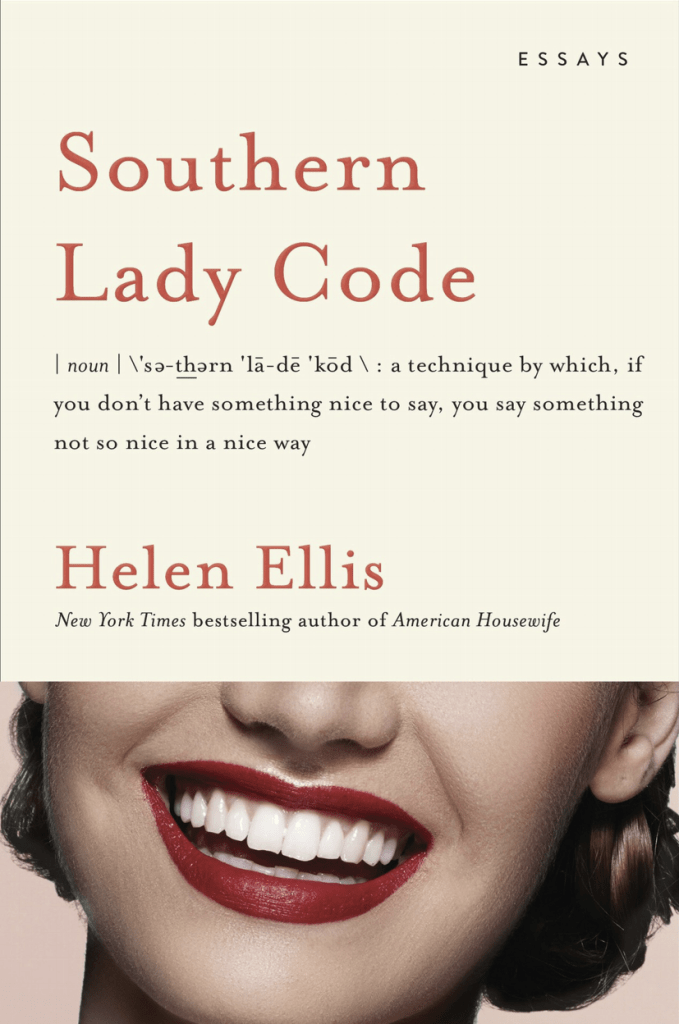
Book of the Week: Southern Lady Code

I had a really lovely week of reading again last week. And there were difficult choices for book of the week this week, but actually I haven’t picked a book of essays in a while and this one was just delicious.

Cover of Southern Lady Code

I wrote about American Housewife back in 2016 and I’ve been waiting for more from her ever since.  American Housewife was a short story collection though, and this a bit different. Across more than twenty essays, Ellis examines what it means to her to be a Southern Lady – and in particular what it’s like to be a Southern Lady living in Manhattan.  Her mantra is “If you don’t have something nice to say, say something not-so-nice in a nice way” and there are a lot of laughs to be had because of this, but there are also ghosts, retro buffets, cleaning as a method of keeping the spark in a marriage and how to shop for a formal event.  It’s funny, clever and true – or at least mostly true. Probably.  But basically Helen Ellis makes me laugh.  I’m not a Southern lady, and I’m a bit younger than Ellis, but there was so much here that amused me and spoke to me.

If you like wry sideways takes on American life, this would make a great addition to your autumn reading list. It was definitely worth waiting two months in the hold queue for it.

As you might guess from that, my copy of Southern Lady Code came from the library, but I’ll be buying myself a copy when it’s out in paperback here. It’s available in hardback, kindle and kobo.

Happy Reading!

Book of the Week, non-fiction

Book of the Week: Jim Henson

So many good books on holiday last week. And if all goes to plan, you’re going to be hearing a about a lot of them. Just as soon as I have time to read a few more books and write the posts. But I’ve got it all planned out in my head. Trust me. Ahem.  Anyway, this week’s pick is Jim Henson: The Biography, Brian Jay Jones’s look at the life of the innovative puppeteer, animator and filmmaker.

Cover of Jim Henson: The Biography

If you don’t know who Jim Henson is, I think you must have been living under a rock, or just not paying attention. Henson was the creator of the Muppets and the puppet characters on Sesame Street. Exactly. I think everyone has grown up with Bert and Ernie, Elmo, Big Bird and of course Kermit and Miss Piggy. This is a big, in-depth look at the man behind the puppets and what drove him.

Going in to reading this, I knew about the Muppets, and I knew he died in the early 90s – there’s a dedication to him at the end of the Muppet Christmas Carol, which is of course one of the all-time great children’s Christmas films – but that was about it. It turns out that he (and his creations) were a TV sensation in his local area before he was out of his teens, he was hugely affected by the early death of his younger brother which lead to a breakneck work ethic, but who also was devoted to being a good dad to his five kids. It’s really a remarkable life.

This book came out in 2013* and Brian Jay Jones had the cooperation of the Henson family, access to all the archives and interviewed all the key players. It was the first full length biography of Henson and Frank Oz (aka Miss Piggy aka Yoda) said that it captured Henson’s genius and his flaws. And I found that very true – it’s not a hagiography. You get a real sense of the amazing mind and vision that Henson had, but also that he must have been a difficult man to live with at times – and definitely a difficult person to manage!

It’s a fascinating read not just because it’s about a great subject but because it’s really well written. Jones has since written biographies of George Lucas and Dr Seuss and even though I’m not hugely interested in either of those men, I enjoyed this so much I would probably still borrow them from the library or buy them in a kindle daily deal just because this was so well researched, thoughtful and readable.

My copy of Jim Henson came from the library but it’s available on Kindle, Kobo and Audible and in paperback and hardback – although mostly via secondhand sellers and coming in from the US.

Happy Reading!

*and I’ve had it on my to-read list since seeing Brian Jay Jones interviewed on the Daily Show soon after it came out, which tells you a lot about how long it’s taken me to get around to getting hold of a copy – thank you library!

American imports, Book of the Week

Book of the Week: You Think It, I’ll Say It

This is going to be late and short. I’m sorry. I’m also sorry for the lack of witty commentary on yesterday’s Week in Books [ed: the commentary is meant to be witty? Try harder], any how, to business.

I’ve written about Curtis Sittenfeld before – I spent a lot of time telling people how good Eligible was back when that first came out. I’ve read most of her books now, and I had the paperback of this on a preorder than Amazon mysteriously cancelled. So I was very happy when my library hold on this came through for me. You Think It, I’ll Say It is a collection of short stories which feels very applicable to modern day life. There’s the former shy girl who gets to meet her high school nemesis years later and see how it all turned out. A woman flirting with adultery with a man in her social circle. It’s tough to pick a favourite, but having spent a lot of time reading blogs, dissecting blogs and watching the rise of influence culture, the woman who takes an unhealthy interest in the career of an Instagram influence-cum-lifestyle guru she once knew might be mine.

Sittenfeld’s writing is sharp and has got the balance right (for me at least) in these stories of enough happening to make things interesting, but not so much that you don’t get to know the characters well enough to care about how it all turns out. I don’t read a lot of short story collections, but this is a very good one. And – as much as you can tell on a kindle – they are all short stories, this is not a few stories plus a novella situation. If you liked Helen Ellis’s American Housewife, this did some of the same stuff for me, but without the horror or supernatural elements. If you haven’t read Sittenfeld before, I might still start you with Eligible, but that’s because it’s tough to top a retelling of Pride and Prejudice where Kitty and Lydia are cross-fit fiends, Mrs Bennet is a kleptomaniac and Jane is the sort of yoga instructor who would spent all her spare cash on crystals from Goop. It’s a high bar.

You should be able to get hold of a copy of You Think It, I’ll Say It from a good bookstore – Amazon even have a paperback now, despite my struggles with them!

Happy Reading!

Book of the Week

Book of the Week: Meddling and Murder

I really enjoyed a couple of books last week and had but of a debate with myself about what to pick. Alisha Rai’s The Right Swipe is new out and very good – and other book which looks at American Football and head trauma – but it’s only a few months since I picked a novel from her. It’s also not long since I picked Anne Helen Petersen, but Scandals of Hollywood was also very good. I have picked Ovidia Yu and the aunty Lee series before, but it was a year ago, it’s been a while since I picked a mystery and this is really very good.

Cover of Meddling and Murder

To catch you up on the series set up: Rosie Lee is the widow of an rich older husband. She’s getting on a bit herself now but she isn’t planning on slowing down. She fills her day cooking Perenaken food in her restaurant in a not as posh as her daughter in law would like area, and keeping up with the gossip and scandal in her community. And she also seems to find crimes and mysteries to solve. This is the fourth book in the series and she’s also started to build a friendly relationship with one of the local policemen, although she’s not above using her late husbands contacts to get her way.

In Meddling and Murder, one of her school friends has died leaving a handsome, younger Chinese husband and a sister who are setting up a nursery school in the house they have inherited. Their maid has gone missing and they ask to borrow Aunty Lee’s beloved Nina, who has some issues of her own going on that means that Aunty Lee thinks some time away might be a good idea. But as time goes on Aunty Lee grows more and more worried about what exactly happened to Beth Kwan’s maid and what Jonny Ho is really up to.

You’re pretty much guaranteed to come away from this feeling hungry – even if, like me you don’t know anything about Singaporean food! This has a lot of the features of a cozy crime – food, amateur sleuth – but a really different setting that makes it feel fresh and different. That’s true of both of the other books in the series that I’ve read so far, but this also has a slightly darker underside (which I like) subtly looking at some social issues – like the treatment of foreign domestic workers and of how unscrupulous people can try to badger/confuse/inveigle old people into giving their money away. But it’s all done so matter of factly and in passing that you do a double take – and it also doesn’t feel at all preachy or crusadey.

As previously mentioned, this isn’t the first in ther series, but I don’t think you need to read these in order necessarily, so feel free to dive in. These can sometimes be a little expensive to get hold of in the UK, but it’s on a deal on ebook at the moment. Meddling and Murder is available on Kindle and Kobo – it’s £1.49 on both at time of writing – and as a paperback – although that may be harder to find.

Happy Reading!