Book of the Week, non-fiction

Book of the Week: The Five

Ok, so this is *technically* cheating, because I finished it yesterday, but as this is where a lot – if not the majority – of my reading time went last week, so it’s a fair pick really guv.

Cover of The Five

Hallie Rubenhold’s The Five: The Untold Lives of the Women Killed by Jack the Ripper does exactly what it says on the tin – and that is the opposite of what most books about Jack the Ripper do.  Rubenhold has researched what the lives of the canonical five victims were like before they were killed.  She’s not interested in who they were killed by – or the gruesome details of their deaths.  She is interested in their lives and whether prevailing idea about them – ie that they were prostitutes – is accurate.  Thus she puts the victims back at the centre of a narrative that has long dismissed them as incidental to the identity of their killer and at the same time gives an important insight into what life was like for working class women in Victorian London.

As a rule, I’m not interested in books about Jack the Ripper.  I was wracking my brains to think what the last one I read was, and I think it was probably Laurie Graham’s novel The Night in Question three and a half years ago.  I don’t want gruesome details of murders and rampant speculation.  But The Five has caused something of a stir.  Rubenhold’s book has got the Ripperologists’ knickers in a twist – because of her assertion that three of the five women were not sex workers.  The angry push back – and her measured responses – were enough to make me want to read this book for myself.  And it was well worth it.  The women in these pages are three dimensional people with messy complicated lives and they deserve to be at the centre of their own stories, not pushed aside in favour of the speculation about who killed them.

As a journalist, I’ve worked on a lot of coverage of murders and killings and one of the common themes when you’re deciding what how to cover them is how to refer to the victims and their killer.  All too often serial killers names are remembered but not their victims.  The first case that I was in court for after I qualified was the Ipswich murders.  Most people probably know the case as “Suffolk Strangler” or worse “the Ipswich Ripper” and could probably tell you who carried out the killings, but not the name of any of the victims (Paula Clennell, Anneli Alderton, Gemma Adams, Annette Nicholls and Tania Nichol).  Harold Shipman, Peter Sutcliffe,  Fred and Rose West, Myra Hindley – I bet all of those names are familiar to you (if you’re a Brit anyway) and yet I doubt you could name many of their victims.  There are books and books about these cases – and you could fill a library with just books about Jack the Ripper.  After the recent mass shooting in Christchurch, New Zealand’s Prime Minister Jacinda Ardern vowed never to say the gunman’s name.  The Five is doing something similar with the Ripper.  We’ll never know who the killer actually was or how many victims they really killed but there is – as Rubenhold demonstrates – a wealth of information about the lives these women lived before their deaths.

And in learning about their lives, you’ll learn a lot about what it was really like to be poor and a woman in Victorian Britain.  When I was little, the geriatric hospital in Northampton was St Edmunds Hospital.  But a lot of the old people in Northampton would do anything to avoid going in to this George Gilbert Scott-designed building.  Why?  Because it was formerly a workhouse and they had been brought up to fear the shame of going into the workhouse.  And once you’ve read The Five you’ll get it – you’ll understand why sleeping on the streets might be preferable to going into one. St Edmunds closed in the 1990s (I think) and has been derelict ever since.  Work has recently started to renovate it – and to turn it into a retirement village.  We’ll see if the elderly of Northampton are prepared to live there yet.

So why do the Ripperologists hate this book so much?  I have my theories – and I don’t think it’s just because Rubenhold’s research demolishes their pet theories or because it feels seedy to be obsessed with a murderer when you know more about the lives of their victims.  But I’ll leave you to draw your own conclusions.  But if you like social history, and books looking at the lives of women in history, this might be your ideal next read.

My copy of The Five came from the library (after a long wait on hold!), but you should be able to find it pretty much anywhere.  It’s popping up on a lot of summer holiday reading recommendation lists and I’d expect it to be front and centre on the history book table at any (good) bookshop.  Sadly I can’t tell you if it’s got an airport paperback edition – because there was a mix up with our baggage when we went on holiday the other week and instead of browsing the airport bookshop and eating a leisurely breakfast before our flight, I spent all my time running around Luton airport trying to get our suitcase taken off an Amsterdam flight and retagged and put on our flight to Nice – but I hope it does.  It’s also availabe on Kindle and Kobo or from Book Depository.

Happy Reading!

Book of the Week, non-fiction, reviews

Book of the Week: The Right Stuff

It’s the last day of the month, and that means a stats post tomorrow, but before we get to that, here’s another Book of the Week post for you! Today’s pick may have taken me a while to finish – but it was an absolutely stonking read. This isn’t the first time I’ve recommended a space race-related book here – Lily Koppel’s The Astronauts Wives Club was a pick a couple of years ago (Editors note: more than four years ago, doesn’t time fly!) so maybe this isn’t a big surprise to you all, but it is a bit of a change from the recent run of BotWs which have been mostly romances and and romance adjacent.

Paperback copy of The Right Stuff

This is pretty much a modern classic of narrative non-fiction. Tom Wolfe tells the story of the American journey into space, starting with the history of America’s military aviators and test pilots, through the selection process to pick the Mercury Seven, then their training and the rivalries within the group and outside. Based on interviews with the astronauts, their wives, the test pilots it will take you through the early days, the competition with the test pilots working on rocket powered aircraft and the friction between the administration and the astronauts who wanted to actually pilot the missions rather than just be cargo and right to the to the end of the Mercury missions. It covers the selection of the second batch of astronauts (the New Nine) but doesn’t go beyond into the Apollo programme and the moon shot, which is probably a good thing, because you’ve grown attached to these guys and, spoiler alert, the Apollo programme did not always go well.

It is incredibly readable, for the most part you don’t want to put it down. But be warned, in the early stages where it talks about pilot training and testing, there is an incredibly high rate of attrition, which meant that I needed to pace myself a bit in reading it and is the main reason it took me longer to read*. I don’t even think you need to have any prior knowledge of the space race really, although obviously it helps. If you saw First Man last year, like I did**, it makes for a great companion piece to that very introspective look at one astronaut’s life, as it takes in the broad sweep of American ambition in space, the competition with the Soviet Union and the public and media attention that focused on the men they hoped were going to restore American dominance in the heavens.

Friendship 7 capsule
It’s really hard to get a good photo of the Friendship 7 capsule at the Smithsonian Air and Space Museum, but I tried!

I remember people telling me that I ought to read this back when I reviewed the Lily Koppel, but it took until Tom Wolfe’s death last May for me to get around to adding it to the to buy pile.  There has been a new edition since my version – which has a snazzy new cover and, more importantly, an introduction from Scott Kelly, the astronaut who spent a year in space a couple of years back and was (probably still is) the subject of a study into the long term effects of being in space as he has an identical twin brother (Mark Kelly, also a former astronaut who is married to former US Representative Gabrielle Giffords and who himself is making a run for Democratic nomination for one of Arizona’s Senate seats) which enabled almost direct comparison.  After reading this, I’ve got a mad yearning for more space books, but also to read more of Wolfe’s works.  So I went for a wander on Amazon and discovered that Bonfire of the Vanities is only £2.99 in paperback there at the moment.  I may have bought myself a copy.  Oopsy daisy.  And I have a couple more sitting in my shopping basket, waiting for the tbr shelf to empty out a little.  If you have any other recommendations for where I should go next – drop them in the comments.

You should be able to get hold of a copy of The Right Stuff from any reasonable book store, it’s also available on Kindle and Kobo and I suspect that you’d have a good chance of finding a copy of it in any reasonably sized charity or second hand bookshop.

Happy Reading!

*the other reason being my long-standing rule about not taking books I’m more than halfway through on overnight trips, or books I have less than 100 pages to go on the train for the daily commute.

** I saw it at the IMAX at the Smithsonian, having spent an afternoon looking at actual space race artifacts.

Book of the Week, LGTBQIA+, memoirs, new releases, non-fiction

Book of the Week: Diary of a Drag Queen

First up a bit of housekeeping: don’t forget last week’s BotW, Death of an Angel is out on Thursday! If you saw the WiB yesterday, you’ll know that there was a bit of a theme to last week’s tired, last night train reading, but actually it’s a non-fiction pick this week.  For once I’m almost relatively timely – because it’sa new book.  Well by new, it only came out on the 7th, Crystal Rasmussen’s Diary of a Drag Queen. Doesn’t it have a great cover?

Cover of Diary of a Drag Queen

Crystal is the drag name of Tom Rasmussen, a writer, Drag Queen and Céline Dion super-fan and their first book is a raw, honest, no holds barred, letting it all hang out look at one year in the author’s life. You follow them back to London after a difficult spell trying to make it in New York, trying to break the fashion industry, find a place in the drag scene and work out where they fit in the LGTBQIA+ community and their own personal manifesto. If you are squeamish, if you can’t deal with reading about other people’s poo, be warned: there is a lot of that here. But Crystal -has a lot they want to tell you and it is worth sitting up and listening.

I think this might be the most honest memoir I have read since Viv Albertine’s Boys, Clothes, Music. Crystal is setting their life and their truth out there on the page, without a filter (or at least not one that I could spot) and seemingly without hiding anything. At various points Crystal talks about having had to tone their life down for their partner or to be accepted or even just to be exist and it feels like this Diary, this book is their life as they want it to be seen, in all its imperfections, messiness, mistakes and triumphs. Here is Crystal explaining their approach in the introduction:

I spent a lot of my life in the violent, painful clutches of shame, which manifested itself in various modes of self-harm, self-destruction, and other untenable, unsurvivable behaviours.

I learned, however, that the antidote to this shame is not pride, or honour, or even celebration. That comes later. The antidote to shame is honesty. Stark, crass, funny, powerful honesty. Honesty that smashes through notions of taboos and inappropriatenesses. I am not shameful, because I’ve done nothing wrong. It’s the same with being gay, queer, femme, non-binary, a drag queen.

Crystal tells these stories with caustic wit, biting insight and what might be considered a reckless disregard for the secrets of the bedroom, if it wasn’t for the fact that they have assured us at the start that some names and details have been changed to protect identities. Phew. A lot of Crystal’s life is a long way from my experience and my background. And, again as I thought with Viv Albertine, I’m not sure that Crystal would like me. There were times when their critiques of various things made me squirm in my seat with the knowledge that I might have skirted the edges of doing some of the things they were railing against. But as they say, we have all made mistakes it’s how you deal with the mistakes and learn from them that makes a difference. And I’m always trying to do better. We should all always be trying to do better.  Here’s Crystal again:

Lesbian, Gay, Bisexual, Transgender, Queer/questioning, Intersex, Asexual and + (not you, straight guy who loves glitter a bit but thinks bum sex is gross). Yes, it’s a long acronym, yes, it’s seven whole letters, but I learned the national anthem even though borders are constructs, so you can learn seven letters.

My copy of Diary of a Drag Queen came from NetGalley, but it is out now in hardback and you should be able to lay your hands on a copy fairly easily – I’d expect it to be in any good-sized actual bookshop. Crystal is also out and about on a book tour, so they may soon be coming to a store near you. I know I’m looking to see if I can make one of the dates – and if you can’t, the audiobook is read by the author and the sample on Amazon is a fairly representative section of the book. And of course it’s also available on Kindle and Kobo.

Happy Reading!

Book of the Week, memoirs, non-fiction

Book of the Week: Priestdaddy

Staying in non-fiction for this week’s BotW – but this time moving to a memoir.  You’ll have noticed Patricia Lockwood’s Priestdaddy on the WiB list for some considerable time – I actually started listening to it on audiobook, but it demands attention and with my long list of podcasts to listen to, I struggled to find time to make progress on it.  I discovered early on that I couldn’t listen to it while I was running because it made me laugh too much and put me at risk of tripping myself up.  So I got on the library hold list and waited for a copy to come in.  And when it finally did (this is a popular book people) I had much more success reading rather than listening to it.

Cover of Priestdaddy by Patricia Lockwood

Priestdaddy is Patricia Lockwood’s memory of her childhood, growing up moving around the Mid-West with an eccentric, doom-prophesying mother and her even more eccentric Catholic priest father.  Yes, you heard right.  Lockwood’s father underwent a religious conversion and felt called to ministry after he was already married with children, and then found a loop hole that meant the Roman Catholic church would receive him as a priest.  The book starts as Lockwood and her husband move back in with her parents after a medical procedure messes up their finances, and as she and her husband get used to living with the eccentric duo, she reminisces on the key moments of her childhood.

Lockwood’s father, Greg, is the biggest, flashiest character in this – he wears as few clothes as possible whenever he’s not on duty, he plays terrifyingly loud electric guitar and shouts along with action movies – but her mother manages steals the show for me a lot of the time.  She’s constantly expecting the worst to happen and seeing the worst, but managing everything, dealing with the madman that she married and loopy in her own way.  By the end of the book you feel like you understand her more than you do Greg.

This is funny and terrifying in equal measure.  It’s also beautifully written.  Lockwood is a poet and her words fairly sing on the page.  There are some weighty issues here – Lockwood is a lapsed catholic and looks back on her childhood – including an anti-abortion protest she was taken to – with a particular view on the world of 80s and 90s religious super-conservatism that she grew up in.  I really liked but I’d think hard about who I recommended it too – my sister, who loves reading about American Christianity in its many shades, yes; my mother, Church of England and formerly of the village’s church council and who went to a convent school probably not.

This was nominated for a whole bunch of prizes and found its way on to a lot of book of the year lists when it came out in 2017 and I’m not surprised.  As always I’m behind the curve with this – but I’m glad I caught up with it in the end.  And all this means that you should be able to get hold of a copy fairly easily.   As I said, I borrowed my copy from the library, but it’s out in paperback, Amazon has hardbacks at a reasonable price via third parties and you can get it in Kindle and Kobo.  And the audiobook I mentioned – is read by the author and is apparently exclusive to Audible.

Happy Reading!

Book of the Week, non-fiction

Book of the Week: The Immortal Life of Henrietta Lacks

There were a few options for BotW this week, but I have some other posts planned involving some of them so I thought I’d mix it up and go with a non-fiction pick this week – after all it’s been a while.

Cover of The Immortal Life of Henrietta Lacks

The Immortal Life of Henrietta Lacks is the story of how cells from a poor Southern tobacco farmer became one of the most important and influential tools in modern medicine.  HeLa cells are immortal – easy to crow and still multiplying today more than 60 years after Henrietta’s death.  In The Immortal Life of Henriett Lacks, Rebecca Skloot has meticulously researched the life of the woman previously known to scientists as HeLa in order to tell her story and the story of her cells and to put her back at the centre of it, refocussing a what has been seen as a story of medical advancement and triumph on the woman who was hidden from the public by the scientists.

Henrietta’s cells were taken as she was being treated for the cervical cancer that killed her, and after they were cultured by lab at John Hopkins hospital it was discovered that they reproduced at a remarkable rate and could be kept alive longer than any other cell they had previously studied.  Scientists have been using them ever since.  Patients were not asked for permission or consent for this sort of procedure at the time, and the Lacks family didn’t know what had happened until years after the fact and, as the book was being researched, still didn’t really understand fully what actually happened to their mother’s cells or the implications.  As well as the story of the HeLa cell, and the ethical questions raised by it, Skloot also tells the story of the Lacks family, how she met them and eventually managed to get their side of the story and helped them understand what had happened to Henrietta and her contribution to science.

I’m not really a science person, but Skloot’s explanations of the medicine and biology in this were at a level that I could follow and understand, however the personal side of the story was what really kept me reading the book.  The way that the hospital acquired Henrietta’s cells is definitely unethical by today’s standards, but was common practice at the time – although issues of race and class seem also to have been at play here.  But effect on Henrietta’s children of the discovery of what had happened to her cells was massive and it’s explored sensitively and empathetically.

This book is fascinating, but also depressing.  It’s easy to see the HeLa cells as an example of the injustices that African Americans have faced at the hands of medicine and science – there are a lot of others in here too.  I don’t read a lot of popular science, but  had heard a lot about this and it lived up to the reviews.  It’s been turned into a TV film now and I hope that Henrietta’s descendants have done better from the book and the film than they have from her cells.

My copy of The Immortal Life of Henrietta Lacks came from the library, but it’s available in Kindle and Kobo as well as in paperback and as an audiobook, so I’m hoping that you should be able to get hold of it fairly easily if you’re interested. I’ll be keeping an eye out for the film.

Happy Reading.

American imports, non-fiction

Book of the Week: Bad Feminist

Another week gone and we’re nearly at Christmas and the end of the year. I’m way behind on Christmas this year: on present shopping, on decorating, on festive reading. I feel like I’ve dropped a few baubles this year. Hey ho. One thing I can do is a pick my favourite book of last week – Roxane Gay’s Bad Feminist – although I can’t promise that this will be the longest post ever!

Cover of Bad Feminist

Bad Feminist is a series of essays that sets out Ms Gay’s views on gender and race and why it’s ok to have messy, complicated views on issues. It is broad ranging in topics – which include the way that women’s bodies are viewed through to 50 Shades of Grey via competitive Scrabble tournaments. First published in 2014, a few things have changed since Bad Feminist came out – it is pre #MeTop, from before Donald Trump was elected president and before Bill Cosby was jailed. But that’s ok because there’s a lot here for you to think about and even the bits that feel a bit dated* give you pause for thought. It can make you hoot with laughter and it will make you cry.

I had heard a lot about this book, and indeed it’s been on my list of books to read for a long time, but due to the size of the pile and my attempts not to spend too much money on books, it’s taken a while to get to this. I read Ms Gay’s short story collection first in fact, because a review copy came my way. I follow her on twitter and I knew going in that I don’t always agree with her, but that she always has something worth listening to and considering whether you need to adjust your opinions. And as expected, I didn’t agree with everything, but it gave me a lot of things to consider and insight on life experiences that are different from my own and that is always worth having.

My copy of Bad Feminist came from the library but it’s also available fairly easily from the shops and as an ebook in Kindle and Kobo.

Happy Reading!

* I know, how can something only four years old feel out of date? Ladies and gentlemen, I give you the American political news cycle. I have recently had first hand experience of it and can testify that it’s really something and can chew a story up and spit it out in a remarkably rapid period.

book round-ups, non-fiction, Recommendsday

Recommendsday: Books about Queen Victoria’s dynasty

As you may remember from last year’s post about the History Books on the Keeper Shelf, As a child I had a serious Queen Victoria obsession.  Other children were obsessed with My Little Pony, Lego or Beanie Babies, but I had a thing for the Empress of India.  I could recite all her children’s full names in order.  Where other kids wanted to go to Alton Towers as a treat, I wanted to go to Osborne or Frogmore (and my parents took me to both, bless their hearts).  One of my favourite dressing up games was to be her eldest daughter, Princess Victoria, with my little sister taking on the role of Princess Beatrice.  I think you’re getting an idea of the scale of the problem.  Anyway over time it developed into my love of history and the history degree that I enjoyed so much.  These days I love a good nonfiction history book as well as historical fiction and I’m particularly susceptible to books about Queen Victoria and her family.

Cover of Queen Victorias Matchmaking

Earlier in the year, I read Deborah Cadbury’s Queen Victoria’s Matchmaking, which I was hoping would be right up my street as it was billed as an examination of her role in using her granddaughters’ marriages to exert international power and influence.  Sadly for me, it was more a of a group biography of the various grandchildren and what happened to them after her death than an examination of her machinations.  It would make a great introduction to the subject, but if, like me, you already have an interest in the subject, there wasn’t a lot of new information here.  It did get me thinking though about other books that I’ve read around the subject and reminded me to fill in a few gaps and read some books I had on the list and then it spawned this post.  There’s a little bit of cross over from the aforementioned Keeper Shelf post, but there are some new books on the list too. So, if you’ve read Queen Victoria’s Matchmaking and want to know more here, are my suggestions (which I hope would work equally well if you’re just interested in the subject).

If you want to read a group biography about the principal granddaughters, my choice would be Julia Gelardi’s Born to Rule, which examines the intertwined lives of the five of the granddaughters who went on to become queens of other European countries and gives you a good jumping off point if you want to find out more.  Spoiler: they don’t all get happy endings.  You’ll probably have come across one of these before – Alexandra, the last Tsarina of Russia.  If you end up with a to find out more about the Romanov’s there’s Simon Sebag Montefiore’s Romanovs, which I’m still working my way through on audiobook.  I’m still only in the nineteenth century and I can vouch for the fact that it’s incredibly gruesome well before you get to the execution in Yekaterinburg.  I listen to it while I’m out running, because it makes me go faster listening to all the terrible ways the Romanov’s found to kill people.

I wrote about Hannah Pakula’s An Uncommon Woman back in that Keeper Shelf post, and if you can get hold of it and want to find out what was going on in Prussia in the second half of the nineteenth century it’s still worth a read and is marginally more cheerful than a book about Kaiser Wilhelm would be.  But only marginally – it’s still a story of what might have been and ominous portents of what is to come.

If you want to find out how Edward VII turned into the Uncle of Europe, but in a light and fun way, Stephen Clarke’s Dirty Bertie shows how the playboy prince turned into a shrewd manoevering diplomat who was able to help keep the peace in Europe during his lifetime, and why it all fell apart after he wasn’t there to hold it together any more.

And if you don’t mind me breaking my own rules about repeating authors too frequently, and want some fiction about one of the granddaughters, there’s Laurie Graham’s The Grand Duchess of Nowhere, about Ducky, aka Princess Victoria Melita, one of the daughters of Prince Alfred – who comes up in passing in Cadbury’s  book, but who actually had a fascinating life, even if she didn’t marry a king.  I reviewed it for Novelicous back in the day, but it’s like having a drink with an indiscreet, drunken elderly auntie.  I still need to find a proper biography of Ducky to find out how much of it is accurate.

Cover of the Grand Duchess of Nowhere

Still sitting on my to read list, hoping that I’ll get to them one day are The Mystery of Princess Louise by Lucinda Hawksley and Three Emperors by Miranda Carter as we head into the twentieth century.  If you’ve got any more books that I should add to the list, let me know in the comments!

And now for the links.  I got my copy of Queen Victoria’s Matchmaking via NetGalley  but it is out now in hardback and KindleBorn to Rule is harder to get hold of – there’s no Kindle edition and it’s 10 years old – but there are reasonably priced secondhand editions available on Amazon and Abebooks.  Dirty Bertie is available on Kindle and is still in print in paperback so you may be able to find it in an actual bookshop as well as on Amazon.

Happy Reading!

Book of the Week, non-fiction

Book of the Week: The Birth of South Korean Cool

It was very easy to pick this week’s BotW – I raced through Euny Hong’s the Birth of South Korean Cool and found it absolutely fascinating.  It had been on my to-read list for a while after I heard it recommended on one of the podcasts that I listen to – so long in fact that I can’t remember which podcast.  But where ever the recommendation came from – it was a really good one.

Paperback copy of the Birth of Korean Cool

The book’s subtitle is “How one nation is conquering the world through pop culture” and that is exactly what the book sets out to prove – and it makes a compelling arguement.  Euny Hong moved to South Korea in 1985 when her father got a job at a South Korean university.  He and her mother had left 20 years previously to go to graduate school and, like many of their contemporaries had never gone back.  The South Korean government was trying to get them back as they worked on their plan to transform the country from a third world military dictatorship into a first world democracy.  Euny grew up as South Korea remade itself – on a scale that I really hadn’t quite comprehended.

Across chapters on schooling, han, kimchi, K-Pop, K-Drama and more, Hong looks at all the work and planning that went in behind the scenes and the (relatively) long game masterplan from the South Korean government to transform itself from the inside out.  First published in 2014, some of the details in this about the relationship with North Korea have obviously dated a little, but that is not the main focus of the book and doesn’t affect the central thesis so it didn’t cause me any problems.  I was staggered at the lengths and the risks and the investment that the government went to – I can’t imagine the British government doing anything similar – let alone the American one.  But it paid off – it is paying off – and now armed with all the information and background from this book I’ll be watching more closely to see how the Korean revolution continues to unfold.  I’m not a big pop music listener, but the Korean revolution has even got to me – I’ve been buying some Korean beauty products for a couple of years!

I got my copy secondhand because it seems to be out of print in the UK, so if you want a physical copy that may be your only option – unless you have an amazon.com account where they still seem to have stock.  It is available on Kindle and Kobo though – but it’s £9.99 at time of writing, so you might want to add it to your watch list and see if there’s any variation going on.  I’m off to try and find some K-pop playlists so I can match up the names in the book with some songs.

Happy reading!

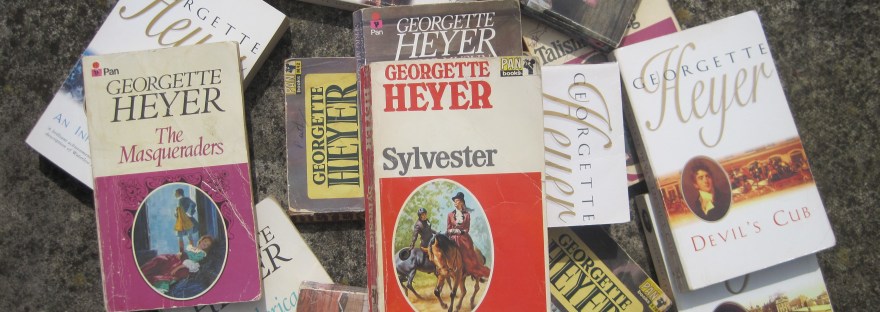
Some of the Heyer collection
Authors I love, non-fiction, romance, Series I love, The pile

Greatest Hits: My 500th post!

I realised earlier that my next post would be my 500th and it seemed a shame for it to go by without being marked and just be a normal Week in Books. So instead a little bonus post looking at what we’ve discovered in 500 posts…

I think, if we’re being honest we could sum most of my reading up as falling into one of three categories: romance, crime and history. To be honest, sometimes it hits all three…

Romance

Artistically arranged Heyer novels
A selection of my favourites


Back in the very early days I wrote about my abiding love of Georgette Heyer so it would be remiss of me not to mention her here (especially as some do hit that trifecta – Masqueraders, Talisman Ring, Unknown Ajax for example) but it’s not just about Regency romances. I already loved Trisha Ashley, but while I’ve been writing the blog I’ve become a massive fan of  Sarah Morgan and Jill Shalvis who both wrote contemporary romances, which a couple of years ago I would have told you that I don’t really read unless they’re romantic comedies. Romantic comedies have become harder to find over the years, but they’re still there if you look hard enough – like Kirsty Greenwood, my old editor at Novelicious who is funny and a little bit rude.*

Crime

Four books
The four books that feature Peter and Harriet

The only way to start this section is with Lord Peter Wimsey. I still love these stories as much as I did when I wrote that post. I still listen to the audiobooks and radio plays with Ian Carmichael monthly. They’re a sure fire way to make me relax at the end of a long day and my favourite of all the Golden Age crime. One of the greatest things about the ebook revolution is the reappearance of some more forgotten classics like Edmund Crispin and a lot of the British Library Crime classics. Another great thing about ebooks are the smaller presses – if you’ve been reading this blog for any length of time you’ll know about my love for Fahrenheit Press because I’ve gone on about it so much over the last 18+ months. And then there’s the cozy crime. My favourites are the ones with a sense of humour – like Meg Langslow and the Royal Spyness series.

History

Gone with the Windsors by Laurie Graham

This is actually quite a broad category – I’m using it to cover straight up nonfiction history books, like The Greedy Queen, and fiction set in the past like Deanna Raybourn and Lauren Willig’s books. A lot of my reading is set in the past in one way or another, which perhaps isn’t surprising given that I’m a history graduate. I’ve learned more about Ancient Egypt and the Victorian rush to excavate it through Elizabeth Peters’ Amelia Peabody series. I tend to stick to books set after 1600, but I do venture back further if something catches my eye. I have a love for the interwar period – non fiction books like Flappers and Queen Bees and novels – like one of my all-time favourites Gone With The Windsors, or mystery series (overlap!) like Daisy Dalrymple and Phryne Fisher, both of which are overdue for new novels too.


And all this hadn’t even touched on my love of boarding school stories – new and old – or ballet books, and classic children’s books in general.  Or the late, great Sir Terry Pratchett. Or Gail Carriger’s supernatural world. Or Charlaine Harris’s. Or the Janet Evanovich obsession. And just writing this has made me realise how many great books I’ve read and written about for this blog.

One  of the aims of Verity Reads Books was to try to reduce my to-read pile  I don’t think we can really count that as a success as the pile took up three boxes when it went into storage. But I do think I think more before buying books and NetGalley means I get advance copies of things now, which don’t take up actual space, but obviously mean I have less time to read Books from the pile. But really, there’s no such thing as too many books! Plus I really like writing about what I’ve been reading and chatting to people about what I’ve been reading on various social media platforms, so that’s been a total bonus.

Thanks for reading my ramblings, and here’s to whatever I discover in the next 500 posts!

Happy Reading.

* Kirsty’s Big Sexy Love is 99p on Kindle at the moment and you should totally buy it!

Book of the Week, non-fiction

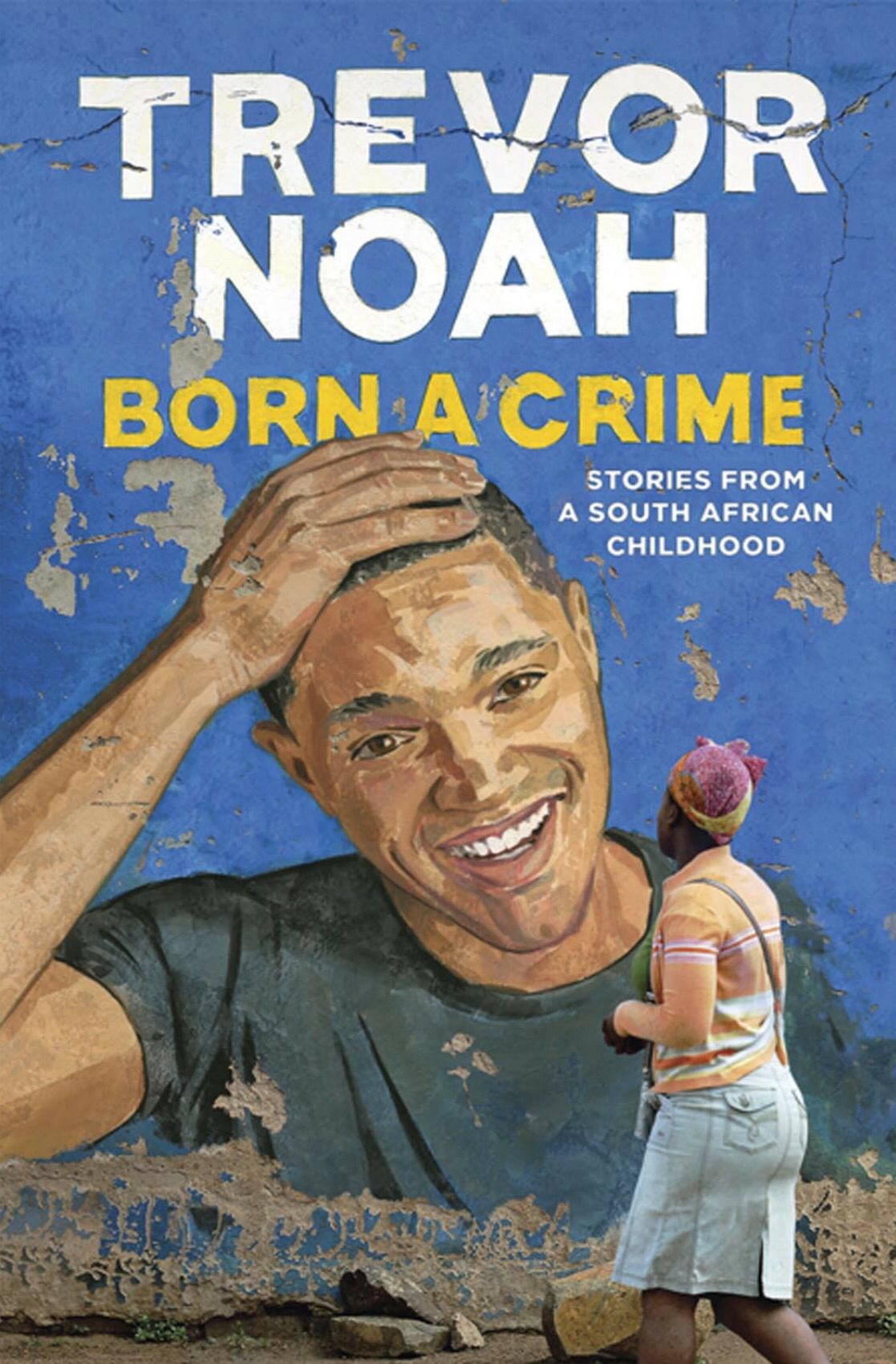
Book of the Week: Born a Crime

This week’s BotW is Trevor Noah’s Born a Crime, which I’ve wanted to read since I heard about it and picked up in a Kindle Daily deal a while back.  I started off by reading it in chunks (hence why it took me a few weeks to read) and then ended up reading the second half pretty much in one sitting.


For those of you who don’t know, Trevor Noah is a South African comedian who succeeded Jon Stewart as the host of the Daily Show in late 2015.  This book isn’t an about his rise to fame though, it’s a collection of essays about his childhood and adolescence in South Africa, where as the child of a white father and a black mother he was literally illegal.  Hence the title.

This is both a engaging look at the childhood of a very naughty and mischievous child and a fascinating but horrifying look at how Apartheid worked and its very real effects on people’s lives.  I’m in my early 30s and, because I was brought up in a house where if the radio was on it was playing Radio 4, I can remember the end of the Apartheid system, but until I read this I hadn’t really appreciated the full reality of what had been going on in South Africa less than 30 years ago.  And as Trevor Noah is pretty much my age – give or take a month or two – I could draw exact paralells between his childhood and mine – we were passing the same milestones at the same time.

This is darkly funny in places and profoundly shocking in others.  There are hilarious stories here about going from church on a Sunday, about dating and about the language barrier.  But Noah’s childhood was far from easy – he spent large periods being hidden inside houses to avoid detection – and if he did go out extreme measures were needed to protect him.  Even after the end of Apartheid, Trevor never really fits in anywhere – even in his own family.  But one of the things that shines through in this book is his mother’s love for him and her determination that he should dream bigger than the rules that society has set out for him.  It’s packed with background information about how South Africa worked – but wears it very lightly because it’s woven in to the narrative of the book so well.

I read this on my kindle, but could hear Noah’s own voice in every paragraph.  In fact if you’re more patient than I am, you can have him read it to you because he narrates the audiobook himself.  I gained even more respect for Noah having read this – and am even more annoyed that he had to cancel his tour date in my home town because he got the Daily Show gig.  I still have the unused ticket sitting in the bottom of my ticket box.  I suspect the opportunity to see him in a venue that small won’t come around again – but the book it good enough that I’ll try and get over it!

You should be able to get Born a Crime from all good bookshops – or you could order if from the Big Green Bookshop.  As I write this, the Kindle and Kobo editions are more expensive than the paperback one, but it has gone in deals before, so you could add it to your wishlist and wait.  And as I already mentioned, it’s also available as an audiobook from Audible and Kobo.

Happy Reading!