In Wednesday’s Recommendsday, I wrote about From Russia With Love which is a spy adventure with the Cold War and Russia as a key protagonist. This week also saw the release of the latest H M The Queen Investigates novel which is also venturing into Cold War spying Territory – with a title that evokes John Le Carré. I mentioned The Queen Who Came in from the Cold back in January in my series releases post, and I think it’s the last book from that post to be released (that hasn’t been bumped back into 2025*). In this book it’s 1961 and the Royal Yacht is heading for Italy for a state visit, but on board the Queen and her private secretary are investigating a possible murder that someone thinks they saw from the Royal Train. I really like this series as you know and I’ve been looking forward to this for more than a year so I’m hoping it will live up to that. I think it’s a sensible decision to move the series back in time, but I remain sceptical about how many scenarios there actually are to keep this series going. But given that I thought similar about the Royal Spyness books and they’re still going I may be surprised! If you haven’t read any of this series, do go back and check out my series post about them – the first is in Kindle Unlimited at the moment and the other three are at sensible prices on Kindle as well.
*there are two of them that have slid back into 2026 – the final Thursday Next book which should have been this month but which I sort of half expected to slide given how long we’ve been waiting already and the now final Phryne Fisher book, which presumably was slowed down by Kerry Greenwood‘s final illness.
Back at the theatre this week – and I was going to say for a play rather than a musical, but then I had a bit of a look back and realised that actually I mostly write about plays (and comedians) here rather than musicals, despite the fact that I think of myself as more of a musicals person than a play one.
Giant is a dramatisation of a moment in Roald Dahl’s life in the 1980s. He’s just about to publish The Witches, but is in the middle of a storm of criticism about a review he wrote of a picture book is deemed anti-Semitic. (If you want to read the review, it’s on the Literary Review website here, it’s paywalled, but you can see one of the key points). The play creates a fictional meeting at Dahl’s house (under renovation by his new wife) between the Dahls, his British agent and a representative of his American publisher. The American is an invented character, but Tom Maschler is real – a major figure in publishing (here’s his obituary from the Guardian if you want to know more about him) who escaped Vienna as a child after the Anschluss. The aim of the meeting is to try to get Dahl to apologise, but no-one seems willing to take Dahl on directly for various reasons.
This won three Olivier awards – best play, best actor and best supporting actor – for it’s original run at the Royal Court and has now transferred into the West End for a summer run. John Lithgow’s Dahl is towering in stature but starts as a charming old man before anger transforms him but the other performances are just as strong and the play itself is all the more remarkable for the fact that it is the author’s first. It’s the first time for a long time that I’ve heard a whole audience gasp in a theatre – and in my view deserves all the plaudits it has received both at the Royal Court and now for the transfer.
So I said yesterday that I had plans for some of the other books that I read last week – and one of them inspired this post. So here I am delivering on my promise that you’d hear more about some of last week’s reading and not just the BotW! This post is about mystery books that feature real people as the detectives.
So lets start with the book that inspired this: The Mystery at Rake Hall by Maureen Paton. This new mystery novel came out earlier this month (I got my copy via NetGalley) and is set in post-war Oxford and features C S Lewis – known as Jack – getting drawn into a mystery after one of his brightest pupils stops coming to her tutorials. Susan it turns out is at Rake Hall, a seemingly respectable hostel for unmarried mothers. But there’s more to it than meets the eye and along with Lucy, one of Susan’s friends and the daughter of a college servant, Jack starts to investigate. I don’t know a lot about the real C S Lewis, but this is a good mystery in a great setting. I love Gaudy Night, and that world of scouts and bulldogs is very much still in evidence here a decade or more after Sayers’ novel – and Sayers herself makes an appearance here too.
From one golden age author to another – and Nicola Upson’s Josephine Tey series. I’ve written about these before, but they’re probably the most well known of the fictionalised real person solves crimes books. Because of the circles that Tey moved in, this also features people like Alfred Hitchcock and Daphne Du Maurier in the stories as Upson weaves the mysteries around the real events of Tey’s life. There are eleven books in the series, and I don’t remember feeling like it was all wrapped up when I finished Shot With Crimson – but that came out in 2023 and there hasn’t been another yet. And although Upson has a new book listed on Amazon, it seems to be a standalone Christmas mystery set in 1943 (which I will definitely be looking out for) rather than another Tey novel but details are sketchy so we will see. Margery Allingham makes an appearance in one of the Upson novels – and I’m pretty sure there’s a mystery series featuring Agatha Christie doing the detecting as well, so only Ngaio Marsh to go to complete the set of Queens of Crime!
It’s been a few years since I read them, but there is also Gyles Brandreth’s series of Oscar Wilde murder mysteries which also feature Arthur Conan Doyle and Wordsworth’s great grandson Robert Sherard. There are seven in this series, and I’ve read the first three and book five (I used to get them from the library, but my local library closed down for: reasons and I’ve not been a library regular since) but they’re clever mysteries with a dash of wit – although obviously you are heading towards Wilde’s eventual imprisonment (which is part of book six) and some of the foreshadowing of that can be a bit… clunky. But if you see them around, they’re worth a look.
And finally a slightly tangential one – and one where I’ve only read two of them. Jessica Fellowes’s Mitford Murder mysteries. I say they’re tangential because they’re set in the Mitford household, but its one of the staff who is doing the actual mystery solving. Louisa is nursery maid to the younger children and chaperone to the older ones (at least to start with), and this means that she has a ringside seat to the events of the Mitford sisters’ eventful lives. I will say that I thought the first one didn’t quite live up to the promise that it had in the blurb, and the second one had more of the stuff that I didn’t like about them and so I haven’t read any more of them – but the fact that they got to six in the series and I see various of them in paperback in the crime sections of the big bookshops fairly regularly suggests that other people liked them more than me!
That’s your lot for this week – hopefully there’s something here for you – but also, don’t forget I’ve got a whole post about Novelised Real People (in books that aren’t mysteries) from back in 2021.
As promised yesterday, here is this month’s batch of quick reviews – and stay til the end for the links to the other bits and bobs from this month.
The Hog’s Back Mystery by Freeman Wills Croft
The first of two British Library Crime Classics novels this month, this features a really intriguing series of disappearances. The Hog’s back of the title is a ridge in the North Downs near where Dr James Earl and his wife live. When the doctor disappears from his home, initially it seems like a domestic affair – with a husband giving up on an unhappy marriage, but then other people disappear mysteriously – including one of his house guests. Yesterday I mentioned that the suspense element of When Stars Collide doesn’t follow the rules of mysteries – well this not only follows the rules, at the end when Inspector French is talking you through his solution, it gives you the page numbers for the clues!
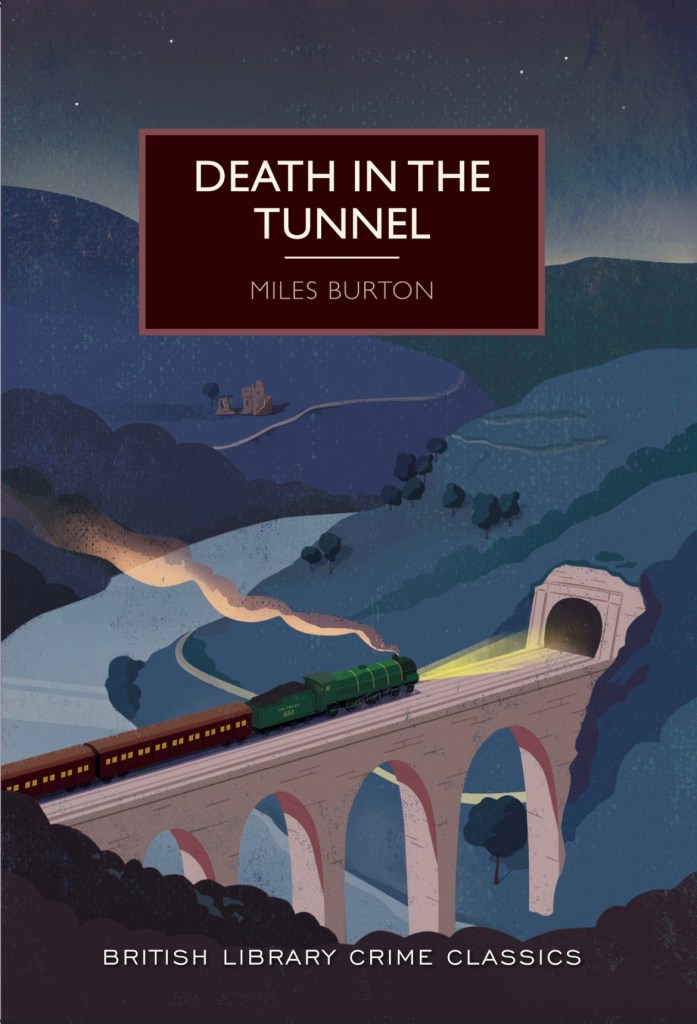
Death in the Tunnel by Miles Burton
The second BLCC is a variation on the locked room mystery – with the victim in a compartment on a moving train when he is shot. At first it seems like Sir Wilfred Saxonby has shot him self, but there’s no motive and soon inconsistencies appear and a murder investigation is underway. I had the solution- or most of the solution worked out before the end of this but it was still a good read, although if you’re only going to read one of these, maybe make it Hogs Back because that’s a totally baffling one for a long time.
The Secret Diaries of Charles Ignatio Sancho by Paterson Joseph*
This was the very last book I finished in October and definitely deserves its mention here. This fits into the fictionalised real lives genre – in this case the life of a black writer and composer who lived in Regency London. As you might expect there are significant challenges facing him – and they are presented in this in the guise of a diary designed for his son to read when he is older (and it is suggested that Sancho will not be around to tell him them himself). Sancho was born on a slave ship and was given as a gift to three sisters who brought him up to be their servant before he escaped from them. I won’t say much more than that because it gives too much away – maybe I have already. The author is the actor Paterson Joseph who has spent two decades researching the life of his main character which he turned into a play before he wrote this novel.
The Secret Diaries of Charles Ignatio Sancho by Paterson Joseph is out today! I’ve started this but I haven’t finished it yet but I’m really enjoying it. This is another fictionalised real person novel – and you know how I love them. This time it’s a writer and composer who lived in Regency London. I hadn’t heard of him, but he’s been on a postage stamp, on a list of Great Black Britons and was a google doodle on October 1 2020 to mark black history month. His Wikipedia page is quite something. Obviously I need to finish it, but so far I think it would make a great candidate for your Christmas book list.
Today is day two of the bumper bank holiday weekend here in the UK to mark the Platinum Jubilee. I wanted to write a post about a royal related series today to tie in, so I’m going back in history for Philippa Gregory’s historical novels about the Tudor Royals and adjacent families.
Now this is a complicated series to write about because although they are lumped now together on Philippa Gregory’s website, on Goodreads and on Amazon as the Plantagenet and Tudor novels, they used to be two listed as two distinct series – the Tudor Court and The Cousins’ War. And I agreed with that because the Cousin’s War books have magic in them and the Tudor Court does not which to me suggests that they can’t really be seen as being in the same timeline. And the order that they were written is not at all the chronological order either. The magic issue is also one of the reasons why I haven’t read all of them – after the magic in The White Queen I didn’t fancy doing the others in that part of the series. The other is that as the series has gone on we’ve got into some of the figures where I know it ends badly (as in beheadings) and as we know I’m not always in the mood for that. I’d also not really appreciated exactly how many of them there are now – because I have been ignoring the potentially magic including newer titles…
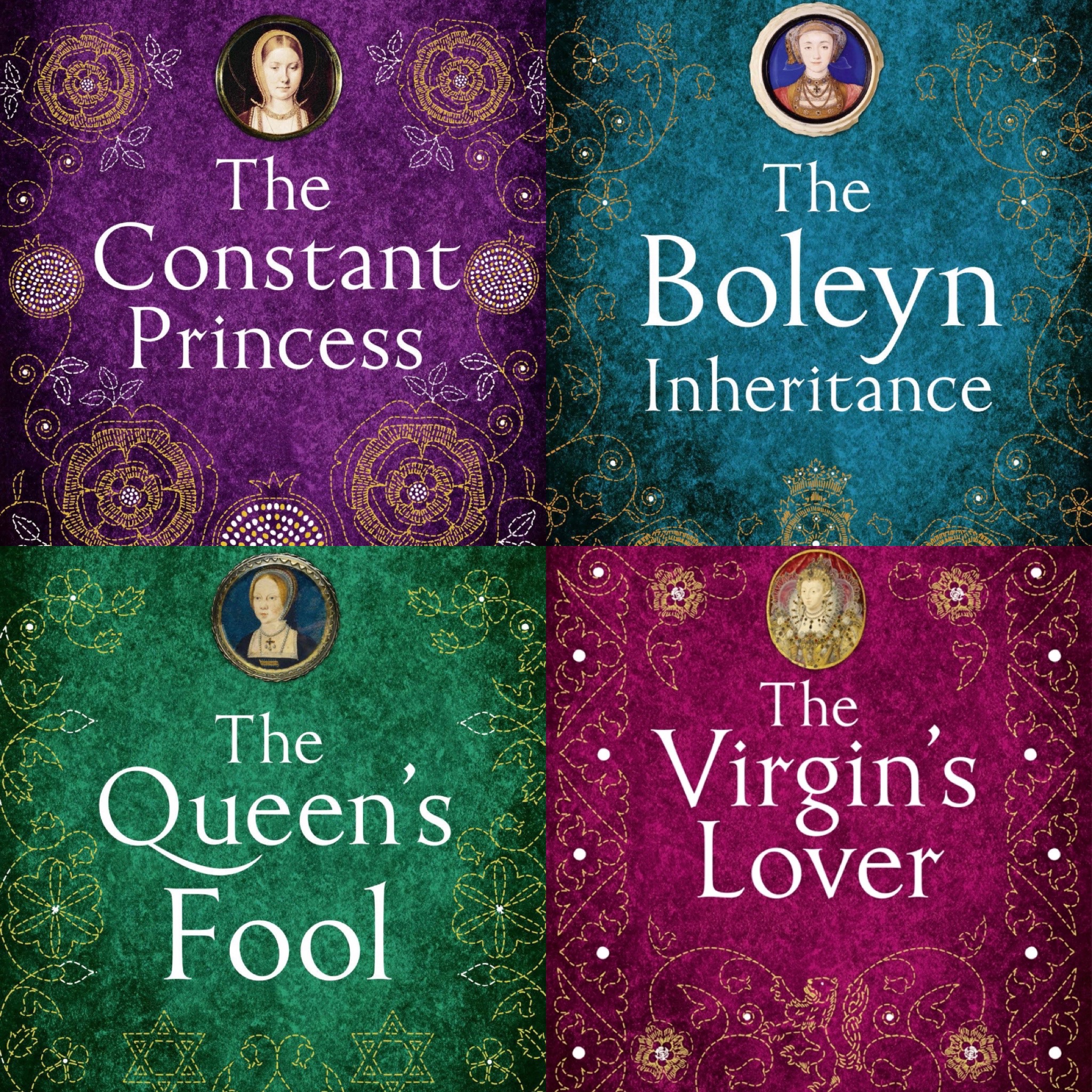
So really I suppose I’m writing about the first five to be published: The Other Boleyn Girl, the Queen’s Fool, The Virgin’s Lover, the Constant Princess and the Boleyn Inheritance which cover (in the order I’ve given the titles) Anne Boleyn’s rise and fall, the changing fortunes of Henry VIII’s two daughters during the decade from the late 1540s to the late 1550s, Robert Dudley’s time as favourite of Elizabeth I, Catherine of Aragon’s time in England and the fourth and fifth marriages of Henry VIII. From this you can see that they are not exactly chronological – and have now ended up being (again in the order I gave the titles at the start of this paragraph) books 9, 12, 13, 6 and 10 in the amalgamated Plantagnet and Tudor series! There is a sixth book from this phase in Philippa Gregory’s career – The Other Queen, about Bess of Hardwick and Mary, Queen of Scots – which I haven’t read, but writing this post has reminded me that I would like to!
Anyway, I first read the Other Boleyn Girl back when I was at university and borrowed it off my sister in the holidays. I have a vivid memory of buying the Airport Paperback edition of The Virgin’s Lover at Stansted on my way to Tours during my year abroad and can see it now sitting on the bookshelf in my room in halls there. The others were bought either by my sister of me and we shared our copies between us – which probably explains why I don’t have any of them in my house anymore. I reread the Virgin’s Lover a few times during my time in Tours – because I didn’t have many books in English and buying more was expensive – and reread the others too at the time but I haven’t read any of them for a while.
Of course this means I’m not quite sure how they stand up these days, but I remember them as fun historical romps which were accurate enough in terms of the time line of things happening, but took a lot of liberties with what the actual people got up to. If you went to school in Britain, it would be nearly impossible not to know the vague outline of events – because as Greg Jenner says in Ask a Historian we have a national obsession with the Tudors. But even knowing what happens, it’s still a really good read to get there – and the books often focus on side characters whose stories intersects with the Big Figures rather than the figures themselves which means you can still hope for a happy ending (for Mary Boleyn in the Other Boleyn Girl for example) or for comeuppance (for Jane Boleyn for example!) as well as trying to work out where the liberties are being taken with the timeline and historical fact if you’re a history student!
I have two of the later books sitting unread on my kindle because they’ve been Kindle Daily Deals at some point – although I think little sister has read them – and once I get my new library card, I will look at filling in some more of the gaps in the Tudor section of the series without the risk of buying (more?) books with magic in them that I will give up on! You should be able to get hold of any of these very easily – Philippa Gregory is in practically every bookshop, they’re also often in the second hand and charity bookshops and they’re on all the ebook platforms too. They’ve been through several editions – the covers I have in the photo for the post are the current Kindle ones, which are totally different to the ones my old paperbacks had and there are several different styles that I’ve seen in the shops too.
Happy Friday everyone – whether it’s day two of the four day Jubilee weekend or the eve of the Whit weekend or just a normal Friday!
As I mentioned in yesterday’s BotW post, you may well come away from reading Vanderbilt wanting to know more about some of the people and situations in it. And I can help with that because this is not my first rodeo with this family or with American High Society in the Gilded age. So for today’s recommendsday, I’ve got a selection of books that tie-in in some way with some of the events or people that feature in Anderson Cooper’s book.
Lets start with the non-fiction, because that’s probably the short of the two lists. First of all is Empty Mansions by Bill Dedman and Paul Clarke Newell. I talked about this in my non-fiction Rich People problems post a couple of years ago. It’s the investigation into the life of a reclusive heiress, who wasn’t photographed for decades and who lived in a hospital for twenty years, despite owning mansions on both coasts of the US. Huguette Clark isn’t a Vanderbilt, but her family money was made at the same sort of time, she moved in the same circles and her family also had a penchant for building giant mansions. It’s mind boggling and she only died a couple of years back. Also mentioned in that 2019 post is The Unfinished Palazzo by Judith Mackerell, which features as one of its leading characters Peggy Guggenheim. Again, not a Vanderbilt, but another one of those big American families that you may well have heard of. Off the back of reading Vanderbilt, I’ve ordered myself Anne de Courcy’s The Husband Hunters, which is about the thirty year period where the British aristocracy looked across the pond to replenish their family coffers with American money by marrying American heiresses. I shall report back, but in the interim, may I suggest the tangentially related The Fishing Fleet, also by Anne de Courcy about the women sent out from Britain to India to try and snag a husband. Lastly, you can read Consuelo Vanderbilt’s own memoir – The Gitter and the Gold but I slogged through it last year, so you don’t have to. It’s a fascinating story, but she (and her ghost writer) aren’t the best at telling it and I definitely don’t suggest you read it first, because she doesn’t give you a lot of context about who the people are that she’s talking about, so you may well find yourself utterly lost or googling every few pages!
Let’s move on to fiction – and more particularly fictionalised real-lives, a corner of fiction that I really enjoy. In the later stages of the book, we see more of Anderson Cooper’s mother’s life. Gloria Vanderbilt was the subject of a notorious custody case when she was a child, but as an adult she was part of the group of women who Truman Capote called his Swans. I’ve read a couple of novels about this group – which probably means there are a stack more that I don’t know about. I read The Swans of Fifth Avenue by Melanie Benjamin back in 2016, before I knew much more about Truman Capote than you can get from the film Capote. And that fact made the reveal of how that little group blew up work really well although I was somewhat hazy about where the real life stuff ended and the fiction began! I read Swan Song by Kelleigh Greenberg-Jephcott a couple of years later – about the same group and the same events – and that was a BotW. In Swan Song you know what Truman has done quite early and you really see the consequences of his actions for the women concerned – you just need to stick with it beyond the initial few chapters which are a bit confounding until you figure out what is going on.
Downton Abbey prompted a surge of books set in the Gilded Age or featuring American heiresses, both in historical fiction and straight up historical romances. In the former category I’ve read My Last Duchess (known in the US as The American Heiress) by Daisy Godwin who is the writer behind the TV series Victoria. Cora Cash is American heiress whose marriage is going really quite badly and who is also having to navigate British High Society with very little help and a lot of people willing her to fail. I preferred The Fortune Hunter which she wrote a couple of years later and which is about Sisi, the Empress of Austria, but that doesn’t really fit this post does it? And then there’s Theresa Anne Fowler’s A Well-Behaved Woman, which is about Alva Vanderbilt and her quest to be queen of society. I found it tricky because everyone in it is really quite unlikeable – and it doesn’t have the humour that can make reading about horrible people fun, but I know that other people enjoyed it more than I did.
On the romance front, Eloisa James’s My American Duchess was one of the first to hit this trend – it came out in 2016 and I reviewed it for Novelicious back in the day. It’s got a heroine who has already jilted two fiancés and a hero who wants to marry a Proper English woman. You know where this is going, except that it’s more than just the fish-out-of-water, comedy of manners, forbidden love novel that you expect from the blurb. I haven’t reread it since, but at the time I said that it wouldn’t be a bad place to start if you want to dip your toe into the historical romance genre, and I would stand by that, because Eloisa James in this period was one of the most consistent of the romance genre. Joanna Shupe has written a couple of series set in Gilded Age New York, but my mileage with her varies a little – she tends towards more melodrama than I like and her characters tend to do abrupt about faces that annoyment. But I did quite like Baron, from the Knickerbocker Club series, which features a fake medium who needs to seduce a railroad millionaire in order to stop him from exposing her latest scheme and also Prince of Broadway from the Uptown Girls series which has a casino owner and the daughter of a family he is trying to ruin financially. More recently there’s Maya Rodale’s An Heiress to Remember (published in 2020) which sees an American heiress return to New York after her divorce to try and claim her family’s department store for herself. Only trouble is that it’s being run by the man whose heart she broke when she married a duke. It’s the third in a series – but I haven’t read the others, so I can’t speak to whether they work as well as this one did (for me at least).
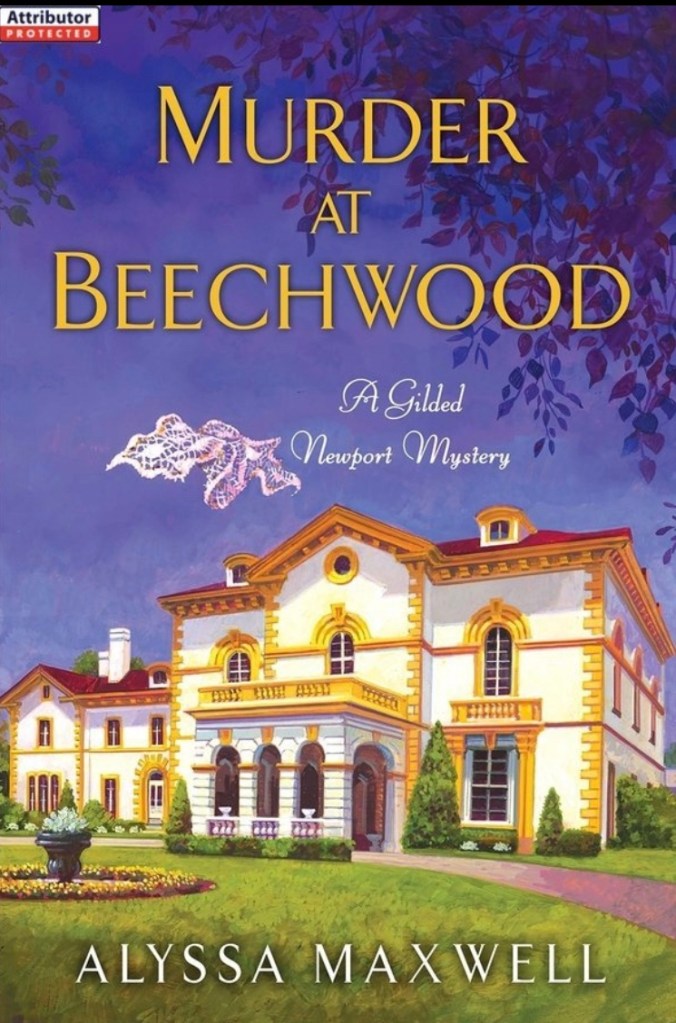
And finally, there have also been a couple of murder mystery series set in and around the mansions that the Vanderbilts and their rivals built in Newport, Rhode Island. Of the ones that I’ve read, the best was Murder at Beachwood by Alyssa Maxwell, which is a historical mystery set in 1896 with a debutant heroine who is a fictional cousin of the Vanderbilts (an actual Vanderbilt connection! yay me!) who ends up trying to solve a murder after a baby is abandoned on her doorstep. It’s bit meladramatic – but that works with the time setting. It’s also the third in a series, and writing this has reminded me that I haven’t read the other two and I’m not sure enough of the Anderson Cooper book is set in Rhode Island for me to be able to use it for the state if I do the 50 states challenge again this year.
So there you are, a monster Recommendsday post with – hopefully – something for everyone. Happy reading!
In a frankly shocking move to anyone who knows me, this week’s pick is a book that I mentioned in my upcoming books post, and that I’ve managed to read ahead of it’s release. I am however breaking one of my rules – because I’m writing about it nine days ahead of its publication date, and I usually try and wait for books to be published before I recommend them. But as the other books that I really liked last week were Christmas-themed books, and here we are in nearly mid-January. But I have a plan for dealing with that. I promise. Anyway, to the review.
If you’ve read anything about Agatha Christie’s life, you’ll probably have come across the mysterious incident in 1926 when she disappeared for 11 days after her husband asked her for a divorce because he had fallen in love with another woman. It sparked a massive hunt for her across the UK until she was found staying at a hotel in Harrogate. The newspapers reported that she was suffering from memory loss and Christie herself doesn’t even mention the incident in her autobiography. Nina De Gramont’s debut novel reimagines what happened, told from the perspective of the fictional Nan O’Dea. Nan is the woman who Christie’s husband is leaving her for – the Goodreads blurb describes her as “a fictional character but based on someone real, which is to say there was a woman who Archie Christie was leaving Agatha for – but that is about as far as the resemblance goes. The novel jumps backwards and forwards through time – showing the reader Nan’s tough upbringing in London and her escape to Ireland during the Great War alongside the hunt for Agatha and the events at the hotel that she’s staying at in Harrogate. Why has Nan infiltrated the Christie’s world and what is it she wants?
I really enjoyed reading this – but it’s so hard to explain why without revealing too much. In fact, I’ve tried three times just to write that plot summary without giving too much away. I think it’s fair to say that this departs a long way away from the actual facts of the Christie divorce fairly quickly. But the story sucks you in so completely that you end up googling to check which bits are real and which aren’t. It’s clever and enthralling and twistier than I expected it to be. There’s also a murder mystery plot in there that’s neatly reminiscent of something Christie herself wrote. I’ve written whole posts about fictionalised real lives, and if you like that sort of thing you should try this – although bear in mind those notes above about it not being what actually happened. It’s a thriller, it’s a mystery and it’s a romance. It’s also very easy to read and evocative. I read it on the sofa snuggled under a blanket wishing I was in front of a roaring fire, but I think it would also make a great read for the commute or a sun lounger. And it wouldn’t make a bad book club pick either. Well worth a look.
My copy of The Christie Affair came from NetGalley, but you can pre-order a signed copy from Waterstones, or the usual Kindle or Kobo editions. It is a hardback release, so the Kindle prices do match that, but if you’ve still got some Christmas book money to spend…
The latest instalment of my intermittent Recommendsday series, is a post about a trio of books that feature fictional versions of real life people. It’s a part of literature that I’ve read quite a lot of over the years – and quite enjoy. I date it back to my A-Levels when I derived a lot of enjoyment when studying the Literature of the First World War and reading Pat Barker’s Regeneration and then in spotting all the various poets popping up in all in various other pieces of fiction about the era – and then deciphering who was meant to be who in Siegfried Sasson’s Memoirs of a Fox-hunting Man. The books in this have been read over some considerable time – and I could have held off on publishing this for ages as I have more of these on my to-read pile. But after not enjoying one of the potentials to be added the other week, I got a bit of a bee in my bonnet and wanted to get it out there. These three fall into some of my preferred areas of reading too – Hollywood’s Golden Age and what I’m going to call the extended post first world war period…
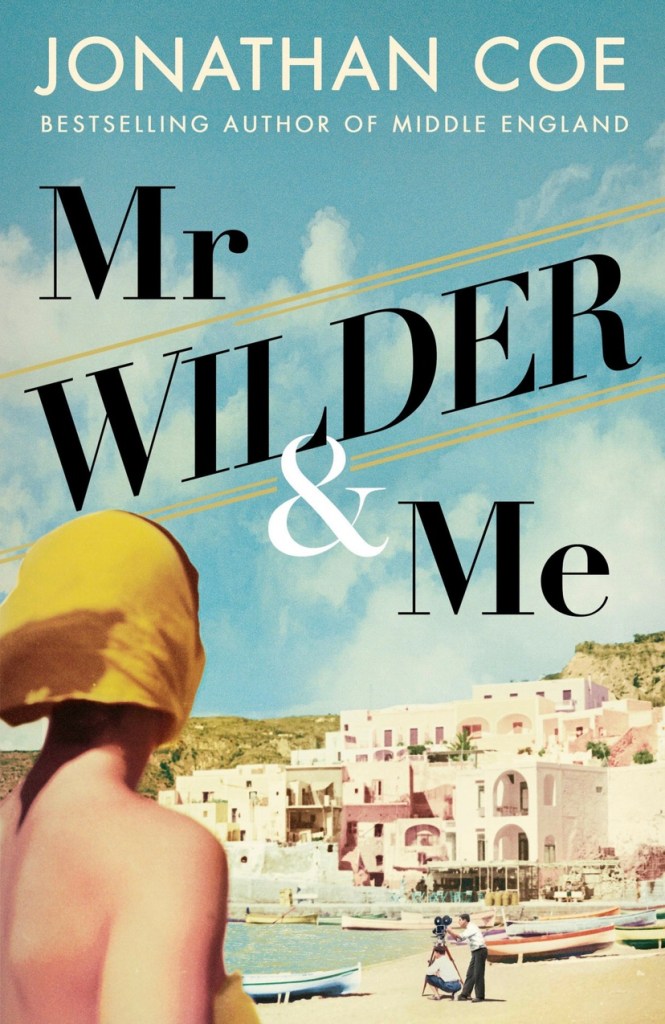
Mr Wilder and Me by Jonathan Coe*
After a chance meeting with Billy Wilder while backpacking around the US in the 1970s, Calista finds herself on a Greek Island working as a translator on the set of Wilder’s latest film. Calista is barely out of her teens, young, naive and slightly without a direction in her life. Through the course of the summer, she watches a Hollywood great who is falling out of favour in the new world of Scorseses and Spielbergs, and learns about the sadness that haunts Wilder. I love a book about Old Hollywood and I also love novels that fictionalise real people, so even the blurb for this really, really appealed to me. And it didn’t disappoint. Mr Wilder and Me is incredibly readable – even if after you finish it you realise Calista herself is not a massively well developed character and exists mostly as a way of getting you into Wilder’s world. There is not a lot of drama here – but it doesn’t need it. It’s an examination of cinema, and fame and what you do and how you cope when people think your glory days are behind you but you don’t.
Love and Ruin by Paula McLain*
I really like what McLain does with fictionalising real people. Admittedly, so far she hasn’t done one on anyone who’s life I was already massively familiar with, but I’m not sure I care. Having tackled Hadley Richardson’s relationship with Ernest Hemingway in The Paris Wife, in Love and Ruin, McLain returns to Hemingway’s life – but this time through the eyes of his third wife, legendary war correspondent Martha Gellhorn. It’s a fascinating portrait of a relationship between two incredibly strong characters, neither of whom are prepared to let go of what they want to do (although Gellhorn definitely makes more compromises than Hemingway does). I would happily read another 100 pages of What Martha Did Next – and came away from this with even more respect for her than I already had. Really, really good – and very readable.
The Age of Light by Whitney Scharer*
This is the story of Lee Miller – a model-turned-photographer, who was Man Ray’s assistant and then went on to work as a photographer in her own right and one of the first female war correspondents. I liked the idea of this – but ended up feeling distinctly mixed. I didn’t like any of the characters really – but that’s not a necessity. What is a necessity is feeling like there has been some resolution or outcome at the end of it all. And I didn’t get that. I felt like a spent a lot of time in the presence of someone very damaged, but I didn’t feel like I came away understanding her any better than at the start. Or at least not on any deeper level. – just not as good as the other books that I’ve read recently that have been telling fictionalised versions of real people’s lives (or portions of them).
If you want more fiction about real people, can I point you in the way of my post about the Happy Valley Set, Swan Song and also of some of Laurie Graham’s books like The Grand Duchess of Nowhere and Gone With the Windsors, the latter of which like Mr Wilder and Me inserts a fictional person into a real situation and remains one of my favourite books of all time.
Happy Reading!
*next to a name indicates that it came to me from NetGalley, probably some time ago!
A tricky choice for my book of the week this week – partly because of a reduced list this week because of exciting things like holidays with friends, but partly because I had little quibbles with everything I read. In the end it came down to Kelleigh Greenberg-Jephcott’s Swan Song and The Vacationers (apt because I was on vacation!) but as I’ve recommended Emma Straub before, I thought I’d go with Swan Song instead. And to be fair, writing this post turned out to be really quite easy in the end!
Regular readers of this blog will be well aware of my love of novels based on real events, and this one takes a look at the downfall of Truman Capote, who after years of friendship (and patronage) with a group of elite high society women, committed social suicide by using their lives as material. He called them his Swans, and they tell the story as a sort of Greek chorus, switching between their lives, his life and the stories he told them. Hopping backwards and forwards through time, the Swans recount the various versions of Capote’s childhood that they’ve been told, full of inconsistencies and embroideries, they tell the stories of their friendship with him and its implosion and the aftermath.
This is really good. While it is most definitely a bit of a Rich People Problems type of situation, there is proper scandal, betrayal and heartbreak on all sides here. There are a lot of novels that talk about the unhappiness of rich and privileged people, and although they can sometimes be my favourite books to read, when it doesn’t work it’s hard to muster any sympathy. But that’s not the case here at all – the women who Truman exposes have all their unhappiness exposed to the world – all the things that they have managed to ignore or put up with to keep their status are suddenly out there in print and although Joe Public might not know who the stories are about at first, the veil disguising their identities is very thin and people work it out – fast. I still can’t make up my mind if Truman knew that what he was about to do was going to explode his life but did it because he was terrified about failing to deliver a follow up to In Cold Blood, or if he thought that the women wouldn’t mind and couldn’t believe that they would be prepared to turn their backs on him. My main quibble was around the last quarter – which I didn’t think worked quite as well as the earlier part had done, mostly because after the swans have broken with him, using them as a narrative device didn’t work quite as well for me.
There is a big cast of characters here but I was fine, knowing a bit about the story and having read another novel based around this very same issue before. But my other quibble was whether you’d get lost if you didn’t know anything about this set before – as I was slightly when I read The Swans of Fifth Avenue – which didn’t tell you what it was that he’d done! Swan Song does give you the details on that – which is good, and I think if you keep reading beyond any initial confusion, it will all start to slot in to place. It’s just that the first part is a little bit like Truman’s brain after he’s had a few Orange Drinks and some pills. And obviously there is Wikipedia to help too if you’re really stuck – to be honest I think you can get all you need to know from Truman’s entry and then disappear off down any rabbit holes that strike your fancy!
Last week I recommended a book of fiction so cleverly done that you can’t believe the band isn’t real and actually these two make quite a good pair and overlap in time in some patches – although you may find that hard to believe. You’ve got Truman and his swans living in the high society world of the East Coast which still feels like a relic of an earlier era, while over on the West Coast, Daisy and the Six are living it up in the new world of rock and drugs and feel much more contemporary. And both would make great books to read on the beach if you’re about to head off on Spring/Easter break. And writing post this has reminded me again that I really need to finish writing that Rich People Problems books post – it’s sitting half done, waiting for an opportune time to finish it (and for me to finish reading a couple more books). Maybe this will be the push that I need!
I’ve had this on the pile for a while – twice in fact as I managed to get a NetGalley ebook copy when I already had a paper copy via the joys of my proper job – but although it came out last summer, I’m sort of timely – as earlier this month it was named on the longlist for the Women’s Fiction prize at the moment. The paperback isn’t out until the end of June so you could preorder it (and Amazon do have that pre-order price guarantee) but the hardback isn’t a bad price on Amazon at the moment if you just can’t wait, and would expect (or hope at least!) there might be a copy in any reasonably sized bookshop – especially now it’s been longlisted for a prize, even more so if it makes the shortlist. And of course it’s on Kindle and Kobo too.








 Verity Reads Books (lots of them)