Inspired by the latest Veronica Speedwell, today’s Recommendsday is books featuring lost heirs. They’re a staple of the mystery and romance genres, which as you know are two of my favourites, so I’m splitting the recommendations up and I’ve still had to restrain myself!
And this week we’re starting with mystery novels – where lost heir plots tend to revolve around whether a mysterious or reappeared person is who they say they are or if they are a fake. It’s a think that actually happened in history – Perkin Warbeck for example – but I’m mystery novels it’s usually an inheritance rather than a crown that the possible pretender is about to come into. It’s not a plot you can really do in the age of DNA, or at least it requires some creativity. So let’s start with a Golden Age Classic – Josephine Tey’s Brat Farrar. In it a man called Brat Farrar appears and claims to be Patrick Ashby, the eldest son of the Ashby family who disappeared when he was 13 and thought to have drowned. He knows Patrick’s mannerisms and the story of his early life and it seems like he may pull it off, until secrets start to emerge…
Sweet Danger is my favourite of all the Albert Campion books (I think), and I listen to the audiobook or read it at least once a the year. In it Albert is trying to find the lost heir to a tiny Balkan principality and meets the family who claim they’re the rightful heirs. There’s also a ruthless crime Lord, witchcraft and the start of a romantic strand in the series – which I promise is not the main reason I like it! It’s actually a really good adventure caper as well as a mystery – and there’s no actual murder. You could also probably make a case that Agatha Christie’s Nemesis is a lost heir book in a way as well – as the mystery that Miss Marple is trying to solve is whether a a deceased millionaire’s son murdered a young woman or not – the son in question having disappeared.
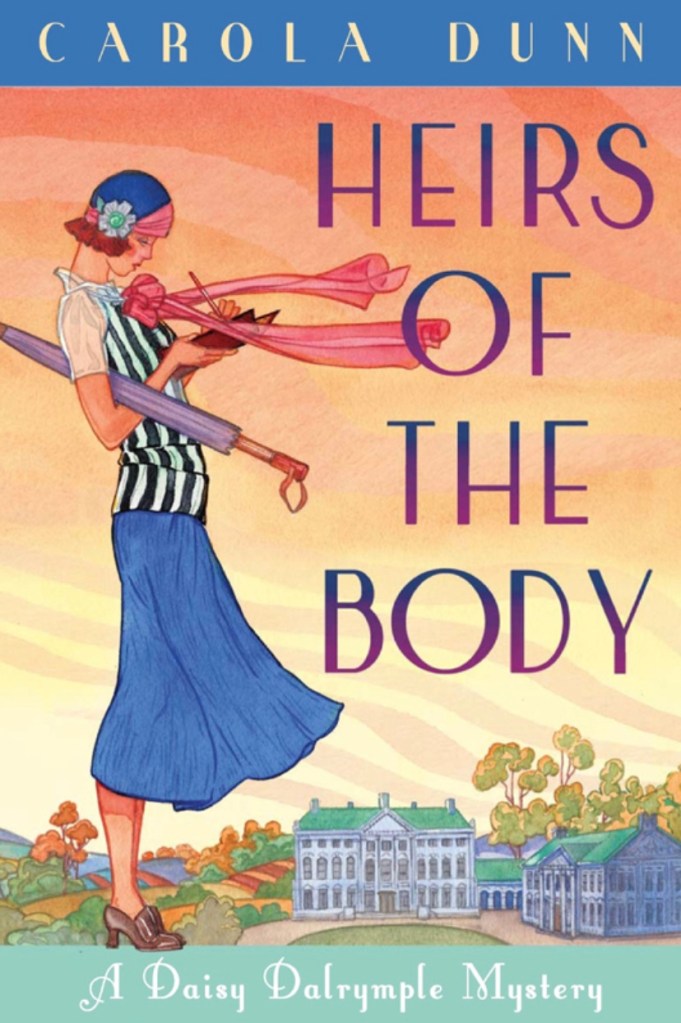
Most historical mystery series will do a lost heir – or variation thereon at some point. In thePhryne Fisherseries it happens fairly early on in the series – within the first half dozen in fact – and as the blurb is a little bit cryptic about it I shall be too, but you can probably work it out. The Mary Russell and Sherlock Holmes series has one relatively early on too – Justice Hall – the sixth in the series but really to appreciate it you need to have read the previous book O Jerusalem too, and they work really well back to back. In the Daisy Dalrymple books it happens much later in the series – Heirs of the Body is the 21st mystery (out of 23) and the whole plot revolves around finding which of four options is the heir to the viscountcy in Daisy’s family.
I’m fairly sure there are more of them that I’ve forgotten about – I’ve been mulling it over before I fall asleep at night and I’m fairly sure I haven’t remembered all the options I came up with, but that’s always the way with things that come to you as you drop off to sleep! But as I said, I have another post planned, and even if it’s meant to be all romances, I can always throw a mystery in if I remember something amazing…
I mean, it was a book first, but in this case it’s the TV adaptation I’m talking about!
So this is ITV’s four part adaptation of Graham Norton’s debut novel. I have to admit that I started but never finished the book, and I don’t know where it’s gone – but I really enjoyed the TV version of this murder mystery, which is just a little bit unexpected and out of the ordinary.
The plot is this: when a body is discovered Siri building work, local police officer PJ has his first murder to solve. The victim turns out to be a long lost local legend – who disappeared the day of his wedding. Introverted and seen as an outsider by the village, PJ discovers hidden secrets as he tries to solve the crime and this is what finally forms a connection with the community.
Everyone in this has a messy life. There are alcoholics, secret affairs, unhappy marriages, busybodies, secret eaters and more. And at times it’s really quite bleak. But for all that there was something totally watchable about it – and I put that down to Conleth Hill’s performance as PJ Collins. Even when he’s doing something he really shouldn’t, you’re still rooting for him and you’re desperate for him to solve the murder and be happy. As the episodes go on, you discover hidden depths to him and the scenes with Mrs Meany (Brenda Fricker) are brilliant. It doesn’t feel like a traditional murder mystery when you’re watching it – whether that’s because you know a lot more than PJ does or because of the way it’s been directed by Kathy Burke, I don’t know. But it felt different and fresh and touching.
As I said at the top, I haven’t read the book – and as I already have way too many books I’m not sure I’ll be going back for it, but if a copy happens into my hands, I’d be interested to see how much of the tone is carried over from the book and how much is from the adaptation.
Anyway, if you’re interested, it’s up on the ITV hub if you’re in the UK, and I think it’s somewhere on Virgin if you’re in Ireland. I have no idea about the rest of the world though – sorry!
We’re in binge reading territory this Friday, because it’s that time of year where people are starting to think about what to read on the sunlounger – and what is better than a series to binge read. And to be fair, basically anything Simon Brett writes is totally bingeable. They’re fun and moreish and won’t make your head explode.
This is a cozy crime series with a sense of humour and at its centre are Jude and Carole, next door neighbours in the seaside town of Fetherings who just keep stumbling across bodies. The two women are unlikely friends – Jude is bohemian and free spirited. Carole is not and more to the fact, Carole doesn’t really know how to be friends with anyone, so as well as trying to solve the mystery the reader has the fun of watching the two of them – Carole desperate to ask questions about her new friend but never quite managing it and Jude, who knows Carole is desperate to know more about her but not volunteering anything unless asked. It’s a hoot.
I’ve written about another Simon Brett series here before, the Charles Paris books, which are great – but written across a large span of time and so if you do binge them then you’ll notice that we’ve gone from the 70s to the now and Charles has not really aged! Fetherings doesn’t have that problem!
There are 20 books in the series – with a 21st due out in the summer. I’ve only read 9 so far, but I have a few more ready to read when I’ve got the NetGalley pile a bit more under control and finished rereading Sookie Stackhouse. Yes I know, I’m easily distracted. Too many books, not enough time – my perennial problem. Still it’s nearly hammock season – so that will help won’t it! Anyway the first one – so probably the best place to start – is The Body on the Beach. In fact the first two are in Kindle Unlimited at time of writing, so if you’re a subscriber to that you can have a read for free.
It’s nearly the end of March and I’m back to some classic crime and another British Library Crime Classic for this week’s pick.
This is the first of John Bude’s Inspector Meredith series and sees the detective investigation what appears to be the suicide of one of the co-owners of a petrol station in a deserted corner of the Lake District. The dead man was due to get married and as Meredith investigates he discovers a plan to emigrate after the marriage. And when he digs a bit deeper he discovered suspicious going’s on at the garage. What follows is a complicated plot involving all sorts of aspects of rural life that I can’t really go into with spoiling things!
This isn’t the first book in this series I’ve read and the Sussex Downs Murder was a book of the week as well when I read that five years ago. I’ve had this on my radar and been wanting to read this and waiting for this to come into my hands for a while. It’s really cleverly done, a little bit bonkers in its own way and also a lovely window onto 1930s life, which I really enjoyed. Definitely worth a couple of hours of your life if you can get hold of it. I’ve got the next book, The Cheltenham Square Murder, lined up to read already.
My copy came from the Willen Hospice bookshop, but it’s available on Kindle, Kobo and from the British Library themselves. It was in Kindle Unlimited when I started writing this post, but it’s dropped back out now and the cover has even changed. A couple of the other books in the series are in KU at the moment though, so if you want to try some John Bude, there is that option for you if you’re a subscriber.
Yes I finished this on Monday. So yes it’s cheating. But it is a book set in a ski resort and I spent the part of my weekend that I didn’t spend in London watching the Winter Olympics so I am going with it!
Death Goes on Skis is one of a series featuring Miriam Birdseye, written in the years following the Second World War. Miriam is a revue artist and has a champagne lifestyle and a coterie of hangers on. This is the first in the series that I have come across (and isn’t it gorgeous!) but Good reads tells me it is the fourth in the series. It sees Miriam on holiday in a ski resort popular with Brits. Her fellow travelers include a ballerina and her night club owner husband, a playboy, his wife and their children and their governess and a wealthy couple whose family make their money from perfume. Most of these people are awful, but when they start dying in mysterious circumstances, Miriam and her friends investigate. But, crucially, they’re investigating because they are bored and not because they have a burning passion for justice or to see the criminal behind bars.
And that is the difference to other Murder mysteries of the era that I have written about – this is a farce and a (black) comedy and doesn’t quite follow the genres connections that you might expect. Think Evelyn Waugh does murder mysteries. And it works very well. You’re not going to like any of the suspects, and the children are truly awful, but it’s really quite entertaining. It also comes neatly broken up into nice small chunks, which makes it perfect for bedtime reading – which is mostly what I’ve been doing with it, although I did read some of it on the sofa on Monday night because I wanted to finish it!
If the name Nancy Spain sounds familiar, well that may be because she’s one of the women featured in Her Brilliant Career, but in brief she was a great niece of Mrs Beaton (of household management game) she went to Roedean and then became a journalist after being asked to write about women’s sport. She served in the WRNS in the war and afterwards started writing detective fiction. This got her a newspaper column and also turned her into a personality who appeared regularly on TV and radio. Her partner was editor of She Magazine, Joan Werner Laurie and they lived openly together in what sounds like a somewhat complicated household with the rally driver Sheila Van Damme. They were friends with Noel Coward and Marlene Dietrich and she was the inspiration for a song. Spain and Laurie died in a plane crash at Aintree in 1964 – they had been travelling there to cover the grand national.
I bought my copy of Death Goes on Skis as a birthday present for myself, and I’ve already ordered another one of them, as Virago have helpfully reissued several of them now, all with delightful covers in this style. They’re also on Kindle and Kobo and in a matching audiobook to this from all the usual vendors.
Pinch, punch, first day of the month, white rabbits etc. Welcome to February everyone. Despite the fact that January is my birthday month, it does always feel like a bit of a slog to get to the end of the month, but we’ve made it through and into Freburary, which always feels like it rattles by at speed. All the usual goodies coming up on the blog this week – monthly stats, mini reviews etc. But first: a book of the week review.
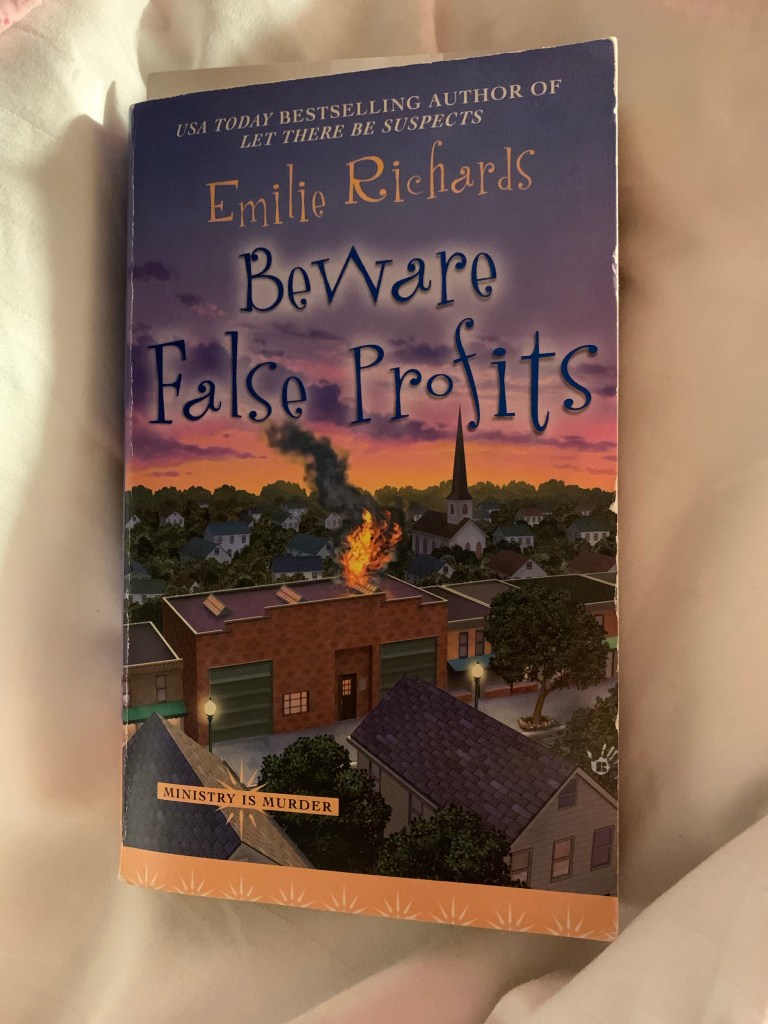
In a week that saw most of my “reading” actually be revisiting audiobooks that I have listened to before, mostly from series that I have already written about so it’s a good thing that this was really good – even if it’s a sort of rule breaker because it’s not a first in series book! This is the third in the Ministry is Murder series, which features a Minister’s wife in small town Ohio. There are five books in the series – the newest of which is from 2010. In Beware False Profits, Aggie and her husband’s trip to New York is disrupted when a member of their congregation goes missing on a work trip there. And when they get back to Emerald Springs, the mayor’s wife is murdered at an event for the local foodbank – which is run by the missing man.
What I really like about Aggie is that she has an excuse for snooping – as a minister’s wife she has an excuse for being involved in the locals lives – especially as you need to keep your congregation happy to keep your job. And that’s another reason I like the series – it’s an insight into a way of life. I nearly wrote a profession, but that felt wrong – even though Aggie isn’t the one with a vocation, it’s her husband. I should add that it’s definitely not a Christian cozy – because I read one of those at the end of last year and this doesn’t have the detail of the sermons or biblical verses to reflect of that that did. Anyway there are a lot of cozy crimes featuring bakers and small businesses and the like and although Aggie also has a side line in house flipping, the ministry side of things gives it a nice twist. And the actual mysteries that need to be solved are good too. All in all a very nice way to spend an afternoon or two on the sofa.
Now because these are an older cozy (and boy does it feel weird to be saying that about something that was published this century!) they’re not available in Kindle – so in the UK you’re likely to be looking at picking them up from Amazon or second hand. I found the first in this series in a second hand bookshop – I think maybe one at a National Trust house, but subsequently I’ve bought from Amazon when the prices have been acceptable – I see that the first two at the moment are insanely expensive there though. So maybe one to add to your list to watch out for the next time you’re mooching around a charity shop!
This week’s fiction book is a historical mystery that has been sitting on my Kindle waiting for me to read it for literally years. And as is so often the case, something I’ve been meaning to read for years turns out to be very good. So I’m owning up and writing about it!
So as The Ashes of London opens, the city is on fire. It’s 1666 and as the cover illustration suggests, the heart of the capital has gone up in flames. Among those watching St Paul’s cathedral going up in flames is James Marwood, who has been forced into a position as a government informer because of the actions of his printer father. In the aftermath of the fire he is drawn in to the investigation into a corpse found with his thumbs tied in a tomb that should have been empty. The investigation takes him back into circles that he would rather not be in but also brings him into contact with Cat Lovett. Cat is searching for her father but is also trying to escape from the people who are looking after her. But the secrets she is hiding are tied up with the answers that James needs.
Firstly an important warning: if you don’t read books with sexual violence in them, then avoid this. Spoiler alert, but in the interest of not letting people in for stuff they don’t want: there is an on page rape in this, which is over quickly but which forms part of Cat’s motivation going forward. I get why Andrew Taylor did it, but I wish he’d come up with another way of achieving the same thing. I’m going to read the second book in the series and I’ll update you if you can jump straight to that without missing too much background.
Now I’ve got that out of the way, I really liked the Restoration setting of this book and the slow drip, drip reveal of all the characters’ backstories. I don’t even think you need to know that much about the period to get the most out of it – as long as you know that Charles I was executed (in 1643) and that for nearly 20 years England was a republican commonwealth ruled by a Lord Protector. In 1660 the monarchy was restored and Charles II (son of the executed Charles) becomes king. And now I’ve told you do you do, and toh can get stuck into the intrigue and suspicion of the Restoration court, and in fact country. I liked the mystery, and the suspense and although ther is some violence and gore, it isn’t too graphic. If you’ve been a fan of the Tudor-set mysteries, and fancy a new scene then try this and if you do like it there are now four more books in the series. As I said at the top, I will read book two and take it from there.
As mentioned this has been on my kindle for ages and was actually part of the NetGalley backlog. But it’s on Kindle and Kobo for £2.99 as I write this and it should also be fairly easy to get hold of in paperback – Foyles have click and collect copies which is always a good sign!
Three books from my anticipated books post are out today – and for once I’m ahead of the game and have finished all of them. Why aren’t I saving one of to be in the running for a BotW post? Well one of them already has been and the other two are thrillery and have plots that I can’t really tell you too much about without ruining it
Let’s start with Tom Hindle’s A Fatal Crossing, which I read in basically three sittings, it’s just they were spread across ten days because I got distracted by Ashes of London. I requested this from NetGalley because it’s a murder mystery on a 1920’s cruise ship and but it’s actually quite hard to explain what’s going on without spoiling it all. Many of the passengers are on their way to an art fair in New York and as well as the murder there is a stolen artwork to deal with. And on top of that, you see it all through the eyes of Timothy Birch, an officer on board the ship who is running away from a tragedy at home but can never quite escape it. This is page turning and atmospheric and I thought I knew where it was going, but i was wrong. I might have figured it out if I hadn’t been convinced of my rightness and had thought a bit harder about the other possible options! It’s hard to tell though once you know – even if you go back and read again, you can never read it again like you don’t know!
From the 1920s to the present day and The Maid by Nita Prose. Molly is a maid at an upmarket boutique hotel. She knows that she’s not like everyone else – but now her gran is gone she has no one to explain human behaviour to her any more. So now she throws herself into her job – where her obsession with cleaning and etiquette as an asset. But when she finds one of the guests dead in his penthouse suite, she finds herself at the centre of a murder investigation where her personality quirks mean the police think she’s their prime suspect. But soon some friends she didn’t know she had are helping her to clear her name. Molly is one of the most unique narrators I have recently come across – and it’s definitely one of those cases where the reader can see things that Molly can’t. I was quite infuriated early on in the book by the way that Molly had been treated, but never fear, her situation was much improved by the end of the book – and without her changing her essential Molly-ness. This is maybe my favourite of the three. But then it’s also the one that I read last, so it could just be recency bias. I do think that this is the easiest to recommend though – I can see why it’s had so much buzz and has been picked out by Good Morning America and the New York Times. I think it will appeal to readers across genres in the way that The Curious Incident of the Dog in the Nighttime and Where’d You Go Bernadette did.
And finally, I have already written about The Christie Affair – it was last week’s book of the week and if you’ve already read that post, consider this your reminder to go and read a sample/buy a copy! If you’re only going to read one of two historical mystery picks, I’m struggling to decide which one to suggest, except that I think the Christie Affair is closer to the murder mysteries that it’s protagonist writes and A Fatal Crossing is less traditional in terms of genre rules when it comes to the resolution. So for me I found the Christie Affair more satisfying but a Fatal Crossing is potentially more thought provoking – or at least might generate more arguments at your book club!
But all three of these are good books and if it wasn’t January and we weren’t in the midst of an omicron wave I would say that all three would be the sort of book you could read on your sun lounger by the side of the pool. As it is, read them on your sofa wrapped in a blanket!
As I mentioned in yesterday’s BotW post, you may well come away from reading Vanderbilt wanting to know more about some of the people and situations in it. And I can help with that because this is not my first rodeo with this family or with American High Society in the Gilded age. So for today’s recommendsday, I’ve got a selection of books that tie-in in some way with some of the events or people that feature in Anderson Cooper’s book.
Lets start with the non-fiction, because that’s probably the short of the two lists. First of all is Empty Mansions by Bill Dedman and Paul Clarke Newell. I talked about this in my non-fiction Rich People problems post a couple of years ago. It’s the investigation into the life of a reclusive heiress, who wasn’t photographed for decades and who lived in a hospital for twenty years, despite owning mansions on both coasts of the US. Huguette Clark isn’t a Vanderbilt, but her family money was made at the same sort of time, she moved in the same circles and her family also had a penchant for building giant mansions. It’s mind boggling and she only died a couple of years back. Also mentioned in that 2019 post is The Unfinished Palazzo by Judith Mackerell, which features as one of its leading characters Peggy Guggenheim. Again, not a Vanderbilt, but another one of those big American families that you may well have heard of. Off the back of reading Vanderbilt, I’ve ordered myself Anne de Courcy’s The Husband Hunters, which is about the thirty year period where the British aristocracy looked across the pond to replenish their family coffers with American money by marrying American heiresses. I shall report back, but in the interim, may I suggest the tangentially related The Fishing Fleet, also by Anne de Courcy about the women sent out from Britain to India to try and snag a husband. Lastly, you can read Consuelo Vanderbilt’s own memoir – The Gitter and the Gold but I slogged through it last year, so you don’t have to. It’s a fascinating story, but she (and her ghost writer) aren’t the best at telling it and I definitely don’t suggest you read it first, because she doesn’t give you a lot of context about who the people are that she’s talking about, so you may well find yourself utterly lost or googling every few pages!
Let’s move on to fiction – and more particularly fictionalised real-lives, a corner of fiction that I really enjoy. In the later stages of the book, we see more of Anderson Cooper’s mother’s life. Gloria Vanderbilt was the subject of a notorious custody case when she was a child, but as an adult she was part of the group of women who Truman Capote called his Swans. I’ve read a couple of novels about this group – which probably means there are a stack more that I don’t know about. I read The Swans of Fifth Avenue by Melanie Benjamin back in 2016, before I knew much more about Truman Capote than you can get from the film Capote. And that fact made the reveal of how that little group blew up work really well although I was somewhat hazy about where the real life stuff ended and the fiction began! I read Swan Song by Kelleigh Greenberg-Jephcott a couple of years later – about the same group and the same events – and that was a BotW. In Swan Song you know what Truman has done quite early and you really see the consequences of his actions for the women concerned – you just need to stick with it beyond the initial few chapters which are a bit confounding until you figure out what is going on.
Downton Abbey prompted a surge of books set in the Gilded Age or featuring American heiresses, both in historical fiction and straight up historical romances. In the former category I’ve read My Last Duchess (known in the US as The American Heiress) by Daisy Godwin who is the writer behind the TV series Victoria. Cora Cash is American heiress whose marriage is going really quite badly and who is also having to navigate British High Society with very little help and a lot of people willing her to fail. I preferred The Fortune Hunter which she wrote a couple of years later and which is about Sisi, the Empress of Austria, but that doesn’t really fit this post does it? And then there’s Theresa Anne Fowler’s A Well-Behaved Woman, which is about Alva Vanderbilt and her quest to be queen of society. I found it tricky because everyone in it is really quite unlikeable – and it doesn’t have the humour that can make reading about horrible people fun, but I know that other people enjoyed it more than I did.
On the romance front, Eloisa James’s My American Duchess was one of the first to hit this trend – it came out in 2016 and I reviewed it for Novelicious back in the day. It’s got a heroine who has already jilted two fiancés and a hero who wants to marry a Proper English woman. You know where this is going, except that it’s more than just the fish-out-of-water, comedy of manners, forbidden love novel that you expect from the blurb. I haven’t reread it since, but at the time I said that it wouldn’t be a bad place to start if you want to dip your toe into the historical romance genre, and I would stand by that, because Eloisa James in this period was one of the most consistent of the romance genre. Joanna Shupe has written a couple of series set in Gilded Age New York, but my mileage with her varies a little – she tends towards more melodrama than I like and her characters tend to do abrupt about faces that annoyment. But I did quite like Baron, from the Knickerbocker Club series, which features a fake medium who needs to seduce a railroad millionaire in order to stop him from exposing her latest scheme and also Prince of Broadway from the Uptown Girls series which has a casino owner and the daughter of a family he is trying to ruin financially. More recently there’s Maya Rodale’s An Heiress to Remember (published in 2020) which sees an American heiress return to New York after her divorce to try and claim her family’s department store for herself. Only trouble is that it’s being run by the man whose heart she broke when she married a duke. It’s the third in a series – but I haven’t read the others, so I can’t speak to whether they work as well as this one did (for me at least).
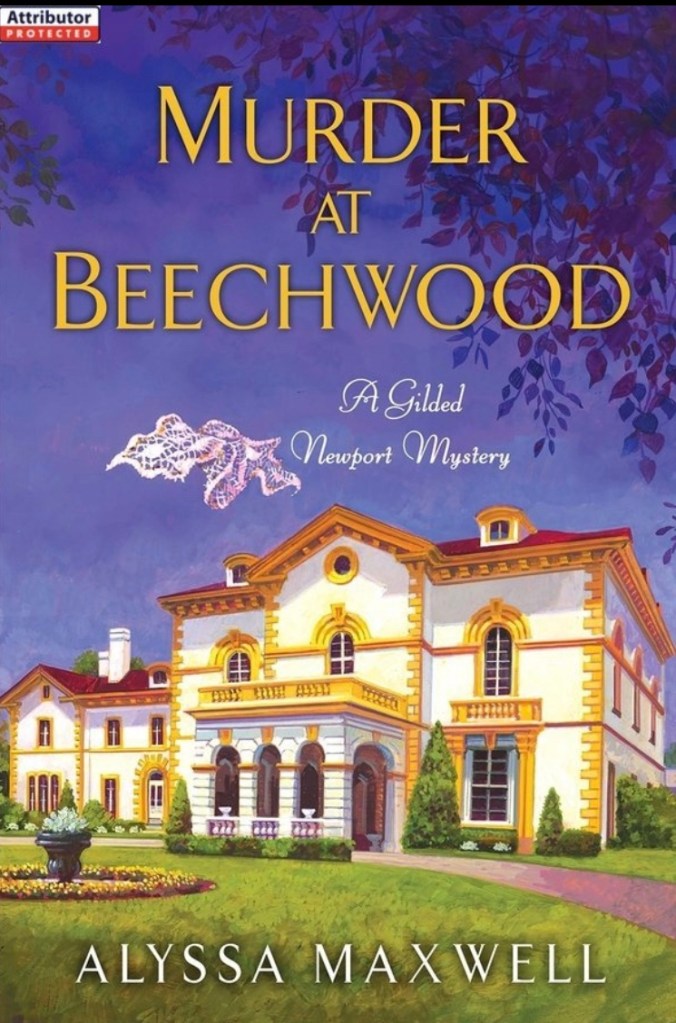
And finally, there have also been a couple of murder mystery series set in and around the mansions that the Vanderbilts and their rivals built in Newport, Rhode Island. Of the ones that I’ve read, the best was Murder at Beachwood by Alyssa Maxwell, which is a historical mystery set in 1896 with a debutant heroine who is a fictional cousin of the Vanderbilts (an actual Vanderbilt connection! yay me!) who ends up trying to solve a murder after a baby is abandoned on her doorstep. It’s bit meladramatic – but that works with the time setting. It’s also the third in a series, and writing this has reminded me that I haven’t read the other two and I’m not sure enough of the Anderson Cooper book is set in Rhode Island for me to be able to use it for the state if I do the 50 states challenge again this year.
So there you are, a monster Recommendsday post with – hopefully – something for everyone. Happy reading!
Amid the flurry of end of year posts, here is something completely different and that has been months in the making. It’s taken me a while to get this down in writing in a way that I’m anywhere near happy with and I’m still not sure I’m quite there. So why am I finally posting it now? Well, I was writing my end of 2021 post and it was starting to touch on some similar ground, so I thought I ought to get this out there first.
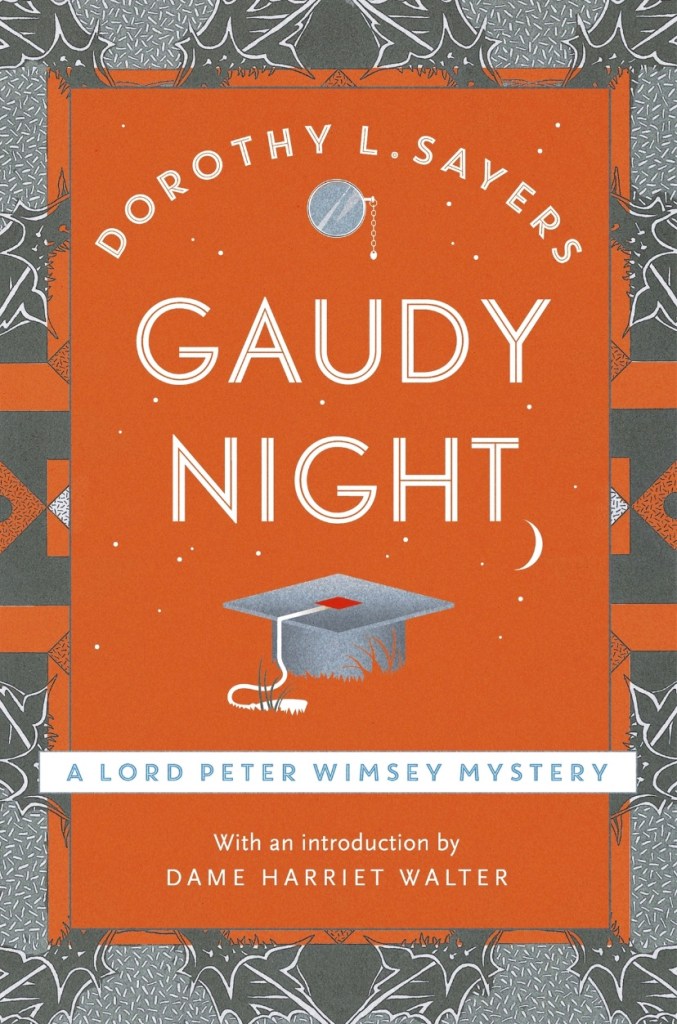
One of my very earliest posts on this site was about my love of Peter Wimsey. And over the years since then I have reread and relistened to the series over and over. But until the summer it had been years since I had Gaudy Night – in full at least and not as a radio play. But then I treated myself to the audiobook in August and listened to it. And I was enjoying it so much that I got the book off the shelf too. And then I realised that I was behind on my podcasts because I wanted to carry on listening to Gaudy Night rather than listening to them. And when I got to the end, I started all over again. And now I have a lot to say about it and Spoilers ahoy, not just for Gaudy Night but for most of the rest of the Wimsey books. Be warned.
A reminder, if you need it, that Gaudy Night is the third of four books featuring Harriet Vane and Peter Wimsey. It is the book where Harriet’s relationship with Peter moves towards a resolution. The final book of the quartet sees the pair get married and Gaudy Night is the bridge that explains how they got from the tetchiness of the murder at Wilvercombe (which was already a step on from her mistrust and confusion in Strong Poison) to a point where Harriet has realised that she is in love with him and that taking a chance on another relationship might be the right thing to do.
She fell a victim to an inferiority complex, and tripped over her partner’s feet. ‘Sorry,’ said Wimsey, accepting responsibility like a gentleman. ‘It’s my fault,’ said Harriet. ‘I’m a rotten dancer. Don’t bother about me. Let’s stop. You haven’t got to be polite to me, you know.’
Worse and worse. She was being peevish and egotistical. Wimsey glanced down at her in surprise and then suddenly smiled.
‘Darling, if you danced like an elderly elephant with arthritis, I would dance the sun and moon into the sea with you. I have waited a thousand years to see you dance in that frock.’
‘Idiot’ said Harriet.
Have His Carcase
I have had the audiobooks of a lot of the other books in the series for years. In fact Busman’s Honeymoon was one of my earliest picks on Audible and I soon picked up as many of the others as I could that were read by Ian Carmichael. But he didn’t read all of them, so I filled in the gaps using radio adaptations of the series – again starring Ian Carmichael as Peter. I had Murder Must Advertise read by someone else, and Five Red Herrings read by Patrick Malahide (in a delightful crossover with my love of the Inspector Alleyn TV adaptations) but until thus summer I didn’t have either Have His Carcase or Gaudy Night in full on audio. But as I was working through audiobooks at some pace, I decided to take a chance on the Have His Carcase that Audible were offering. Now I have reread Have His Carcase a few times – because I think it’s a particularly well worked mystery – but I’d stuck to the radio play version because of my attachment to Ian Carmichael narrating. But actually after a little bit I got used to Jane McDowell, and although the code breaking section makes no sense to me as audio (it’s hard enough on paper), because it was told from more Harriet’s side than Peter’s the female narrator grew on me. So I bought Gaudy Night.
The thing it is easy to forget reading now is that Sayers spaced out the Peter and Harriet with other novels with just Peter and the poor readers at the time had no idea what was going to happen – if anything – between them. So when you realise Strong Poison (1930) was followed by Five Red Herrings (1931), it adds the context that perhaps the reason Peter has gone off to Scotland is perhaps to clear his head after Harriet’s trial. Have His Carcase is next (1932), when Harriet finds a body on the beach and Peter comes down to solve the crime (as she thinks) but also as the reader knows, try and make her situation better. Then it’s Murder Must Advertise, which focuses on Peter in his advertising alter ego but with a blink and you’ll miss it nod to what is going on with Harriet.
Wimsey put down the receiver. ‘I hope,’ he thought, ‘she isn’t going to make an awkwardness. You cannot trust these young women. No fixity of purpose. Except, of course, when you particularly want them to be yielding.’
He grinned with a wry mouth, and went out to keep his date with the one young woman who showed no signs of yielding to him, and what he said or did on that occasion is in no way related to this story.
Murder Must Advertise
Then the following year was the Nine Tailors before (at last) Gaudy Night in 1935. And early in Chapter 4 of Gaudy Night, Sayers sets out for you what has been going on in the background all along. I’m struggling to think of another series with a moment quite like it – where an author says “by the way, while these mysteries were going on, there was also something I didn’t tell you about”.
Was it too late to achieve wholly the clear eye and the untroubled mind? And what, in that case, was she to do with one powerful fetter which still tied her ineluctably to the bitter past? What about Peter Wimsey?
Gaudy Night
And then across the course of 500 pages, Harriet tries to solve a poison pen mystery at her old college, but decide exactly what about Peter Wimsey. She works her way through her hang ups after her disastrous relationship with Philip Boyes and starts to come to a better understanding of who she is and what it is about her that has caused Wimsey to propose to her once a quarter for years on end. And the reader understands him better for it too.
I have listened to the radio play version of Gaudy Night more times than I care to count, because even though Ian Carmichael is really quite old by that point, he doesn’t sound it and it is such a clever mystery as well has having a great setting in Oxford. But as I listened to it unabridged, I realised both how cleverly that radio adaptation had been done and how much had been taken out from the original novel. Reggie Pomfret’s whole plot strand is neatly snipped out and part of the evolution of Harriet’s feelings goes with it. And because it is a radio play you also lose the internal side of Harriet’s world and of course the glorious set up explaining what had been going on in the background with Harriet and Peter was missing too – because how on earth do you jump through a time line like that in a radio play?
After I finished Gaudy Night, I bought the Jane McDowell Busman’s Honeymoon and listened to that as well for the contrast with the Carmichael that I have listened to so many times. And it was interesting, but then I went back to Gaudy Night again. And again.
And so here we are, several months on. And I’ve probably listened to it in full half a dozen times. And my edited highlights half a dozen more: that chapter four description of the three years between Wilvercombe and Harriet’s return to her old college for the Gaudy. Her first encounter with St George and her subsequent discoveries about Peter’s relationships with his family – and then Peter’s reaction to that. His arrival in Oxford and their afternoon on the river. The chess set. The resolution of the mystery. The resolution. What it is about Gaudy Night that means it is what my brain needs at the moment I don’t know. But it is.
I’ve written bits and bobs here about the pandemic, but it’s been a rotten nearly two years for everyone. And it turns out that my brain had decided that the best way to get away from what’s happening in the real world and to help it relax, is to listen to the same audiobooks over and over again. Gaudy Night. Busman’s Honeymoon. Sylvester. These Old Shades. Artists in Crime. Death in a White Tie. And that’s ok by me, even if it does mean I’m months behind on podcasts I previously listened to religiously. But hey. These aren’t normal times. As is evidenced by the fact that I’ve just written the longest thing I’ve ever put on this blog to dissect my obsession with Peter Wimsey and Harriet Vane. Now if you’ll excuse me, Harriet is trying to write a letter to Peter about St George…








 Verity Reads Books (lots of them)