LGTBQIA+, Recommendsday

Recommendsday: Pride Month 2026

It’s the last Wednesday of Pride month and so it’s time for some pride month reccs before it’s too late.

How to Fake It In Society by K J Charles
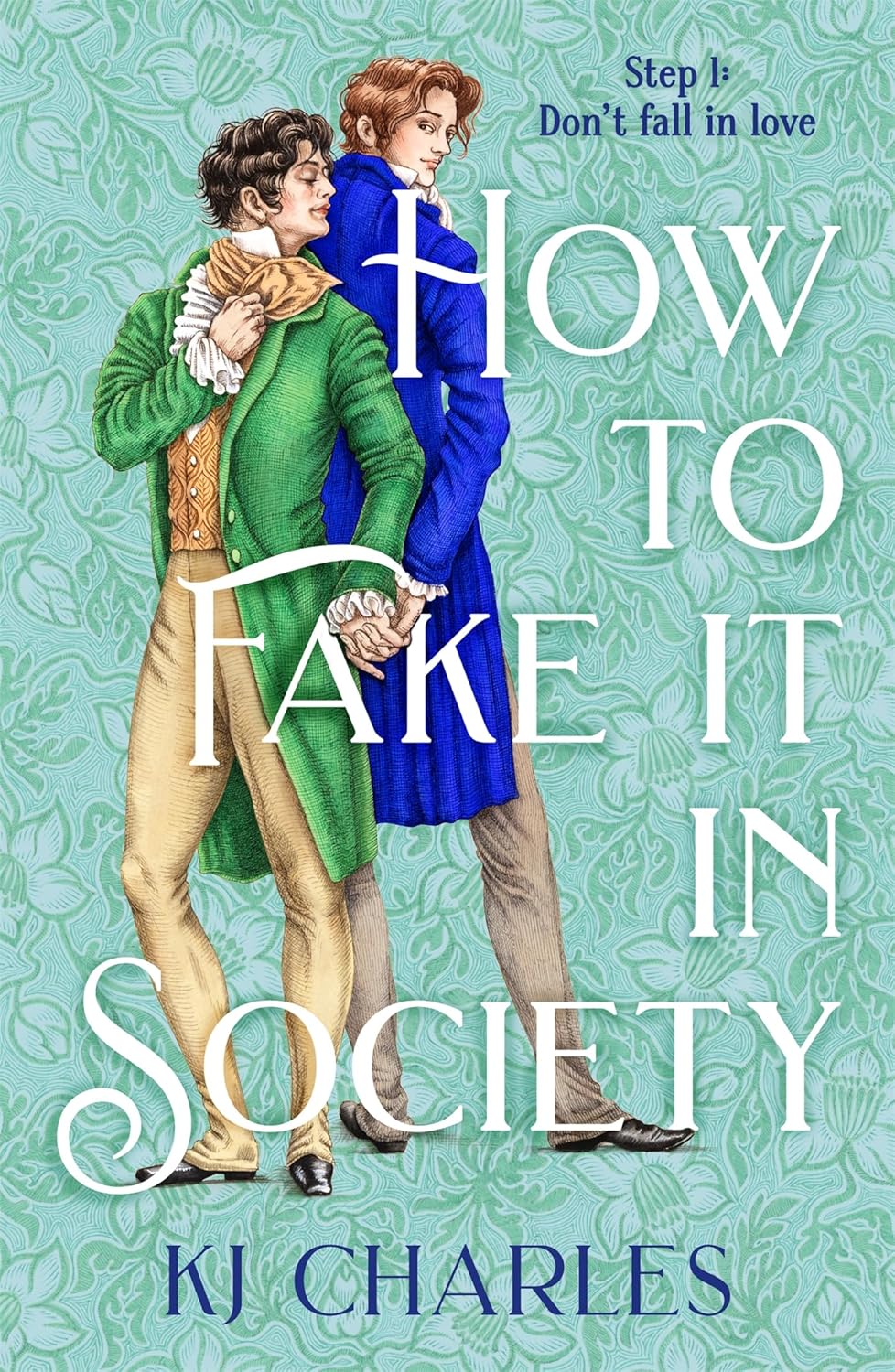
Cover of How to Fake It in Society

This was one of my purchases while writing the offers post and it was so much fun. Titus Pilcrow is a younger son who’s been making his own way in the world as a shopkeeper, right up until he marries a wealthy woman on her deathbed. Now he’s got more money than he could have dreamed of – and suddenly people are coming out of the woodwork to try and get a share of it. The Comte de Valois is one of them. Nico was courting the woman that Titus married until not long before her death – and he really needed that money. So he inveigles himself into Titus’s life to help him accustom himself to his new life – and to try and make some money out of it. Except that he finds himself liking Titus a lot more than he expected. I read this in no time at all – started it on the train to work, carried on reading it at lunchtime, then on the train home and finished it in the evening. K J Charles does a really good line in Adventurers – see also The Gentle Art of Fortune Hunting – and I love that as a trope in romances (See also The Masqueraders) and I only wish I’d been able to pace myself and made it last longer!

The Gay Best Friend by Nicolas DiDomezio
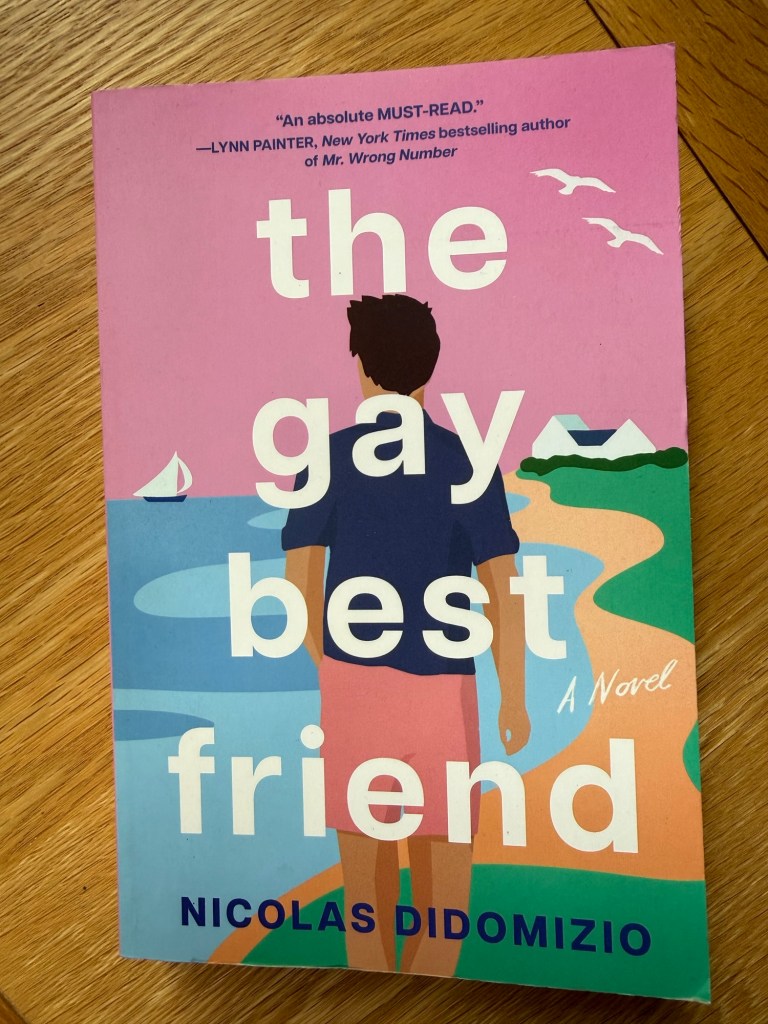
I’ve had four goes at writing the plot summary for this – and all of them have been unsatisfactory. But basically Domenic is caught in between his childhood best friend Patrick and Patrick’s fiancée Kate who is now maybe a closer friend that Patrick. Domenic is invited to both the stag do and the hen party and both Patrick and Kate want him to be on their side and report back (or lie if necessary). Domenic is also just broken up with his own fiancé and had to cancel his own wedding. Unexpectedly at the bachelor party is Bucky, a professional golfer and possibly Dom’s replacement as Patrick’s best friend – who was meant to be playing in a PGA tournament that weekend but is “injured”. I didn’t really like any of the characters much – especially not Domenic, who is A Lot. He’s living a life he doesn’t want, not at all over his childhood issues and is such a people pleasing doormat I wanted to shake him. At least 90 percent of his problems are of his own making – and add on to that that he keeps getting drunk and spilling other people’s secrets and it’s just really hard to have any sympathy with him. I’m not going to lie, I read this in an evening, but the more I think about it, the less I like it and the more it annoys me – which is a shame because I really liked the blurb for this – and also for some of DiDomizio’s other books which I’m now not sure I want to risk!

Puck by Samantha Allen*
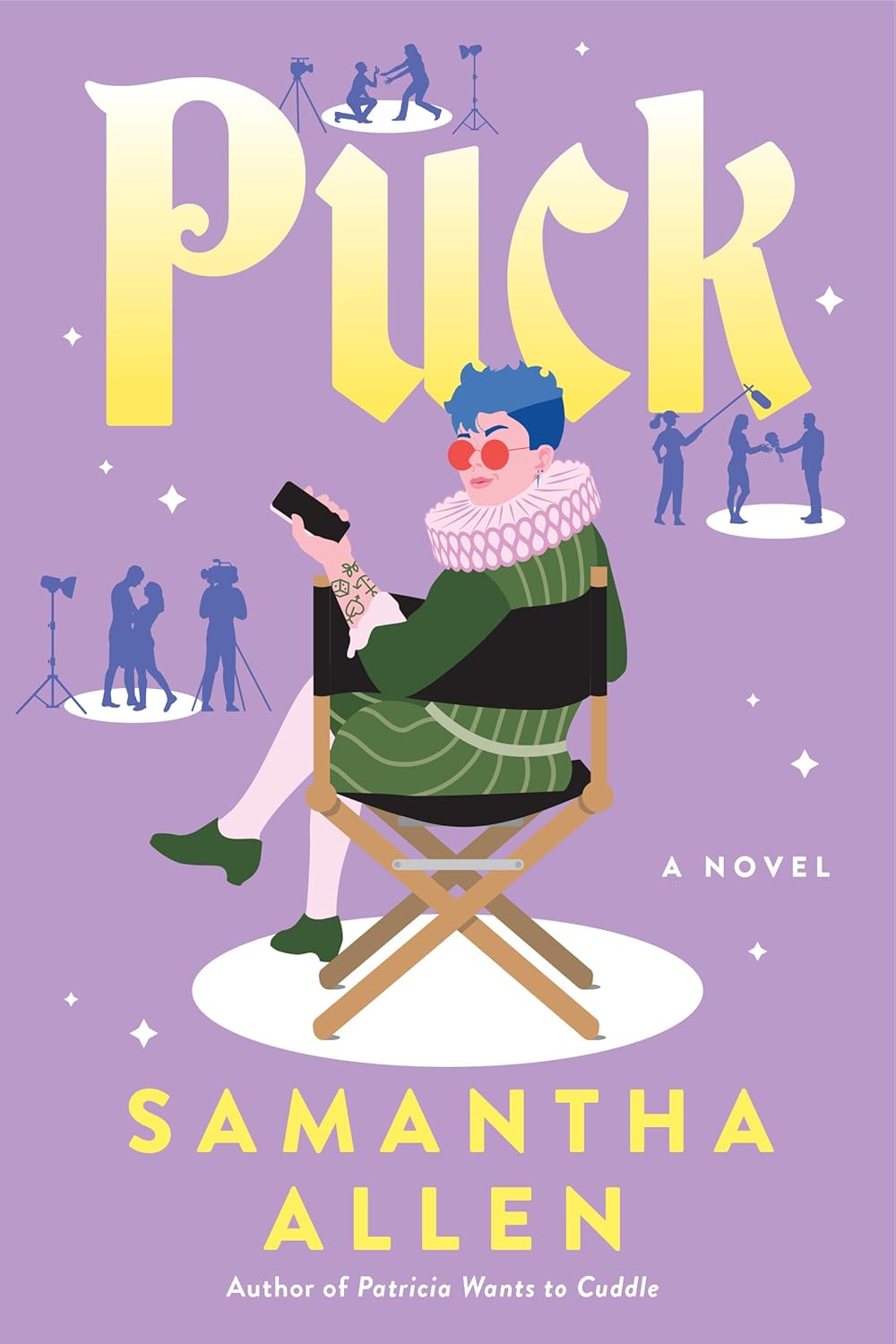
Cover of Puck

Puck is a reality show producer on a dating show called Homewreckers, where they specialise in putting couples together and then ripping them apart again. So when the go to their college best friend Mia’s wedding to the man Puck is convinced is the wrong guy, they decide to deploy the skills from their day job to stop the wedding. The only person standing in their way is Robyn, the maid of honour and Mia’s new bestie. This is described as Midsummer Night’s Dream inspired and yes there are two couples who Puck is meddling with so that all checks out. The problem really is that Puck isn’t really very likeable and that the romantic plot for them seems shoe-horned in as a bit of an afterthought. Robyn and Puck seem to be hate banging more than anything else as they barely exchange a pleasant word with each other. I do wonder if the romance was addd to try and expand the potential readership (we romance readers sure are voracious) because the rest of the plot definitely more well developed even if I didn’t really enjoy it.

And that’s your lot – I’m sorry it’s a bit of a mixed bag in terms of whether I liked them or not, but as with so many books, your mileage may vary. The common theme between The Gay Best Friend and Puck Hard to Like Main Characters and my tolerance for that is low at the moment. But if you are better with that than me at the moment, then I think The Gay Best Friend is the one to try – it’s sort of rich people problems adjacent and Dom has at least maintained his friendships, which Puck really hasn’t.

Happy Humpday!
bookshops

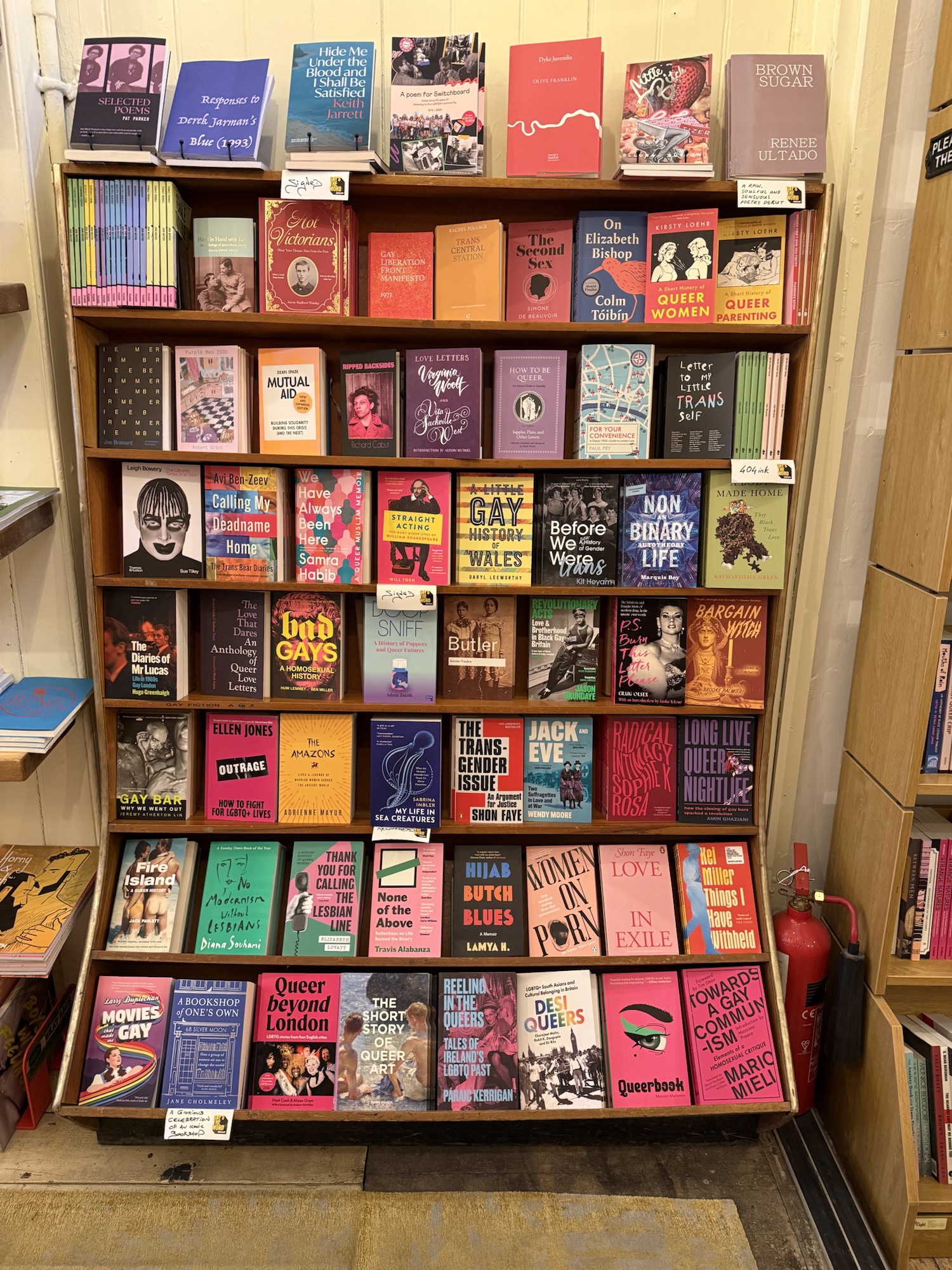
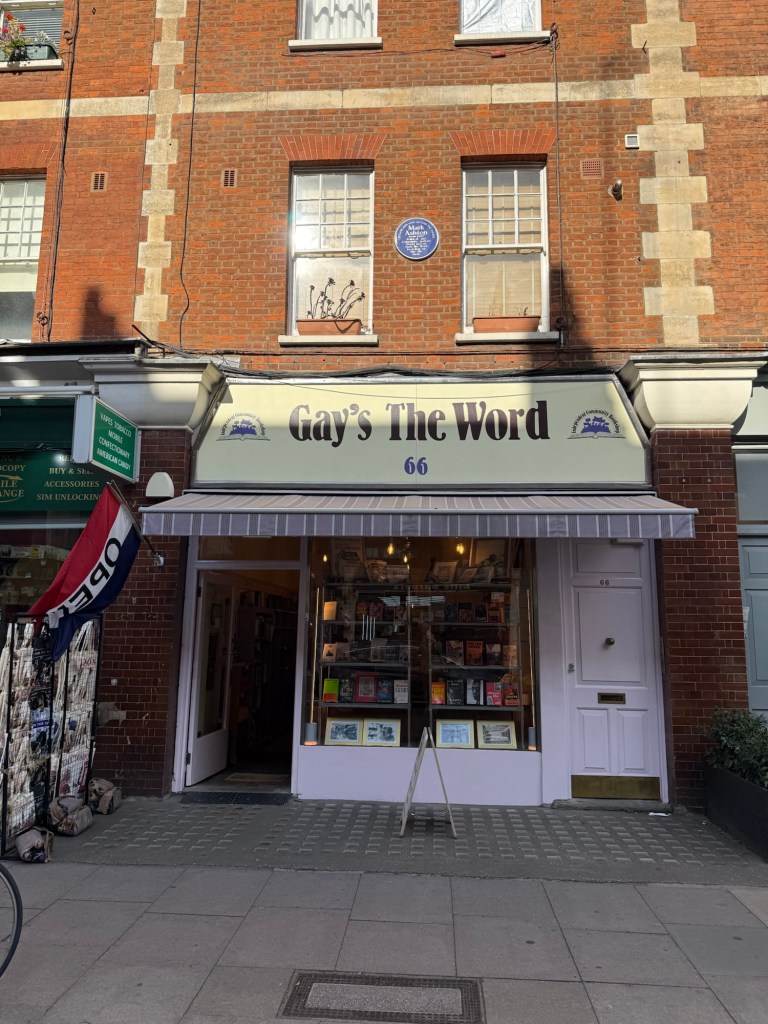
Books in the Wild: Gay’s The Word

Happy Saturday! Independent bookstore week starts today *and* it’s Pride Month, so I thought Books Incoming could wait another week so that I could write about Gay’s The Word instead.

Gay’s The Word opened in 1979 and says it’s the UK’s oldest LGTB+ bookshop. It’s on Marchmont Street – just down the road from Judd Books as you head towards the Brunswick Centre, which is home to Skoob and also Brunswick Bookshop, which makes for a very easy four bookshop afternoon should that sort of thing be your jam – we know that it is mine. It’s not a big store, but it’s got a deceptively large amount of books in there, many of which I haven’t ever spotted in an actual shop before which is always a delight.

I should say that I’m annoyed with myself because I didn’t take as many photos as I should have on my two visits in the last few weeks, but hey ho, I can’t be perfect all the time. I’m particularly that I didn’t take a photo of this shelf this week – because there were definitely more biographies on there this week and this one doesn’t actually have the book that I bought on it.

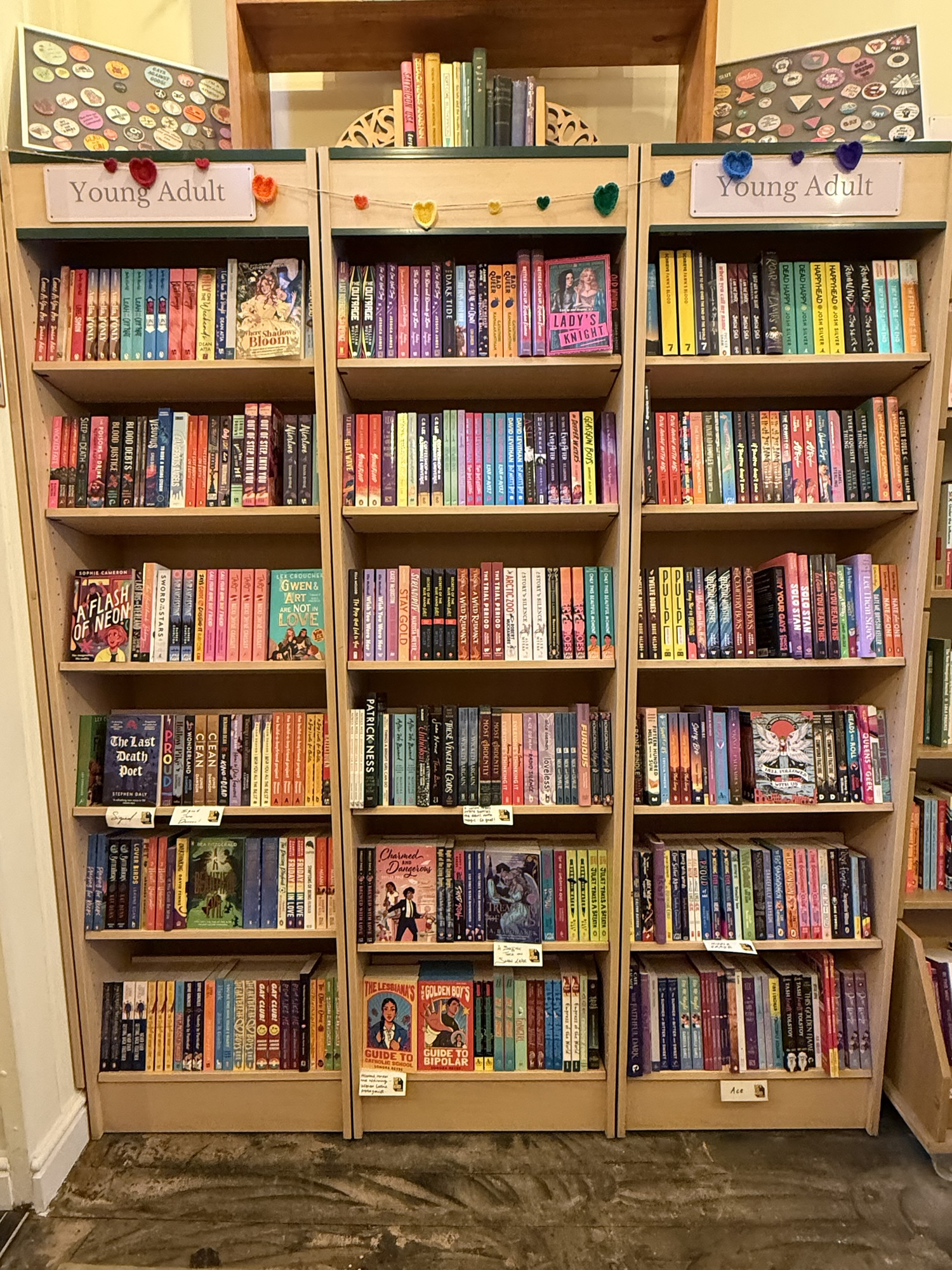
I’m not a big Young Adult reader, but I have friends who are who I will be dragging down here to have a look because this is big, varied and again had loads of stuff I hadn’t seen before, even though I feel llike the algorithm serves me a lot of YA.

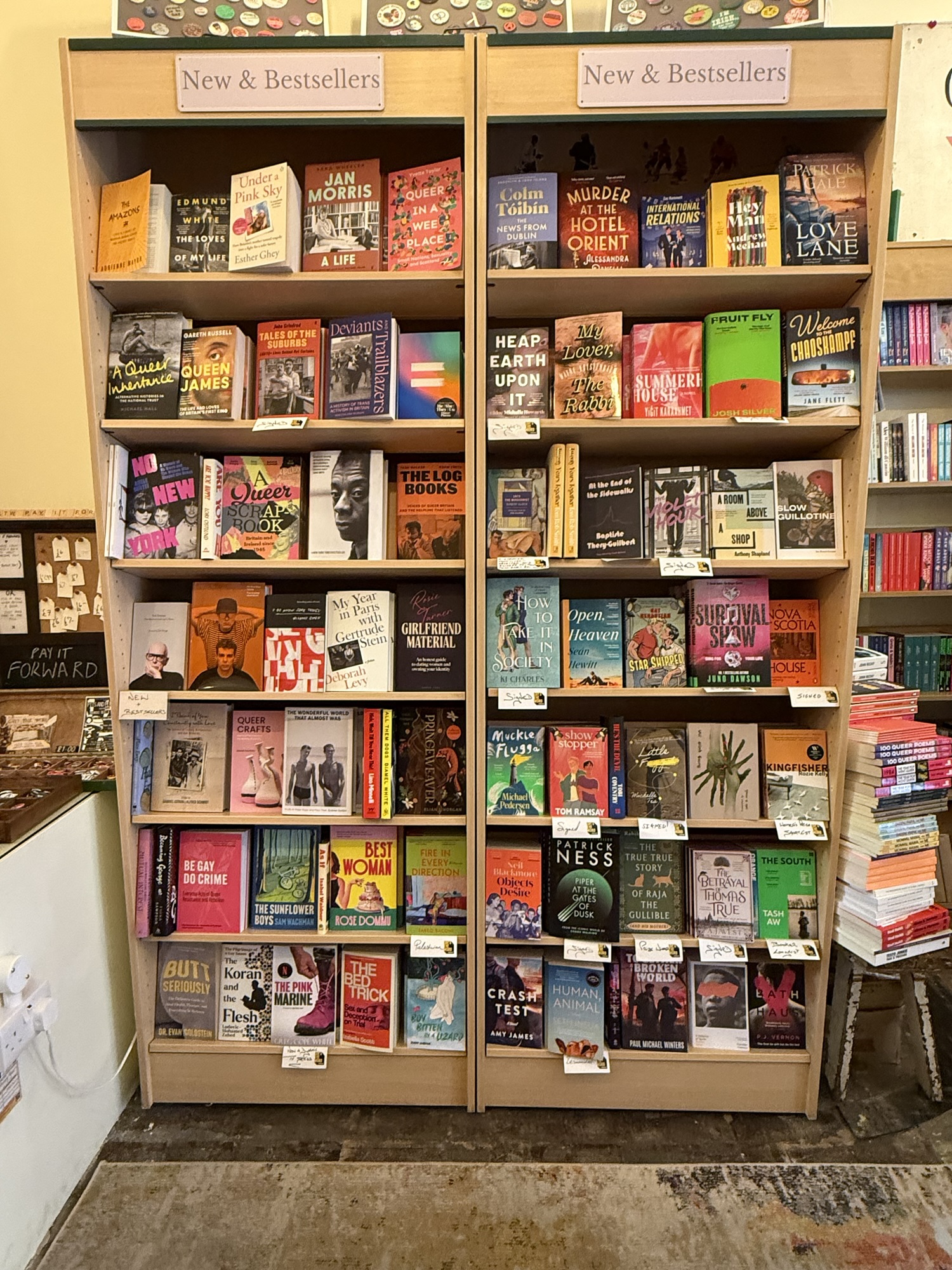
This is also a few weeks old – this week it had Father Material on it as well as Star Shipped, and K J Charles‘s How To Fake It In Society (which is a hard back or I would have been tempted). I’ve got the Rose Dommu on the (virtual) shelf as well as Murder at the Hotel Orient. On the top shelf, International Relations – a m/m fake dating romance with a diplomat who needs a husband to get an ambasadorial post – looks right up my street and in the middle Show Stopper – about teens at a musical theatre competition is the one I’m going to be telling my YA reading friends about. On the non-fiction side, I’m waiting for A Queer Inheritance – which is about queer lives at properties that are now run by the national trust – to come out in paperback, and I also really want to read Queen James but it’s just as chunky in paperback as it was in Hardback.

And that’s your lot for today. Go visit an indie for bookshop week, and for double points buy a book by an LGTBQ+ author. And if you’re in or around Sheffield this pride month, don’t forget Juno Books too.

LGTBQIA+, Recommendsday

Recommendsday: Non-fiction for Pride Month

It’s the final Wednesday in June, so for the last Recommendsday of the month I’m following on from last weeks’ fiction picks for Pride Month, with some non-fiction option.

Young Bloomsbury by Nino Strachey

Let’s start with something that I finished last week.This is a group biography of the second generation of the Bloomsbury Group, who joined in with the first wave in the 1920s when people like Virginia Woolf and Lytton Strachey were at the height of their powers and influence. There are a lot of people in this – many of them named Strachey – so it can some times get a little confusing, but it’s a very readable look at some of the lesser-spotted Bloomsburies and what they got up to. Very much an overview, and so I’m now off to see what there is on some of the more interesting figures in this that I didn’t already know about!

Wild Dances by William Lee Adams

This is a slightly strange one to write about – because William is actually a work colleague! As well as working with me, William is a massively popular Eurovision expert who runs a YouTube channel and blog. How did he get from small town Georgia (the US state, not the country) to here? His memoir will tell you and it’s quite the journey. Reading this was the first time I read a memoir written by someone who I know in real life, so that was slightly disconcerting experience. But the book is really powerful and worth reading even if you don’t like Eurovision.

I’ve already recommended a load of really good non-fiction that fits into their category too – like The Art of Drag – which you can see in the photo behind William’s book; Legendary Children – about RuPaul’s Drag Race’s first decade; Fabulosa – about the secret gay language Polari; and Harvey Fierstein’s memoir I Was Better Last Night. And currently on the pile waiting to be read, I have Queer City – about the history of gay London, The Crichel Boys – about a literary salon adjacent to the Bloomsbury group; and RuPaul’s memoir The House of Hidden Meanings. I’m also looking out for Bad Gays – looking at overlooked gay figures in history, and Hi Honey, I’m Homo – about queer comedy and the American sitcom.

Happy Wednesday!

LGTBQIA+, Recommendsday

Recommendsday: Fiction for Pride Month

Now we’re through the quick reviews and the kindle offers, I thought I’d do this week’s Recommendsday with some fiction picks for Pride month. And it turns out, I’ve already read and recommended a lot so narrowing the field down was the tricky bit – but I’ve given it a good go.

Now a lot of the stuff I’ve read the most recently has been romance – and I’ve told you about loads of them already. But that’s not going to stop me from reminding you about some of my favourites. So there’s Alexis Hall’s Boyfriend Material, K J Charles’s Secret Lives of Country Gentlemen and the Bright Falls Series. And of course it’s just a few weeks since Cat Sebastian’s You Should Be So Lucky was Book of the Week.

Talking of recent books of the week – there’s Mona of the Manor and in fact the whole of Armistead Maupin’s Tales of the City series. I struggle a lot with comps for these because they’re just so wonderful and the early ones uniquely capture the moment that they were written in – San Francisco in the mid-1970s. But another book that captures the moment that it was written in is Christopher Isherwood’s Goodbye to Berlin – a fictionalised version of the author’s time in Berlin in the dying days of the Weimar Republic. Written a couple of years after his return, it was published in 1939. If you’ve read many/any books set in 1930s Berlin then this is worth a read even if only to see how it was seen at the time.

I’m hopping around a bit, but I’m going back to YA for a second – as well as Heartstopper, Aristotle and Dante Discover the Secrets of the Universe (which has a sequel) Red, White and Royal Blue, Our Own Private Universe and The Gravity of Us, there is What if it’s Us which I haven’t read yet, but which comes highly recommended by my friend Tom.

And that’s all I’ve got today – but have a great Wednesday!

Book of the Week, LGTBQIA+, non-fiction

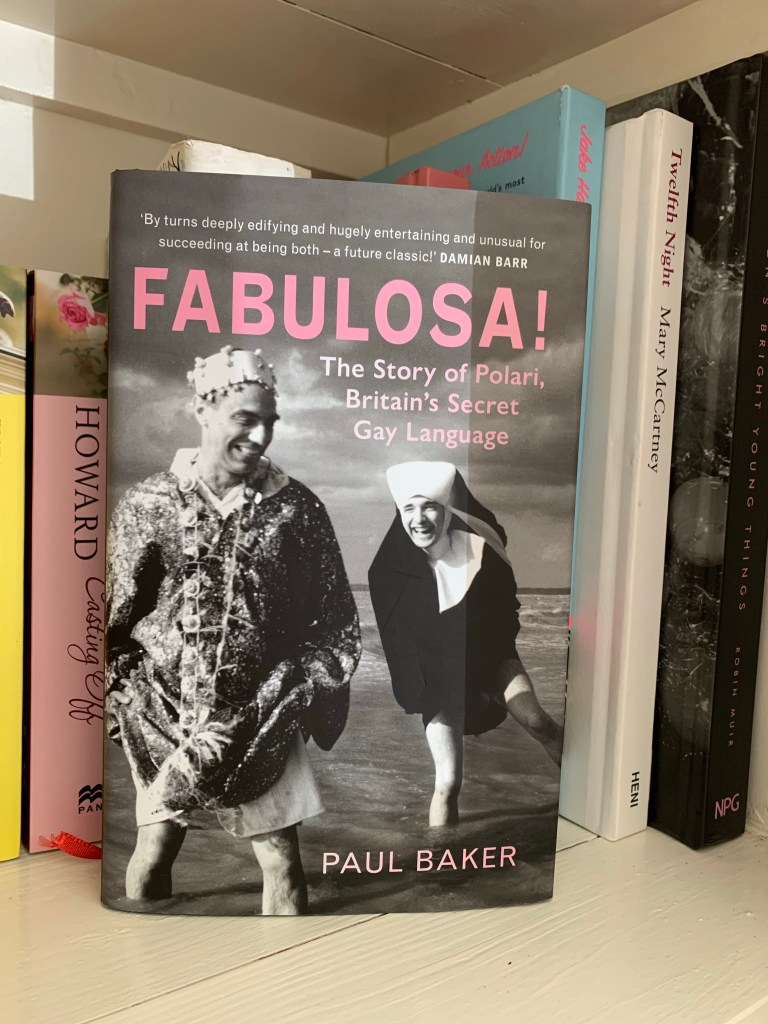
Book of the Week: Fabulosa!

A few options under serious consideration from last week, but in the end I settled on Paul Baker’s Fabulosa! because it was really, really good and I’m not sure it will have come onto people’s radar. So this week’s BotW could be seen as the latest in a line that has already included Legendary Children and Diary of a Drag Queen – and also Art of Drag – which you can actually see in the background of my photo below.

In case you don’t already know, Polari is a language that was used mostly by gay men in the first half of the twentieth century. It had a brief moment in the limelight in the mid 1960s when it featured in Julian and Sandy sketches on the radio show Round the Horne, and then dropped away again. In Fabulosa! Paul Baker examines the language’s roots – in Cant, dancers’ slang and Lingua Franca – the reasons why it was spoken and the reasons for its decline. Baker is a linguistics professor and the foundations for the book are from of his PHD research – and interviews conducted with surviving speakers of Polari.

This is part linguistic study, part social history and really very enjoyable. There are a fair few word which crossed over into common usage from Polari – as well as the origins of a few of the words you may have encountered in Drag Race. One of the main roles for Polari was a means of communicating with a level of camouflage – but it’s hard to work out at this distance how successful that was. Baker is very frank that it was hard to find people who spoke it to interview, and there is very littl documentation about it and so it’s hard to work out how Polari was actually used – and whether it ever reached the level of a language rather than a variety, and whether people who didn’t speak Polari would have recognised it as something spoken by the gay community and been able to expose this and thus defeat the object.

IF you’re interested in language or social history – or both, this is well worth a look to discover a hidden part of the recent past. I bought my copy from Foyles – where the hardback is now out of stock but they do have the paperback, but it’s also available on Kindle and Kobo. You’ll probably need a reasonably large or specialist bookshop to be able to wander in and pick up a copy.

Happy reading!

And one last bonus – here are Kenneth Williams and Hugh Paddick reviving Julian and Sandy – on camera for a BBC programme in the late 1980s, shortly before Paddick’s death. Both this and the clip above are discussed in the book.