book round-ups, non-fiction, Recommendsday

Recommendsday: Rich People Problems – Non-fiction Edition

Regular readers of the blog may be aware that I’m somewhat fascinated by the interwar period.  I love Golden Age crime novels, like my beloved Peter Wimsey, one of my all-time favourite novels is Laurie Graham’s Gone With the Windsors and I’ve read a lot about of some of the notables of the period  – some of which I’ve written about here before – like Flappers, Bright Young People and Queen Bees.  And after a recent jag of books about the era (and slightly beyond), now seemed like an ideal time for a bit of a round up of the best bits of the non-fiction.  You’ll hear more about the fiction anon…

Empty Mansions by Bill Dedman and Paul Clark Newell JrCover of Empty Mansions

This is another one of those books that I’ve wanted to read after I saw the author interviewed about on the Daily Show before Jon Stewart left and have recently got around to reading (see also: Jim Henson) and it is really something.  Huguette Clark died in hospital in 2011 at the age of 104. The fact that she died in hospital is about the only “normal” thing about her life. She was worth $300m. She’d been in the hospital for 30 years. She hadn’t been photographed – in public at least – for nearly twice that. Pulitzer prize-winning journalist Bill Dedman and one of Huguette’s cousins, Paul Clark Newell Jr, look at her life, her family’s fortune and why she retreated to the confines of one room (and progressively smaller one at that) of a hospital for so long when she had apartments and riches that most people can only dream of.  And it’s one hell of a ride.  I read it as an ebook, which is good because it’s long and dense and has footnotes that you might want to flick back and forth to. As well as being fascinating it leaves you with lots of things to ponder – why did she retreat from public life in the 1930s? Was she exploited by the hospital or her carers? And what do people who have made huge fortunes owe to the people and the towns they made the money off? Well worth a look.

The Riviera Set by Mary S Lovell

Hardback of The Riviera Set

Want to know how the French Riviera become the playground of the rich and famous?  This book will tell you.  Lovell’s book starts by introducing you to Maxine Elliott and showing how she established herself as one of Edwardian society’s notable hostesses before building Chateau de l’Horizon, the modernist villa at the centre of the book.  Between the wars, Maxine’s house hosted all the notables of the time – the Churchills, the Windsors, Noel Coward and more – and after the war it transitioned into a party house for the Hollywood set under the ownership of Aly Khan.  I learned new things about some familiar faces from the interwar years – as well as being introduced to a 50s and 60s jet-set that I wasn’t really very knowledgable about.  This mixes royal history, political history and Hollywood history as it shows how the Riviera evolved through the years – although it stops well before the coast became the exlusive playground of oligarchs and the super rich.  Very readable and just gossipy enough. I liked it so much it’s still on my downstairs shelves, nearly two years after I first read it.

Chanel’s Riviera by Anne de Courcy

hardback copy of Chanels Riviera

Once you’ve read about Maxine, go straight on to Anne de Courcy’s new book and see what happened to the Riviera when the Second World War hit it.  The Lovell – which focuses on the villa and the rich – covers the World War Two in one chapter, mostly about how everyone got out.  Chanel’s Riviera will fill in the gaps – and make sure that you don’t go away with the idea that the Riviera wasn’t really affected by it all.  There is plenty about Chanel herself in here, mostly around her time on the Riviera and her friends there, but there’s a lot more detail about the more normal people down there – and not just the rich.  There are expats who had moved down there for their health and the people who had moved down there to work for them or with them.  This one only just came out – it’ll get a place on my shelves just as soon as I get it back from my mum…

The Unfinished Palazzo by Judith Mackrell

Cover of The Unfinished Palazzo

This is a group biography of sorts of three very unconventional for their time women who all owned the titualar Venetian Palazzo during the twentieth century. I found this while scouring my shelves looking for something similar to The Riviera Set after reading that – and it even has some crossover in the cast list (if you know what I mean!), as Doris Castlerosse is a principle figure in this after being a side character in the Lovell.  Luisa Casati was what probably what we would consider now to be a performance artist – albeit one with a pet cheetah. Doris Castlerosse was a socialite who married money and was close to Winston Churchill. And Peggy Guggenheim was an heiress who renovated the building and used it to showcase her collection of modern art (yes, one of those Guggenheims).  Although this was less satisfying than the Lovell overall,  and would serve you well as an entry point into any of their lives.  I would happily read more about any one of the women in this.

So there you have it.  Four more books to add to the list.  This has been mostly European focused – even Huguette – who was part French and spoke with a French accent!  If you’ve got any recommendations for more stuff about America or the rest of the world in this period, hit me up in the comments. Equally if you’ve got an historical rich people problems novels that you think I should read let me know – because they are also my catnip.

Happy Reading!
American imports, Book of the Week, memoirs, non-fiction, Uncategorized

Book of the Week: Southern Lady Code

I had a really lovely week of reading again last week. And there were difficult choices for book of the week this week, but actually I haven’t picked a book of essays in a while and this one was just delicious.

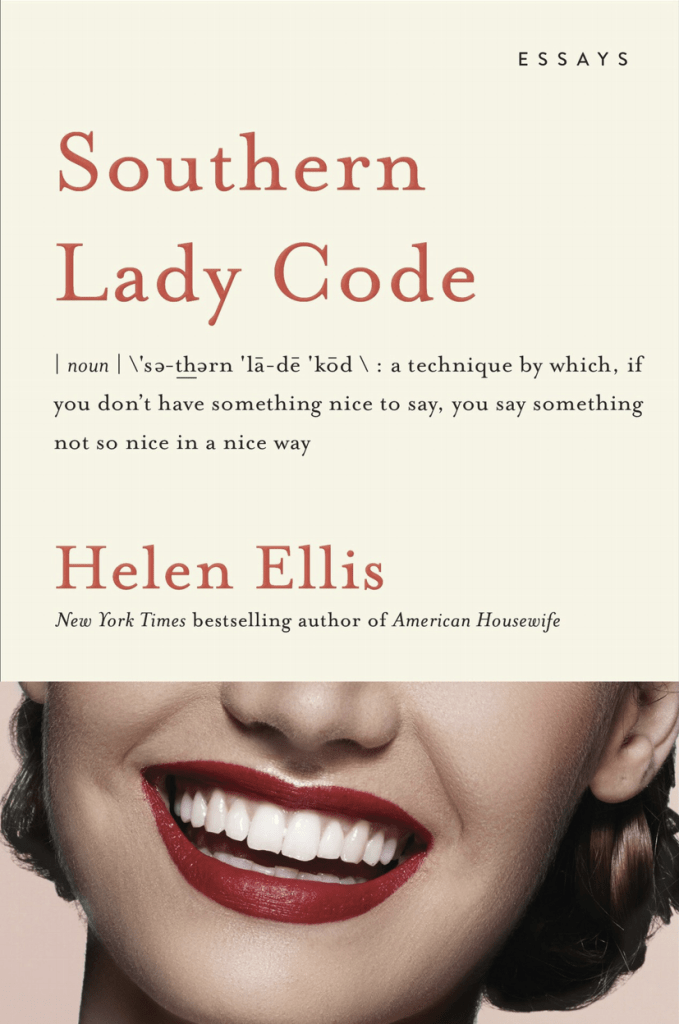
Cover of Southern Lady Code

I wrote about American Housewife back in 2016 and I’ve been waiting for more from her ever since.  American Housewife was a short story collection though, and this a bit different. Across more than twenty essays, Ellis examines what it means to her to be a Southern Lady – and in particular what it’s like to be a Southern Lady living in Manhattan.  Her mantra is “If you don’t have something nice to say, say something not-so-nice in a nice way” and there are a lot of laughs to be had because of this, but there are also ghosts, retro buffets, cleaning as a method of keeping the spark in a marriage and how to shop for a formal event.  It’s funny, clever and true – or at least mostly true. Probably.  But basically Helen Ellis makes me laugh.  I’m not a Southern lady, and I’m a bit younger than Ellis, but there was so much here that amused me and spoke to me.

If you like wry sideways takes on American life, this would make a great addition to your autumn reading list. It was definitely worth waiting two months in the hold queue for it.

As you might guess from that, my copy of Southern Lady Code came from the library, but I’ll be buying myself a copy when it’s out in paperback here. It’s available in hardback, kindle and kobo.

Happy Reading!

Book of the Week, non-fiction

Book of the Week: Jim Henson

So many good books on holiday last week. And if all goes to plan, you’re going to be hearing a about a lot of them. Just as soon as I have time to read a few more books and write the posts. But I’ve got it all planned out in my head. Trust me. Ahem.  Anyway, this week’s pick is Jim Henson: The Biography, Brian Jay Jones’s look at the life of the innovative puppeteer, animator and filmmaker.

Cover of Jim Henson: The Biography

If you don’t know who Jim Henson is, I think you must have been living under a rock, or just not paying attention. Henson was the creator of the Muppets and the puppet characters on Sesame Street. Exactly. I think everyone has grown up with Bert and Ernie, Elmo, Big Bird and of course Kermit and Miss Piggy. This is a big, in-depth look at the man behind the puppets and what drove him.

Going in to reading this, I knew about the Muppets, and I knew he died in the early 90s – there’s a dedication to him at the end of the Muppet Christmas Carol, which is of course one of the all-time great children’s Christmas films – but that was about it. It turns out that he (and his creations) were a TV sensation in his local area before he was out of his teens, he was hugely affected by the early death of his younger brother which lead to a breakneck work ethic, but who also was devoted to being a good dad to his five kids. It’s really a remarkable life.

This book came out in 2013* and Brian Jay Jones had the cooperation of the Henson family, access to all the archives and interviewed all the key players. It was the first full length biography of Henson and Frank Oz (aka Miss Piggy aka Yoda) said that it captured Henson’s genius and his flaws. And I found that very true – it’s not a hagiography. You get a real sense of the amazing mind and vision that Henson had, but also that he must have been a difficult man to live with at times – and definitely a difficult person to manage!

It’s a fascinating read not just because it’s about a great subject but because it’s really well written. Jones has since written biographies of George Lucas and Dr Seuss and even though I’m not hugely interested in either of those men, I enjoyed this so much I would probably still borrow them from the library or buy them in a kindle daily deal just because this was so well researched, thoughtful and readable.

My copy of Jim Henson came from the library but it’s available on Kindle, Kobo and Audible and in paperback and hardback – although mostly via secondhand sellers and coming in from the US.

Happy Reading!

*and I’ve had it on my to-read list since seeing Brian Jay Jones interviewed on the Daily Show soon after it came out, which tells you a lot about how long it’s taken me to get around to getting hold of a copy – thank you library!

Book of the Week, non-fiction

Book of the Week: Too Fat, Too Slutty, Too Loud

As I said in yesterday’s Week in Books, it turns out that the week after the move is also super busy.  And I have so little brain space going on for anything that it’s not funny. Anyway, another non-fiction pick this week.  What can I say, all my library holds for non fiction books are coming in and I’m trying hard to read them as soon as I get them so I don’t run out of time on the loans!  And this is one that I’ve heard a lot about – including some great interviews with the author Anne Helen Peterson.

Too Fat, Too Slutty, Too Loud’s subtitle is The Rise and Reign of Unruly Women and examines a series of women and what it is about them that the media and society finds so difficult to deal with.   Each woman is picked for one specific trait that makes her unrulyy – Serena Williams is too strong, Kim Kardashian is too pregnant, Hillary Clinton too shrill.  And in examining these women it sheds light on to how society views women and challenges assumptions that you may have made yourself.  Anne Helen Peterson is a senior culture writer at Buzzfeed and this is incredibly readable, as well as packed with what was clearly a lot of research.

Even if you don’t like all of the women here – and there are definitely some that I wouldn’t say I’m a fan of – but I found that there was something in every chapter that made me think, or reconsider some of my preconceptions.  And as someone who used to be a radio newsreader, I’ve had a lot of comments about my voice over the years, so there was definitely some stuff in the too shrill chapter that I had a lot of feelings about.  But I think most (every?) woman reading this will recognise something that’s been said about her or too her in this.

I know this review is shorter than the usual – but that’s mostly my brainfade talking.  This is a really, really good and interesting read – I raced through it – and fits in really well with some of the other writing about women and society that I’ve read recently.  Peterson is currently writing a book about burnout – if you haven’t read her essay about how Millennials became the burnout generation, you really should – and I’m very excited to see what she has to say about it.

My copy of Too Fat, Too Slutty, Too Loud came from the library, but you should be able to get hold of it fairly easily – there are Kindle and Kobo editions as well as paperbacks and hardbacks that you can get from places like Book Depository.  I’m not sure how easy it’ll be to get in an actual bookshop – because I still haven’t worked out if these are UK editions or imports.

Happy Reading!

Book of the Week, non-fiction

Book of the Week: The Great Successor

So I did manage to do some reading last week in between packing boxes, moving boxes and unpacking boxes, and in between all the comfort reading to try and calm me down, I finished this fascinating non-fiction read.  But as it’s still all go here, please forgive me if this post is a little shorter than usual!

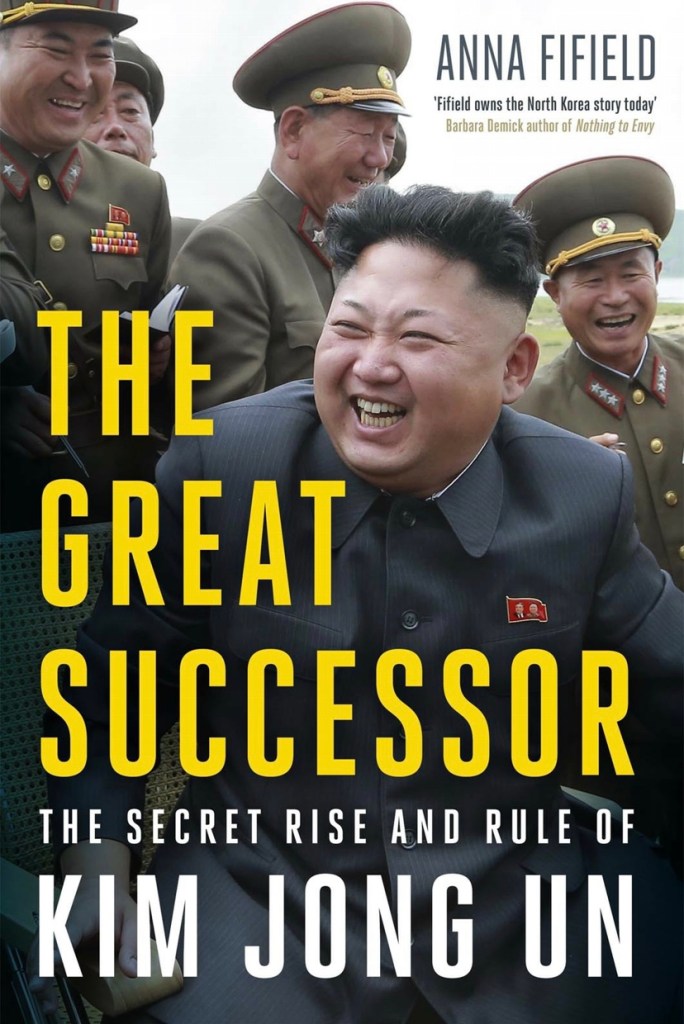
Cover of The Great Successor

Anna Fifield is currently the Beijing bureau chief for the Washington Post, but her previous beat was the Koreas and Japan.  She’s also worked for the Financial Times in Seoul.  The Great Successor is her look at Kim Jong Un – his childhood, his rise to power and what he’s done since he became ruler of North Korea.  She’s knowledgable and her sources are people with real experience of the regime.  But it’s also incredibly readable – if a little bit terrifying.

Along with pretty much every journalist on the planet, I’ve done a lot of watching of North Korea – particularly since Donald Trump came to power.  And this is the best insight I’ve yet found into what might be going through the mind of Kim Jong Un – who is pretty much the same age as me and who might have the power to change the world as we know it if he so chooses.   Try not to panic.  This is definitely worth trying to get your hands on if you’re interested in international affairs – and if you’ve read some of the books looking at the inside of the Trump White House, this would make an interesting addition to your to-read pile.  Equally, this isn’t the first book about the Korean Peninsular that I’ve read – and it would make a great trio with The Birth of South Korean Cool and A Kim Jong Un Production.

British cover of The Greaet Successor

My copy of The Great Successor came from the Library, but I think it should be available fairly easily – it’s certainly out in Kindle and Kobo and the hardback is out now and available from Book Depository – all though you’ll note the difference in subtitles between the US and British editions!

Happy Reading!

Book of the Week, non-fiction

Book of the Week: Seduction

June’s stats coming up tomorrow, but first, this week’s Book of the Week – where we’re still firmly in non-fiction (that’s three BotW posts in a row now!) and in a different part of my historical sweet spot: classic Hollywood.

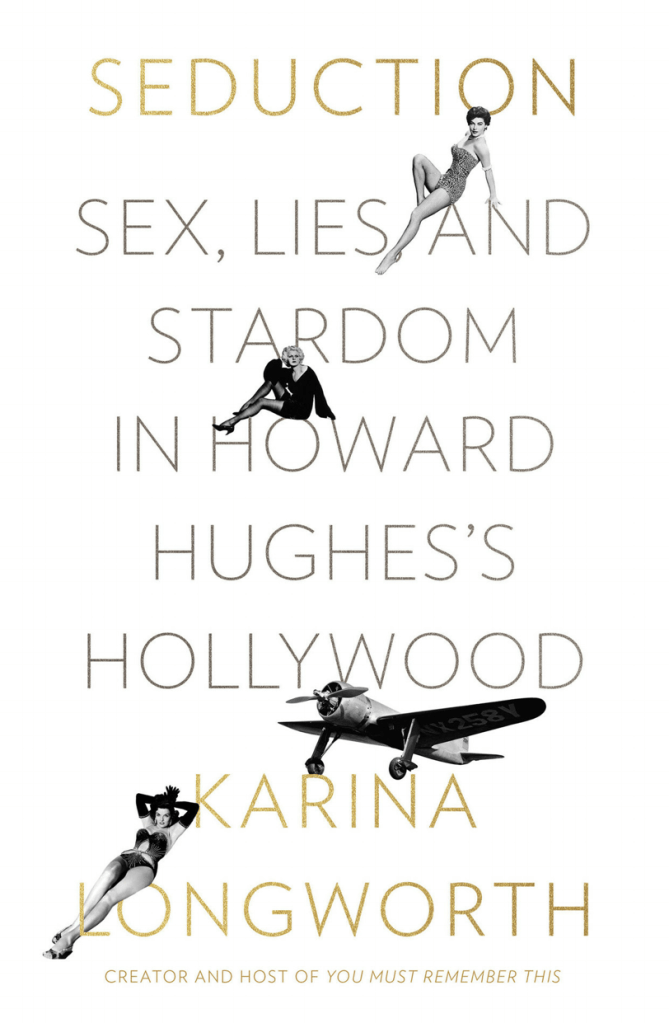
Cover of Seduction

As the subtitle suggests, this is an examination of the machinations of movie mogul Howard Hughes.  A controversial and massively famous figure in his day, if you’re not into Hollywood history you’ve probably still seen Howard Hughes references in all sorts of stuff – like the episode of The Simpsons where gambling is legalised and Mr Burns turns weird, or Willard Whyte in Diamonds are Forever or the fact that Stan Lee cited him as an inspiration for Tony Stark.  And of course there’s the Martin Scorsese film The Aviator in which he’s played by Leonardo DiCaprio.  But like Hallie Rubenhold in The Five last week, Karina Longworth is coming at this from the perspective of the women in the case – and there were a lot of them – she examines what Hughes’s obsessions with sex, power and publicity meant for the women in his orbit and how it affected them. Hint: he was a real piece of work, even more than you might already be thinking.

This was where the majority of my commute reading time went last week (five of my six train journeys) because although it’s fascinating it’s also super long. I’m a recent* convert to Longworth’s podcast, You Must Remember This, and was a little bit worried that this was going to be covering some of the same ground that that has already covered, but actually that’s not a problem. Some of the stuff has been touched on, but this is much more in depth and with more space to develop an overarching theme and narrative.

Obviously #MeToo has been much in the news over the last few years and if you want an illustration of what powerful men in Hollywood have been getting away with since the silent era then this is it. It would also serve as a great starting off point for a wider journey into Hollywood lore – I know there’s a few more lives I want to explore and a couple of books off the bibliography that I’ll be keeping an eye open for.

My copy of Seduction came from the library, but it’s out now in hardback, Kindle and Kobo as well as audiobook read by Longworth. NB: if you haven’t listened to her podcast, she’s got a very particular way of talking which can take a bit of getting used to and I know doesn’t work for everyone.  I’m not sure how easy it’s going to be to find in bookstores – it’s available to buy from Waterstones’ website, but not on click and collect – ditto Foyles.

Happy Reading!

*as in a couple of series ago.


Book of the Week, non-fiction

Book of the Week: The Five

Ok, so this is *technically* cheating, because I finished it yesterday, but as this is where a lot – if not the majority – of my reading time went last week, so it’s a fair pick really guv.

Cover of The Five

Hallie Rubenhold’s The Five: The Untold Lives of the Women Killed by Jack the Ripper does exactly what it says on the tin – and that is the opposite of what most books about Jack the Ripper do.  Rubenhold has researched what the lives of the canonical five victims were like before they were killed.  She’s not interested in who they were killed by – or the gruesome details of their deaths.  She is interested in their lives and whether prevailing idea about them – ie that they were prostitutes – is accurate.  Thus she puts the victims back at the centre of a narrative that has long dismissed them as incidental to the identity of their killer and at the same time gives an important insight into what life was like for working class women in Victorian London.

As a rule, I’m not interested in books about Jack the Ripper.  I was wracking my brains to think what the last one I read was, and I think it was probably Laurie Graham’s novel The Night in Question three and a half years ago.  I don’t want gruesome details of murders and rampant speculation.  But The Five has caused something of a stir.  Rubenhold’s book has got the Ripperologists’ knickers in a twist – because of her assertion that three of the five women were not sex workers.  The angry push back – and her measured responses – were enough to make me want to read this book for myself.  And it was well worth it.  The women in these pages are three dimensional people with messy complicated lives and they deserve to be at the centre of their own stories, not pushed aside in favour of the speculation about who killed them.

As a journalist, I’ve worked on a lot of coverage of murders and killings and one of the common themes when you’re deciding what how to cover them is how to refer to the victims and their killer.  All too often serial killers names are remembered but not their victims.  The first case that I was in court for after I qualified was the Ipswich murders.  Most people probably know the case as “Suffolk Strangler” or worse “the Ipswich Ripper” and could probably tell you who carried out the killings, but not the name of any of the victims (Paula Clennell, Anneli Alderton, Gemma Adams, Annette Nicholls and Tania Nichol).  Harold Shipman, Peter Sutcliffe,  Fred and Rose West, Myra Hindley – I bet all of those names are familiar to you (if you’re a Brit anyway) and yet I doubt you could name many of their victims.  There are books and books about these cases – and you could fill a library with just books about Jack the Ripper.  After the recent mass shooting in Christchurch, New Zealand’s Prime Minister Jacinda Ardern vowed never to say the gunman’s name.  The Five is doing something similar with the Ripper.  We’ll never know who the killer actually was or how many victims they really killed but there is – as Rubenhold demonstrates – a wealth of information about the lives these women lived before their deaths.

And in learning about their lives, you’ll learn a lot about what it was really like to be poor and a woman in Victorian Britain.  When I was little, the geriatric hospital in Northampton was St Edmunds Hospital.  But a lot of the old people in Northampton would do anything to avoid going in to this George Gilbert Scott-designed building.  Why?  Because it was formerly a workhouse and they had been brought up to fear the shame of going into the workhouse.  And once you’ve read The Five you’ll get it – you’ll understand why sleeping on the streets might be preferable to going into one. St Edmunds closed in the 1990s (I think) and has been derelict ever since.  Work has recently started to renovate it – and to turn it into a retirement village.  We’ll see if the elderly of Northampton are prepared to live there yet.

So why do the Ripperologists hate this book so much?  I have my theories – and I don’t think it’s just because Rubenhold’s research demolishes their pet theories or because it feels seedy to be obsessed with a murderer when you know more about the lives of their victims.  But I’ll leave you to draw your own conclusions.  But if you like social history, and books looking at the lives of women in history, this might be your ideal next read.

My copy of The Five came from the library (after a long wait on hold!), but you should be able to find it pretty much anywhere.  It’s popping up on a lot of summer holiday reading recommendation lists and I’d expect it to be front and centre on the history book table at any (good) bookshop.  Sadly I can’t tell you if it’s got an airport paperback edition – because there was a mix up with our baggage when we went on holiday the other week and instead of browsing the airport bookshop and eating a leisurely breakfast before our flight, I spent all my time running around Luton airport trying to get our suitcase taken off an Amsterdam flight and retagged and put on our flight to Nice – but I hope it does.  It’s also availabe on Kindle and Kobo or from Book Depository.

Happy Reading!

Book of the Week, non-fiction, reviews

Book of the Week: The Right Stuff

It’s the last day of the month, and that means a stats post tomorrow, but before we get to that, here’s another Book of the Week post for you! Today’s pick may have taken me a while to finish – but it was an absolutely stonking read. This isn’t the first time I’ve recommended a space race-related book here – Lily Koppel’s The Astronauts Wives Club was a pick a couple of years ago (Editors note: more than four years ago, doesn’t time fly!) so maybe this isn’t a big surprise to you all, but it is a bit of a change from the recent run of BotWs which have been mostly romances and and romance adjacent.

Paperback copy of The Right Stuff

This is pretty much a modern classic of narrative non-fiction. Tom Wolfe tells the story of the American journey into space, starting with the history of America’s military aviators and test pilots, through the selection process to pick the Mercury Seven, then their training and the rivalries within the group and outside. Based on interviews with the astronauts, their wives, the test pilots it will take you through the early days, the competition with the test pilots working on rocket powered aircraft and the friction between the administration and the astronauts who wanted to actually pilot the missions rather than just be cargo and right to the to the end of the Mercury missions. It covers the selection of the second batch of astronauts (the New Nine) but doesn’t go beyond into the Apollo programme and the moon shot, which is probably a good thing, because you’ve grown attached to these guys and, spoiler alert, the Apollo programme did not always go well.

It is incredibly readable, for the most part you don’t want to put it down. But be warned, in the early stages where it talks about pilot training and testing, there is an incredibly high rate of attrition, which meant that I needed to pace myself a bit in reading it and is the main reason it took me longer to read*. I don’t even think you need to have any prior knowledge of the space race really, although obviously it helps. If you saw First Man last year, like I did**, it makes for a great companion piece to that very introspective look at one astronaut’s life, as it takes in the broad sweep of American ambition in space, the competition with the Soviet Union and the public and media attention that focused on the men they hoped were going to restore American dominance in the heavens.

Friendship 7 capsule
It’s really hard to get a good photo of the Friendship 7 capsule at the Smithsonian Air and Space Museum, but I tried!

I remember people telling me that I ought to read this back when I reviewed the Lily Koppel, but it took until Tom Wolfe’s death last May for me to get around to adding it to the to buy pile.  There has been a new edition since my version – which has a snazzy new cover and, more importantly, an introduction from Scott Kelly, the astronaut who spent a year in space a couple of years back and was (probably still is) the subject of a study into the long term effects of being in space as he has an identical twin brother (Mark Kelly, also a former astronaut who is married to former US Representative Gabrielle Giffords and who himself is making a run for Democratic nomination for one of Arizona’s Senate seats) which enabled almost direct comparison.  After reading this, I’ve got a mad yearning for more space books, but also to read more of Wolfe’s works.  So I went for a wander on Amazon and discovered that Bonfire of the Vanities is only £2.99 in paperback there at the moment.  I may have bought myself a copy.  Oopsy daisy.  And I have a couple more sitting in my shopping basket, waiting for the tbr shelf to empty out a little.  If you have any other recommendations for where I should go next – drop them in the comments.

You should be able to get hold of a copy of The Right Stuff from any reasonable book store, it’s also available on Kindle and Kobo and I suspect that you’d have a good chance of finding a copy of it in any reasonably sized charity or second hand bookshop.

Happy Reading!

*the other reason being my long-standing rule about not taking books I’m more than halfway through on overnight trips, or books I have less than 100 pages to go on the train for the daily commute.

** I saw it at the IMAX at the Smithsonian, having spent an afternoon looking at actual space race artifacts.

Book of the Week, LGTBQIA+, memoirs, new releases, non-fiction

Book of the Week: Diary of a Drag Queen

First up a bit of housekeeping: don’t forget last week’s BotW, Death of an Angel is out on Thursday! If you saw the WiB yesterday, you’ll know that there was a bit of a theme to last week’s tired, last night train reading, but actually it’s a non-fiction pick this week.  For once I’m almost relatively timely – because it’sa new book.  Well by new, it only came out on the 7th, Crystal Rasmussen’s Diary of a Drag Queen. Doesn’t it have a great cover?

Cover of Diary of a Drag Queen

Crystal is the drag name of Tom Rasmussen, a writer, Drag Queen and Céline Dion super-fan and their first book is a raw, honest, no holds barred, letting it all hang out look at one year in the author’s life. You follow them back to London after a difficult spell trying to make it in New York, trying to break the fashion industry, find a place in the drag scene and work out where they fit in the LGTBQIA+ community and their own personal manifesto. If you are squeamish, if you can’t deal with reading about other people’s poo, be warned: there is a lot of that here. But Crystal -has a lot they want to tell you and it is worth sitting up and listening.

I think this might be the most honest memoir I have read since Viv Albertine’s Boys, Clothes, Music. Crystal is setting their life and their truth out there on the page, without a filter (or at least not one that I could spot) and seemingly without hiding anything. At various points Crystal talks about having had to tone their life down for their partner or to be accepted or even just to be exist and it feels like this Diary, this book is their life as they want it to be seen, in all its imperfections, messiness, mistakes and triumphs. Here is Crystal explaining their approach in the introduction:

I spent a lot of my life in the violent, painful clutches of shame, which manifested itself in various modes of self-harm, self-destruction, and other untenable, unsurvivable behaviours.

I learned, however, that the antidote to this shame is not pride, or honour, or even celebration. That comes later. The antidote to shame is honesty. Stark, crass, funny, powerful honesty. Honesty that smashes through notions of taboos and inappropriatenesses. I am not shameful, because I’ve done nothing wrong. It’s the same with being gay, queer, femme, non-binary, a drag queen.

Crystal tells these stories with caustic wit, biting insight and what might be considered a reckless disregard for the secrets of the bedroom, if it wasn’t for the fact that they have assured us at the start that some names and details have been changed to protect identities. Phew. A lot of Crystal’s life is a long way from my experience and my background. And, again as I thought with Viv Albertine, I’m not sure that Crystal would like me. There were times when their critiques of various things made me squirm in my seat with the knowledge that I might have skirted the edges of doing some of the things they were railing against. But as they say, we have all made mistakes it’s how you deal with the mistakes and learn from them that makes a difference. And I’m always trying to do better. We should all always be trying to do better.  Here’s Crystal again:

Lesbian, Gay, Bisexual, Transgender, Queer/questioning, Intersex, Asexual and + (not you, straight guy who loves glitter a bit but thinks bum sex is gross). Yes, it’s a long acronym, yes, it’s seven whole letters, but I learned the national anthem even though borders are constructs, so you can learn seven letters.

My copy of Diary of a Drag Queen came from NetGalley, but it is out now in hardback and you should be able to lay your hands on a copy fairly easily – I’d expect it to be in any good-sized actual bookshop. Crystal is also out and about on a book tour, so they may soon be coming to a store near you. I know I’m looking to see if I can make one of the dates – and if you can’t, the audiobook is read by the author and the sample on Amazon is a fairly representative section of the book. And of course it’s also available on Kindle and Kobo.

Happy Reading!

Book of the Week, memoirs, non-fiction

Book of the Week: Priestdaddy

Staying in non-fiction for this week’s BotW – but this time moving to a memoir.  You’ll have noticed Patricia Lockwood’s Priestdaddy on the WiB list for some considerable time – I actually started listening to it on audiobook, but it demands attention and with my long list of podcasts to listen to, I struggled to find time to make progress on it.  I discovered early on that I couldn’t listen to it while I was running because it made me laugh too much and put me at risk of tripping myself up.  So I got on the library hold list and waited for a copy to come in.  And when it finally did (this is a popular book people) I had much more success reading rather than listening to it.

Cover of Priestdaddy by Patricia Lockwood

Priestdaddy is Patricia Lockwood’s memory of her childhood, growing up moving around the Mid-West with an eccentric, doom-prophesying mother and her even more eccentric Catholic priest father.  Yes, you heard right.  Lockwood’s father underwent a religious conversion and felt called to ministry after he was already married with children, and then found a loop hole that meant the Roman Catholic church would receive him as a priest.  The book starts as Lockwood and her husband move back in with her parents after a medical procedure messes up their finances, and as she and her husband get used to living with the eccentric duo, she reminisces on the key moments of her childhood.

Lockwood’s father, Greg, is the biggest, flashiest character in this – he wears as few clothes as possible whenever he’s not on duty, he plays terrifyingly loud electric guitar and shouts along with action movies – but her mother manages steals the show for me a lot of the time.  She’s constantly expecting the worst to happen and seeing the worst, but managing everything, dealing with the madman that she married and loopy in her own way.  By the end of the book you feel like you understand her more than you do Greg.

This is funny and terrifying in equal measure.  It’s also beautifully written.  Lockwood is a poet and her words fairly sing on the page.  There are some weighty issues here – Lockwood is a lapsed catholic and looks back on her childhood – including an anti-abortion protest she was taken to – with a particular view on the world of 80s and 90s religious super-conservatism that she grew up in.  I really liked but I’d think hard about who I recommended it too – my sister, who loves reading about American Christianity in its many shades, yes; my mother, Church of England and formerly of the village’s church council and who went to a convent school probably not.

This was nominated for a whole bunch of prizes and found its way on to a lot of book of the year lists when it came out in 2017 and I’m not surprised.  As always I’m behind the curve with this – but I’m glad I caught up with it in the end.  And all this means that you should be able to get hold of a copy fairly easily.   As I said, I borrowed my copy from the library, but it’s out in paperback, Amazon has hardbacks at a reasonable price via third parties and you can get it in Kindle and Kobo.  And the audiobook I mentioned – is read by the author and is apparently exclusive to Audible.

Happy Reading!