Recommendsday

Recommendsday: Rich People Problems – Fiction edition

Given that I’ve talked twice in the last week about how much I like books about Rich People Problems, I thought it was finally time for me to finish that post about that sort of novel – given that it’s more than a year since my round up of non-fiction books about the same sort of thing.

Firstly, what do I mean when I say Rich People Problems? Well it’s hard to put my finger on exactly, but I’m talking about the sort of novel where the characters are living the sort of lives that most of us can only dream of – and the problems they have are less imminent risk of death or destruction and more can’t afford a summer house in the fashionable resort any more/why is it so hard to be rich. Often you’re looking at their lives through the prism of an outsider – or a newly arrived person in the group, like you are with Sasha in Pineapple Street.

That’s also the case with Kevin Kwan’s Crazy Rich Asians, which is probably the book in this category that most people have heard of (or watched the film of) where Rachel Chu heads off to Singapore to go to a wedding with her boyfriend, only to discover that he’s a member of one of the richest families in the city state and part of a whole hierarchy of old money/new money rivalries that she’s got to try and navigate. It’s a trilogy and although the first one is my favourite, they’re all brilliant for reading on a sunlounger (which is one of my favourite times to read this sort of book!). It’s success spawned a whole host of other similar books of which I’ve read a few (including Last Tang Standing by Lauren Ho) but you could also probably say Dial A for Aunties is adjacent to this, as the billionaire wedding that they’re catering is for a very similar sort of family to the ones Rachel meets in Singapore.
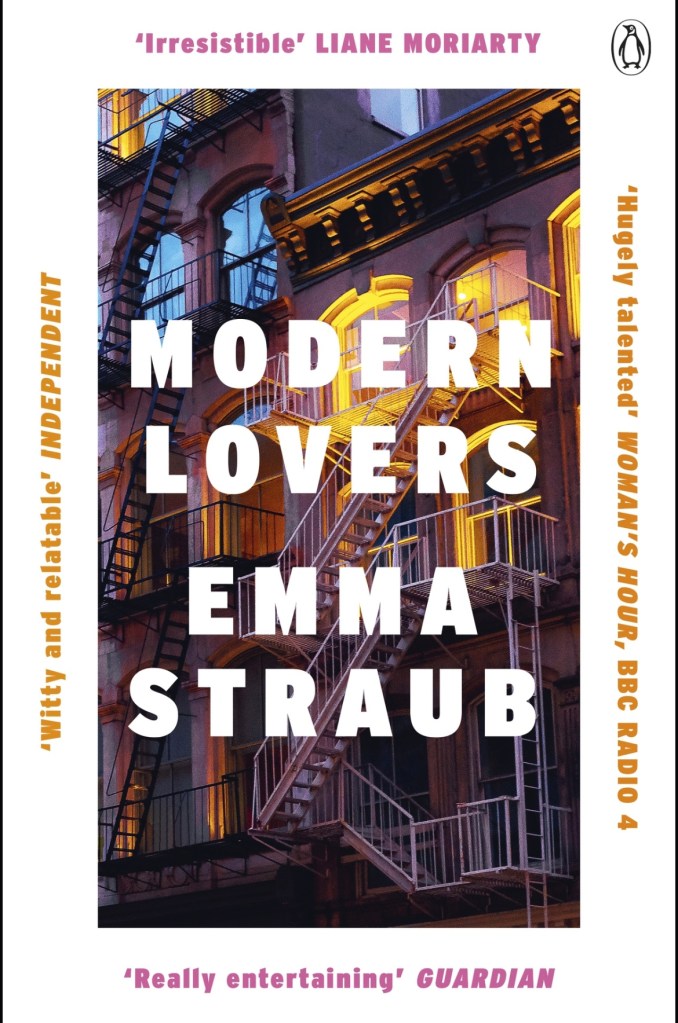
The people in it aren’t as rich as the Singapore set, but Emma Straub’s Modern Lovers is also a Rich People Problems novel, except all the rich people in it are Hipsters. This is about a group of friends who were in a band together in their youth but as their kids leave home, their lives start to unravel and long buried secrets start to come to light. If books about people who can afford to privately educate their kids despite not always having a job annoy you, then maybe don’t read this. If you do like that sort of thing (and you can tell from this post that I do!) then fill your boots with this! See also Straub’s other novel The Vacationers, which sees a family summer in Mallorca go not entirely according to plan. Where’d You Go Bernadette could probably also go on this list, although it’s sort of hard to explain why without spoiling the plot of the book – but it’s definitely not the sort of life that most of us have.

In YA, Katherine McGee’s American Royals probably fits into this genre too – the premise is that when American gained independence, they set up their own royal family, and you’re following the latest generation as they try to grapple with their inheritance. It’s much broader in characterisation than some of the other books I’ve mentioned here – and importantly – it is the first in a series and doesn’t have a resolution to any of the major strands so read at your peril/depending on your preferences on that front. Also in YA, as I said in my BotW post about it back in 2020, Meg Rosoff’s The Great Godden is Rich people Problems adjacent.

And there you are – that’s your lot today. I’ve stuck to contemporary novels rather than historical stuff – I mean you could basically count any historical romance as Rich People Problems in a way. And I’ve resisted the urge to recommend Eligible again (oops) although you could probably pick a Pride and Prejudice retelling of your choice in here too, and this has reminded me of a bunch of stuff I have waiting on the shelves to be read that could fit this post – so there may yet be a part two!

Happy Reading!

new releases, Recommendsday

Book of the Week: Pineapple Street

Well as I mentioned yesterday, picking a book for today was a bit of a problem of my own making. I mean I try not to do release day posts and then make them my books of the week, but I did it with Romantic Comedy and I’m doing it again today. Romantic Comedy perhaps not a surprise because: Curtis Sittenfeld, but this – well, I had other stuff on the go last week that I thought was going to be an option for today, but it turns out, nope. So here we are. Anyway, I really enjoyed reading Pineapple Street and it deserves not to just a mention in Quick Reviews at the end of the month.

The Pineapple Street of the title is the road in Brooklyn Heights where the Stockton family own a house. It’s not their only house, but it is the house where Cord, Darley and Georgiana grew up. Their parents have just moved out to allow Cord and his new wife Sasha to move in and the sisters have added this to the list of black marks against their new sister-in-law, which also includes being middle class, being from New England (but not in a good way) and basically not being The Right Sort. To Sasha the family seem weirdly close, full of rituals and traditions designed to exclude her and make her feel like she’ll never understand them. The sisters have other problems too – Darley is struggling to figure out who she is now she’s a stay at home mum with two kids instead of a high powered worker at an investment bank and Georgiana has fallen in love for the first time – but it’s with the wrong person.

As I said last week – sound the Rich People Problems klaxon! I love a novel about people with the sort of lives most of us can’t even conceive and this is a really good one. I read this in 24 hours – and if I hadn’t had to go to work it would have been less. As well as making you want to just keep turning the pages to find out what happens next, it’ll make you laugh, it’ll make you roll your eyes and by the end you’ll have a lot more sympathy than you were expecting for both Georgiana and Darley – and of course you’re rooting for Sasha from the start. I could happily have spent even longer with them all – but actually the epilogue is a glorious touch and a great way to send them all off. We’re starting to reach the time of year where people start to go on beachy (or at least hot weather) holidays and this would make perfect sun lounger reading.

My copy came from NetGalley, but it’s looking fairly easy to get hold of – as I mentioned last week I saw it in a store before it was even released, but I saw it in both Foyles and Waterstones in Gower Street last week and so I suspect the physical copies will be easy to get hold of – hopefully even in airport edition. And of course it’s in Kindle and Kobo too.

Happy Reading!

Book of the Week, non-fiction

Book of the Week: Vanderbilt

Say hello to a non-fiction pick that is both a hardback and a book that I got for Christmas – and so hasn’t lingered on the pile at all. Now that may be because it was a book that I specifically asked for, or it may just be a fluke but, hey lets celebrate small wins when we get them.

You’ll know Anderson Cooper as a news anchor on CNN, but he’s also part of the Vanderbilt family and this book, written with Katherine Howe, as the subtitle suggests is a look at the rise and fall of the dynasty. It is not a complete and comprehensive examination of every member of the family, but more a look at the key figures and key moments in the family’s fortunes from making their money, through breaking into New York society, to the various court battles and all the way to Cooper’s own childhood as the son of Gloria Vanderbilt. It takes you from seventeenth century New Amsterdam through to the present day, but with its main focus from the mid-ninteenth century onwards.

I knew bits and bobs about some of the Vanderbilts, but not a whole lot so this was really interesting to me – even before the personal aspect that Cooper’s own connection to the story adds. I’ve read a lot of books at various points about the British nobility in the nineteenth century, and portions of this story are the American equivalent to that – and they interface at some points too, for example when Consuelo Vanderbilt is married off to the Duke of Marlborough. If you’ve got an interest in this sort of history, it’s definitely worth a look – even if it’s not the most comprehensive account and may well leave you wanting to read more about some of the characters you meet. But that’s never a bad thing really is it? We’ve all already got to-read piles bigger than we should have, so what difference do a couple more books make…

My copy of Vanderbilt was a Christmas gift from my parents (thanks mum and dad!) but you can get it now in hardback, Kindle and Kobo. It’s also on audiobook read by Anderson Cooper himself, which sounds delightful from the sample. I still haven’t been into a bookshop this year, but I suspect it’ll be a case of ordering it in – I’ve put a Waterstones link as I know that’s where mum got it from so I know it will actually work.

Happy Reading!

Book of the Week, new releases, Young Adult

Book of the Week: The Great Godden

The mini-reviews are coming up tomorrow, in the meantime, this week’s Book of the Week is a beach/holiday read suggestion for those of you are taking some time off work in August – whether you’re hanging out in a hammock in your garden like me or actually going somewhere away from home.

Cover of The Great Godden

So Meg Rosoff’s The Great Godden is about one family, one summer at their family’s house by the beach and what happens when they meet the Godden brothers. Children of a famous actress, Kit is handsome and charismatic and Hugo is quieter and almost surly when you first meet him. The narrator isn’t named or described by gender, which means that you can either decide what you want them to be (if you manage to think about it that conciously) or just read and draw your own conclusions as you go.

It’s really quite hard to explain what genre this book actually is. It’s published by a YA imprint, but I can think of people who don’t read YA who would like this. It’s not quite Rich People Problems, but it is sort of adjacent to it – I mean the family have a summer house by the sea! It’s also very subtle and feels quite low stakes in a way –  I was reading it waiting for something awful to happen, but it’s not that sort of book. It’s much more every day, it’s about everyday events and normal summer holiday type things. One of the narrator’s sisters is pony mad. The other has suddenly grown into her looks and is getting a lot more attention than she used to. The narrator works in a shop for a holiday job. There’s a wedding being planned. The climax of every thing is basically a tennis match and it’s so good. There aren’t a lot of really good sport-in-book scenes in novels – but this is one of them and would be fairly near the top of my list (the top being the cricket scene in Murder Must Advertise). It would be a great book to read by the sea or by the “sea” aka your pond, paddling pool, local body of water. It is very, very summery and perfect for the warm weather.

I am all about the low-stakes at the moment – so if you’ve got any recommendations for me for similarly enjoyable but un-anxiety-inducing books, drop them in the comments for me please. I’ve mentioned before that I am all about resolutions at the moment – hence the mystery and romance heavy reading lists, but this was a nice change that didn’t make me super stressed. It’s not the first Meg Rosoff I’ve read, but it is the first one I’ve really liked, so I might have another little wander through her other books, but I’m not sure there’s any guarantee I’ll find something similar there!

My copy came from NetGalley, but it’s out now in hardback and in Kindle and Kobo. I haven’t ventured into a bookshop yet, so I can’t tell you what the likelihood is of it being in there on a table, but Meg Rosoff is a fairly well known name so I reckon there’s a good chance it’ll be in stock in larger book stores, but probably not the supermarkets.

Happy Reading!

Authors I love, historical, Series I love

Series I love: The Cazalets

It’s been a while since I wrote a series I love post – and as we’re all in the market for some binge-reading at the moment, I thought I would offer a suggestion for Easter at the same time.  I have written about Elizabeth Jane Howard’s series in roundup posts before, but it’s been a few years and now seems like the time to have a proper moment for them.

So the series tells the stories of the Cazalet family from the last years before World War Two until the 1950s. A the start of the series in The Light Years, you meet the characters in 1937 as they gather at Home Place – where The Brig and Duchy live.  They have four grown-up children, sons Hugh, Edward and Rupert – who all work in the family firm – and a daughter, Rachel, who lives at home.  Their lives look perfect on the surface, but underneath they all have problems.  Hugh is still struggling after the Great War, Edward is chronically unfaithful to his wife, Rupert has a younger, demanding wife and Rachel is putting her loyalty to the family above any chance of personal happiness.  All three of the sons have children and we see their lives too, complete with rivalries, alliances and fears. As the series goes on, you see them all age and mature (and in some cases die) until by the final book of the series even the youngest of the children from the first book are adults.

The narrative moves from character to character, so they all have their own stories that add up to a bigger picture that only the reader is fully aware of.  I have been known to go through the series just reading the bits about my favourite characters. I don’t know how Elizabeth Jane Howard does it, but she juggles a huge cast of characters while making them all seem different and distinct, and by the end you have sympathy even for the people who you found the most unlikable at the start *cough* Edward *cough* Villy *cough* and have seen promising children turn into horrors.  It’s not quite a Rich People Problems book, because although they are well off upper class types (not aristocracy though) the war is a genuine real problem with genuine consequences, but it’s not far off.

I first read the original quartet while raiding my mum’s bookshelves in my teens and my sister read them not long after. I actually own then as actual books and as ebooks and they are one of the few series that we all own our own copies of. Well, at least we all own the first four books. I think I’m the only one with a copy of the fifth. All Change came out in 2013 nearly 20 years after Casting Off – which had finished the series off perfectly – to my mind at least.  Looking back at my goodreads review from the time, I found it true to the series and not contrived, but it is telling that I haven’t been back to re-read it since then. It’s quite melancholy and sad in places – more than the others are because it doesn’t have the same payoffs at the end.  It was inevitable – and well signposted in the earlier books – that the war was going to change the lives and lifestyles of the family, but All Change really leans into the reality of that and it makes me a bit sad and means you end the series on a bit less of a satisfying high than you do if you finish at Casting Off. I don’t think it spoils the whole series (which was my big fear before it came out) but I prefer to think of them all as they were at the end of Casting Off – heading out into their futures with all sorts of possibilities unexplored and ahead of them.

The weather is just starting to turn properly nice here at the moment – with flowers blooming in the garden and the sun shining – which makes it an ideal time to start reading about the last golden summers before the Second World War.  At 400 pages each, they’ll also keep you going over the long Easter weekend and beyond if you want them to.  I originally read these not long after I had read Barbara Taylor Bradford’s Hold the Dream series and was looking for something similar – telling the stories of a family over years and years.  Once I’d read the Cazalets, I was spoiled forever for the genre.  Lots of people have tried to tell stories like this, but very few have done it as well as Elizabeth Jane Howard did. The original books came out in the early 90s, so it’s very possible that some of you reading this haven’t come across her before – so if you like authors like Harriet Evans, Dinah Jeffries or have enjoyed Elena Ferrante’s Neapolitan books, you should totally try these.  And if anyone has any recommendations for other series that I could read that do the same sort of thing – then drop them in the comments. Also: if you like this and haven’t read The Camomile Lawn, then you should totally read that too.

As the bookshops are closed, and these aren’t new releases, I suspect you’ll have to buy them as ebooks.  The Kindle and Kobo editions of the Light Years are £3.99 at the moment, which isn’t too bad.  After that the prices go up for books two and three and Casting Off is a bargainous 99p (Kindle/Kobo)- but whatever you do, don’t start there, it won’t work for you anywhere near as well.

Happy Reading and stay safe.

book round-ups, non-fiction, Recommendsday

Recommendsday: Rich People Problems – Non-fiction Edition

Regular readers of the blog may be aware that I’m somewhat fascinated by the interwar period.  I love Golden Age crime novels, like my beloved Peter Wimsey, one of my all-time favourite novels is Laurie Graham’s Gone With the Windsors and I’ve read a lot about of some of the notables of the period  – some of which I’ve written about here before – like Flappers, Bright Young People and Queen Bees.  And after a recent jag of books about the era (and slightly beyond), now seemed like an ideal time for a bit of a round up of the best bits of the non-fiction.  You’ll hear more about the fiction anon…

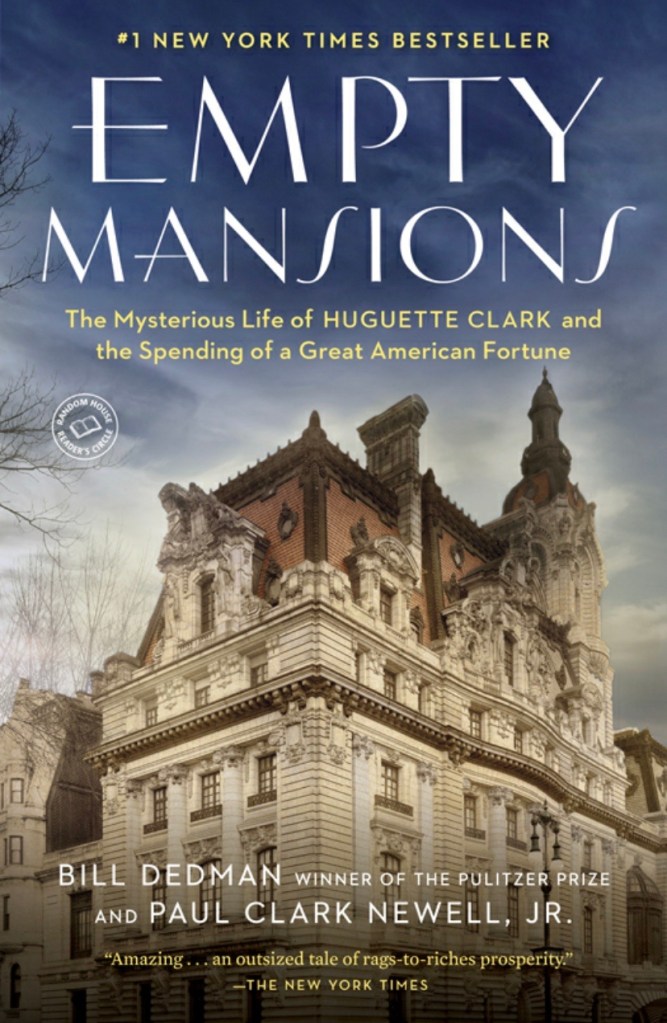
Empty Mansions by Bill Dedman and Paul Clark Newell JrCover of Empty Mansions

This is another one of those books that I’ve wanted to read after I saw the author interviewed about on the Daily Show before Jon Stewart left and have recently got around to reading (see also: Jim Henson) and it is really something.  Huguette Clark died in hospital in 2011 at the age of 104. The fact that she died in hospital is about the only “normal” thing about her life. She was worth $300m. She’d been in the hospital for 30 years. She hadn’t been photographed – in public at least – for nearly twice that. Pulitzer prize-winning journalist Bill Dedman and one of Huguette’s cousins, Paul Clark Newell Jr, look at her life, her family’s fortune and why she retreated to the confines of one room (and progressively smaller one at that) of a hospital for so long when she had apartments and riches that most people can only dream of.  And it’s one hell of a ride.  I read it as an ebook, which is good because it’s long and dense and has footnotes that you might want to flick back and forth to. As well as being fascinating it leaves you with lots of things to ponder – why did she retreat from public life in the 1930s? Was she exploited by the hospital or her carers? And what do people who have made huge fortunes owe to the people and the towns they made the money off? Well worth a look.

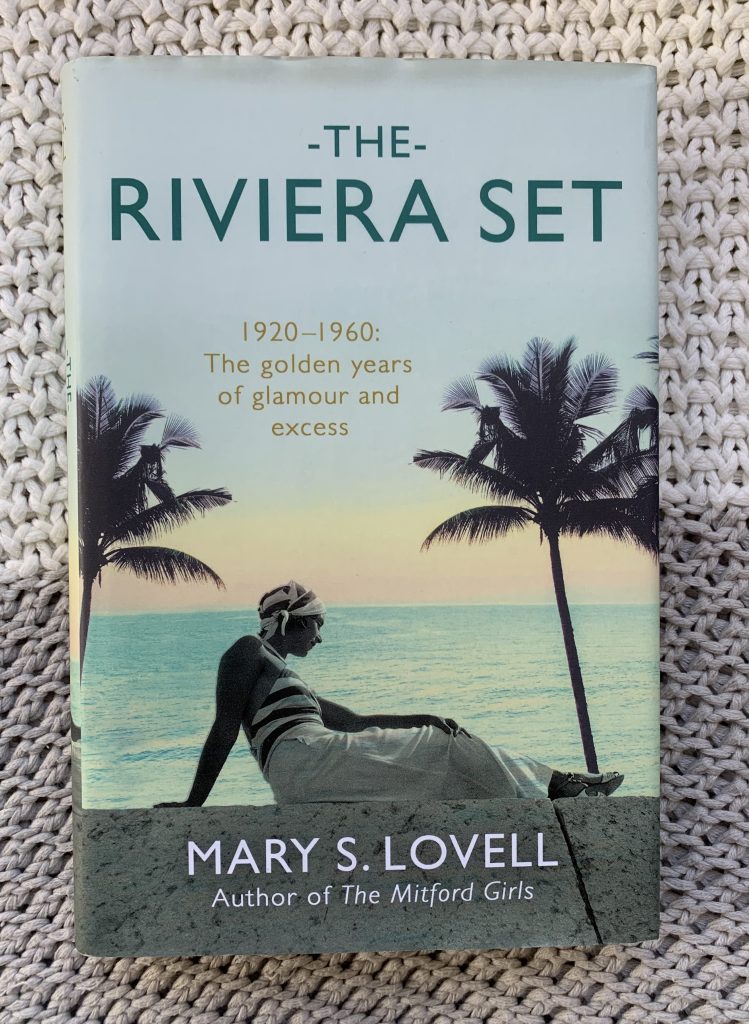
The Riviera Set by Mary S Lovell

Hardback of The Riviera Set

Want to know how the French Riviera become the playground of the rich and famous?  This book will tell you.  Lovell’s book starts by introducing you to Maxine Elliott and showing how she established herself as one of Edwardian society’s notable hostesses before building Chateau de l’Horizon, the modernist villa at the centre of the book.  Between the wars, Maxine’s house hosted all the notables of the time – the Churchills, the Windsors, Noel Coward and more – and after the war it transitioned into a party house for the Hollywood set under the ownership of Aly Khan.  I learned new things about some familiar faces from the interwar years – as well as being introduced to a 50s and 60s jet-set that I wasn’t really very knowledgable about.  This mixes royal history, political history and Hollywood history as it shows how the Riviera evolved through the years – although it stops well before the coast became the exlusive playground of oligarchs and the super rich.  Very readable and just gossipy enough. I liked it so much it’s still on my downstairs shelves, nearly two years after I first read it.

Chanel’s Riviera by Anne de Courcy

hardback copy of Chanels Riviera

Once you’ve read about Maxine, go straight on to Anne de Courcy’s new book and see what happened to the Riviera when the Second World War hit it.  The Lovell – which focuses on the villa and the rich – covers the World War Two in one chapter, mostly about how everyone got out.  Chanel’s Riviera will fill in the gaps – and make sure that you don’t go away with the idea that the Riviera wasn’t really affected by it all.  There is plenty about Chanel herself in here, mostly around her time on the Riviera and her friends there, but there’s a lot more detail about the more normal people down there – and not just the rich.  There are expats who had moved down there for their health and the people who had moved down there to work for them or with them.  This one only just came out – it’ll get a place on my shelves just as soon as I get it back from my mum…

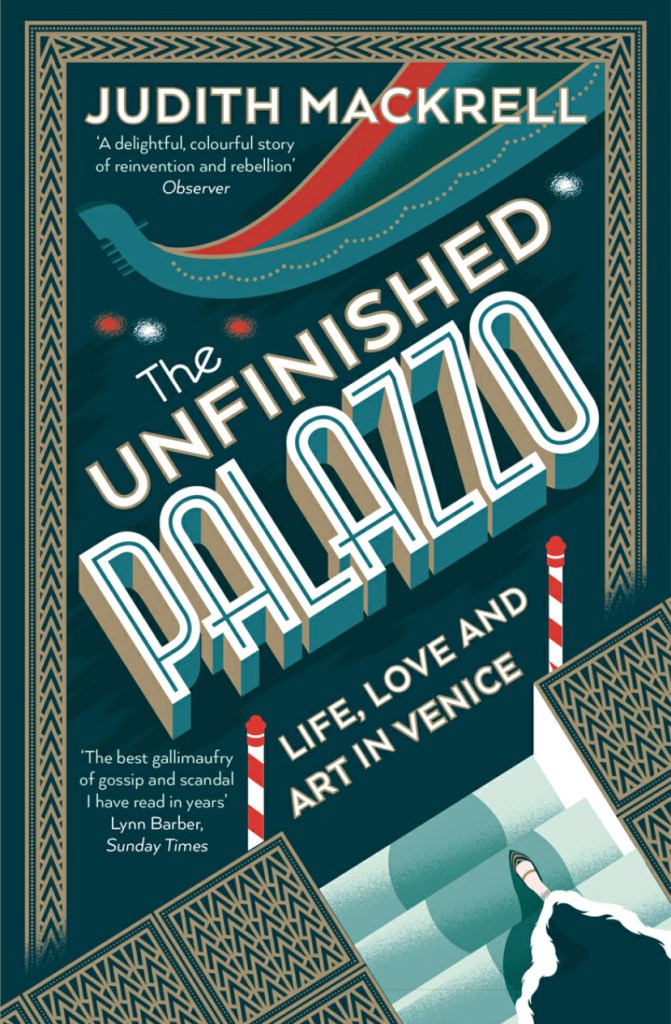
The Unfinished Palazzo by Judith Mackrell

Cover of The Unfinished Palazzo

This is a group biography of sorts of three very unconventional for their time women who all owned the titualar Venetian Palazzo during the twentieth century. I found this while scouring my shelves looking for something similar to The Riviera Set after reading that – and it even has some crossover in the cast list (if you know what I mean!), as Doris Castlerosse is a principle figure in this after being a side character in the Lovell.  Luisa Casati was what probably what we would consider now to be a performance artist – albeit one with a pet cheetah. Doris Castlerosse was a socialite who married money and was close to Winston Churchill. And Peggy Guggenheim was an heiress who renovated the building and used it to showcase her collection of modern art (yes, one of those Guggenheims).  Although this was less satisfying than the Lovell overall,  and would serve you well as an entry point into any of their lives.  I would happily read more about any one of the women in this.

So there you have it.  Four more books to add to the list.  This has been mostly European focused – even Huguette – who was part French and spoke with a French accent!  If you’ve got any recommendations for more stuff about America or the rest of the world in this period, hit me up in the comments. Equally if you’ve got an historical rich people problems novels that you think I should read let me know – because they are also my catnip.

Happy Reading!