Surviving the 'Rona

Surviving Coronavirus: History Books

This is another post that has been months and months in the making – as you’ll be able to tell if you look at my Goodreads. This started as a non-fiction roundup, but there have been a lot of non-fiction Books of the Week during the Quarantimes, so it evolved into a specifically historical non-fiction post which has taken me (even) longer to pull together than I originally thought. But as always, I got there in the end, even if I’m publishing this after I’m fully vaccinated when I started writing it when a vaccine for Covid-19 was still in the early stages of research.

Alexandria by Edmund Richardson*

Cover of Alexandria

The Alexandria of the title is the city that was “discovered” in the 1830s in Afghanistan, by Charles Masson. Masson was a deserter turned pilgrim turned spy turned many other things who roamed parts of Asia that very few Westerners had visited at the time. I read this before the current situation in Afghanistan deteriorated so far (although by this point it’s more of a complete collapse) and it was already somwhat poignant when talking about Bamiyan Buddhas, but I can only imagine that it will be heart-breaking at this point. It is a fascinating story and impeccably researched but sometimes a little dense. And with so many name changes it’s sometimes hard to keep track of what’s going on with whom. A new area of history for me – in geographical terms, but not in terms of the East India Company and its machinations.

The Fall of the House of Byron by Emily Brand*
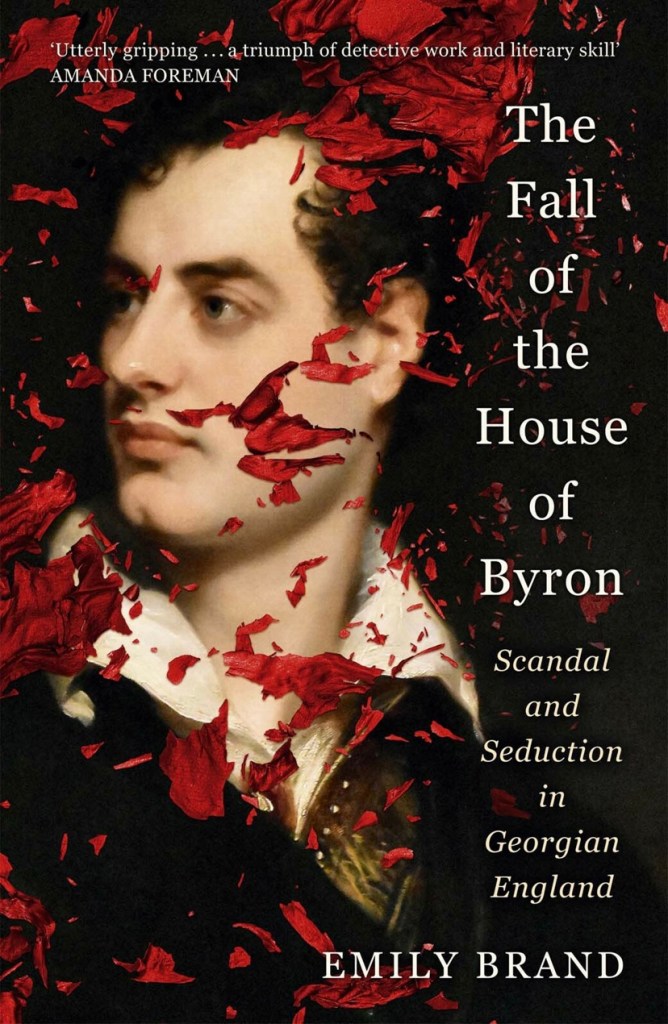
Cover of the Fall of the House of Byron

If you’ve only heard of the poet, there’s a lot you’re missing out on about the Byron family – and this book sets out to change that. I had come across Admiral Byron before – but only in passing in history lectures. But it turns out there’s a scandalous sister and a profligate baron who fought in a duel. I enjoyed this, and it’s clearly very well researched, but I found it sometimes quite hard to keep track of the large cast of characters (who often share names) and I found the jumps forward and backwards a little confusing – but that may just be the way that it was formatted in the advance e-copy I had. But if you like histories of aristocratic families, this is worth your while – there is so much going on here in so few generations. And if you’re interested in the poet, then this has valuable insight into his family and backstory – although not a huge amount about him.

Cecil Beaton’s Bright Young Things by Robin Muir

Regular readers will know that I have a fascination for the interwar period – a lot of the fiction that I love was written then, or is set then and I also read a lot of non-fiction and biography from that period. One of the things that I had been really looking forward to doing last spring/early summer was going to the Cecil Beaton exhibition at the National Portrait Gallery. But sadly it was open less than a week before the first lockdown happened. So instead I treated myself (and it was a treat because art books are proper expensive – all those photos) to the book of the exhibition – and it’s so good. It’s got all the pictures that you would expect – and along with writing about Beaton himself, his portraits are accompanied by one or two page biographies of the people they feature. If you like the period, all the notables are here, it’s very dip in and out-able (ideal in these crazy times) and as an added bonus, it’s got a huge bibliography in the back to give you ideas about what to read next on anyone who particularly interests you.

The Romanovs by Simon Sebag Montefiore

Cover of the Romanovs

One last bonus book – bonus because I still haven’t finished it because this is a really long read and a bit gruesome so needs to be read in sensible chunks!  This is Simon Sebag Montefiore’s group biography of the Romanov dynasty. For a lot of people, all they might know about them is the story of the death of Nicholas II and his family in the Russian Revolution but the family had ruled over Russia from the early seventeenth century. I did half of it while running (or what passes for a run with me) because hearing about all the awful ways people got killed made me run faster. But after a couple of generations of people with the same names it started to get a bit hard to keep track of who was who, so I got hold of the ebook and have carried on with that.

Happy Reading!


book round-ups, Recommendsday

Recommendsday: July 2021 Mini Reviews

Here we go – another month, another batch of books that I wanted to talk about but didn’t have quite enough to say about to give them a post all to themselves. There’s romance, comedy, adventure and history here – so a nice mix.

Surfeit of Suspects by George Bellairs

Cover of Surfeit of Suspects

I picked a British Library Crime Classic for Book of the Week last week – and this is another cracker. It was actually a close call for BotW this week, but I thought I might look too one note (not that that’s ever bothered me before). A Surfeit of Suspects is the 41st (!) book in the Inspector Littlejohn series, and concerns an explosion at a joinery company, that kills three of the company’s directors. The company itself is teetering on the brink of insolvency and there is a suspicion that the explosion may have been an insurance job on a rather spectacular scale. But why would the firm have had any dynamite to explode if it hadn’t been planted there. And why had the previously profitable firm fallen so far? There is potential fraud and corruption, but also personal rivalries and love affairs. There’s also a lot of focus on the local banking eco-system – which as Bellairs had worked in a bank, he was very well placed to write. And despite the fact that banking has changed a lot in the fifty plus years since this was published, it’s all easy to follow – and actually quite informative for those of us who have grown up in the era of big banking chains. Oh and it’s a good solution too. I got it on Kindle Unlimited, but it’s also available in paperback.

The Lock In by Phoebe Luckhurst*

Cover of The Lock In

I keep talking about the summer reading post (I promise it is coming) and this was a contender for that, but it’s a little too domestic for a sunlounger read. Or at least it is for me, so I’m writing about it here instead. Ellen, Alexa and Jack are housemates. They’re also locked in their attic on a Saturday morning, with terrible hangovers and Alexa’s Hinge date from the night before. Why are they locked in the attic? Well the kitchen is flooding and they were looking for the way to switch off the water when the handle broke off the attic door. They only have one phone – and it’s Jacks that’s very low on battery and the signal is poor. But he’s mostly live tweeting the situation. Ben and Alexa are getting to know each other, and Ellen is becoming convinced that she’s met Ben before.  Will they get out? Will they still be friends when they do – and will they survive the wrath of their landlord? I think I’m a little too old for this – I did my dating before apps were a thing – but this is a funny portrait of possibly the worst hangover ever. I was sort of expecting more romance, but it’s much more of a comedy than it is a romantic comedy. Worth a look. Newly out this summer – should be fairly easy to get hold of.

The Camelot Caper by Elizabeth Peters

Paperback copy of The Camelot Caper

This one is probably only worth a look for Elizabeth Peters completists. This is from the very late 1960s and is interesting because it’s sometimes listed as a prequel to the Vicky Bliss series. It’s much less connected to that than that makes it seem – basically the connection is to “Sir John Smythe” in a way that I can’t reveal without giving some big old spoilers for Vicky Bliss. And it’s quite a minor connection – so don’t go into this expecting lots of him. And if you’ve not read Vicky Bliss (or Amelia Peabody to which its even more tenuously linked) then it’s just a late 1960s thriller-slash-cozy-mystery with no murder but a lot of chasing around Britain by an American Tourist, who is being hunted down by mysterious thugs, and the charming Brit who is helping her out. Your mileage on that may vary. I’m glad I read it, but if I’d read it first, I probably wouldn’t have read the rest of the Vicky Bliss series, and that would have been a shame. Second-hand only, and no ebook.

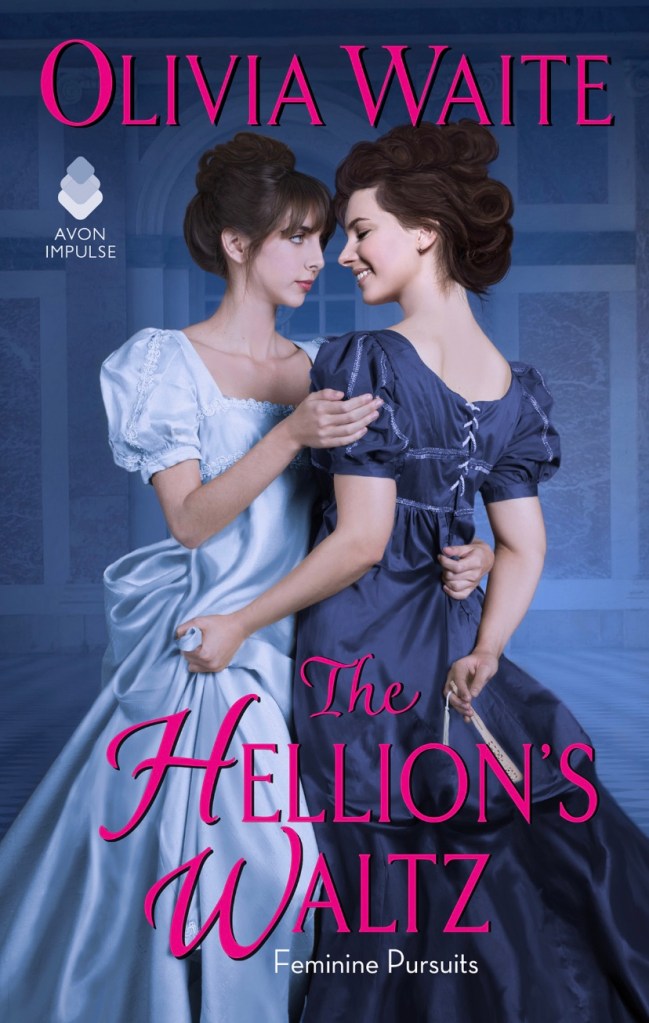
Hellions Waltz by Olivia Waite

 Cover of The Hellions Waltz

Sophie’s family has moved to a new town to start over after they were taken in by a conman who ruined their business. Maddie is busy planning to ruin the draper who has been cheating and defrauding the local weavers for years. When recently cheated Sophie sees that Maddie has some sort of con going on, she starts to investigate. And of course the only thing for Maddie to do to distract her is seduce. And it all goes on from there. The middle book in this trilogy, The Care and Feeding of Waspish Widows was a BotW pick here earlier this year, but be aware the connection between three books is looser than you usually see in romance series – there’s barely any mention of the previous leads, and there was nothing in the previous book to mark out who was going to feature in the next (if you know what I mean) or if there was it was so subtle that I missed it. The link between them is women with a craft or a passion – in this case a musician and a silk weaver. But this was a fun read – I liked all the details about the various pianos and about the silk reading, and the denouement – although fast – is satisfying.

Meet the Georgians by Robert Peel*

Cover of Meet the Georgians
I’m including this one in here because I think if you don’t know anything about the Georgians, this would be a good introduction to some of the characters in it – and also to the idea that the Victorians were the prudish ones and that life before that was much more interesting/racy! For me (degree in history in which I mostly did post 1700 stuff in Britain, France and wider Europe) there wasn’t a lot new here. But that said: I like the idea, and the choices of who to feature are good because the people are fascinating, but the writing style is strangely uneven – at times it feels like the author is wants to emulate Greg Jenner‘s chatty informal style but is trying to hard and it’s only in patches before it reverts to something more standard for a history book. It’s still very accessibly written in the rest of it, but it has these weird bits where it all sounds a bit “how do you do fellow kids”. For me, the introduction also spoilt a bit of the fun/mystery of finding out who the people were – a lot of the key details were in there. Thinking about it, it’s a bit like a history essay in book form: here is my theory, here is the evidence for my theory, here is my conclusion with a reminder of my theory and a look ahead. Additionally the cover is a bit out of step with the audience I feel like it’s trying for. Great idea and if you’re a newbie to the era, it will probably work better for you than it did for me!


In case you missed any of them, the Books of the Week posts in July were Empire of Pain, The Guncle, Bring Your Baggage and Don’t Pack Light and Smallbone Deceased. And finally, just to complete the link-fest, here are the links to the mini reviews from January, February, March, April, May and June.

Happy Reading!

Book of the Week, non-fiction

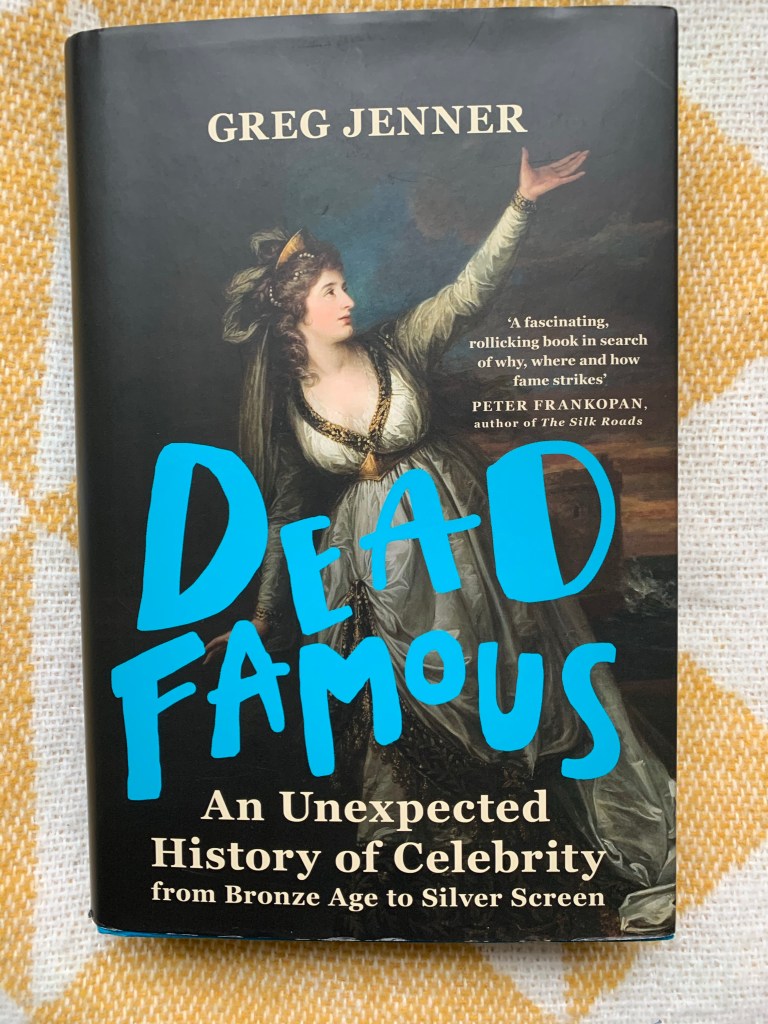
Book of the Week: Dead Famous

Another week, another Book of the Week post, but first another quick reminder about the Escapist Reading post from the end of last week. Anyway, back to today and taking a break from the romance and crime picks of most of the month (and last month to be fair), this week’s pick is Greg Jenner’s latest book – Dead Famous: An Unexpected History of Celebrity from Bronze Age to Silver Screen. I’ve got a whole stack of history books on the to-read pile and I’m hoping that my head is getting back to a place where I can concentrate on more serious reading now – I love history books, but I’ve had trouble getting my concentration going for them the last couple of months (gee, wonder why) but this broke through.

Hardback copy of Dead Famous

First up, I should say that I went to the same uni as Greg – and what’s more we both “worked” at the same student radio station – and although we weren’t in the same teams or social groups we do follow each other on Twitter.  Anyway since then, Greg has gone on to be a successful public historian – he worked on the Horrible Histories series, hosts a two podcasts for the BBC, You’re Dead To Me (currently on hiatus in the middle of it second series) and the brand new Home School History (which I was listening to part of the time while writing this post) and done all sorts of exciting history stuff including his first book, A Million Years in a Day. Dead Famous came out last month and examines where the modern concept of “celebrity” comes from – how old is it, is it different to fame (or infamy) and how one goes about acquiring it. Over the course of the book he tells the stories of celebrities through history and works out how we got to where we are.

This was one of my hammock reads last week (as the sharp-eyed amongst you may noticed in yesterday’s bonus picture!) and it’s really good. I won’t spoil Greg’s thesis, but it’s well made and with a lot of really great historical figures to illustrate it. Greg has done some serious research into this – 1.4 million words worth on his laptop according to the Acknowledgments – but his writing style makes it so accessible and easy to understand. There are some history books that are scary and hard to read for the layman – sometimes even though they have a funky cover and an enticing blurb. But if you’ve ever heard Greg on radio, podcasts or seen him on TV, he writes exactly as he talks – which makes his books funny and chatty but with impeccable researching to back it up. Greg narrates his own audiobooks and they’re a fabulous listen – that’s how I read Greg’s first book and it was a real treat. As the title suggeests, this stops at 1950 – because Greg says everything after that has already been covered. If you’ve read books on modern celebrity – like Anne Helen Peterson’s Too Fat, Too Slutty, Too Loud – this would make a really good companion piece to examine how we got here.

I pre-ordered my copy (its signed!) from Kirsty at Fox Lane Books – and as you can see from the tweet above she is still taking orders and if you message Greg to tell him that you bought from her, he’ll send you a signed bookplate. It’s also available on Kindle and Kobo – and as an audiobook read by Greg.

Happy Reading!

Book of the Week, non-fiction

Book of the Week: The Five

Ok, so this is *technically* cheating, because I finished it yesterday, but as this is where a lot – if not the majority – of my reading time went last week, so it’s a fair pick really guv.

Cover of The Five

Hallie Rubenhold’s The Five: The Untold Lives of the Women Killed by Jack the Ripper does exactly what it says on the tin – and that is the opposite of what most books about Jack the Ripper do.  Rubenhold has researched what the lives of the canonical five victims were like before they were killed.  She’s not interested in who they were killed by – or the gruesome details of their deaths.  She is interested in their lives and whether prevailing idea about them – ie that they were prostitutes – is accurate.  Thus she puts the victims back at the centre of a narrative that has long dismissed them as incidental to the identity of their killer and at the same time gives an important insight into what life was like for working class women in Victorian London.

As a rule, I’m not interested in books about Jack the Ripper.  I was wracking my brains to think what the last one I read was, and I think it was probably Laurie Graham’s novel The Night in Question three and a half years ago.  I don’t want gruesome details of murders and rampant speculation.  But The Five has caused something of a stir.  Rubenhold’s book has got the Ripperologists’ knickers in a twist – because of her assertion that three of the five women were not sex workers.  The angry push back – and her measured responses – were enough to make me want to read this book for myself.  And it was well worth it.  The women in these pages are three dimensional people with messy complicated lives and they deserve to be at the centre of their own stories, not pushed aside in favour of the speculation about who killed them.

As a journalist, I’ve worked on a lot of coverage of murders and killings and one of the common themes when you’re deciding what how to cover them is how to refer to the victims and their killer.  All too often serial killers names are remembered but not their victims.  The first case that I was in court for after I qualified was the Ipswich murders.  Most people probably know the case as “Suffolk Strangler” or worse “the Ipswich Ripper” and could probably tell you who carried out the killings, but not the name of any of the victims (Paula Clennell, Anneli Alderton, Gemma Adams, Annette Nicholls and Tania Nichol).  Harold Shipman, Peter Sutcliffe,  Fred and Rose West, Myra Hindley – I bet all of those names are familiar to you (if you’re a Brit anyway) and yet I doubt you could name many of their victims.  There are books and books about these cases – and you could fill a library with just books about Jack the Ripper.  After the recent mass shooting in Christchurch, New Zealand’s Prime Minister Jacinda Ardern vowed never to say the gunman’s name.  The Five is doing something similar with the Ripper.  We’ll never know who the killer actually was or how many victims they really killed but there is – as Rubenhold demonstrates – a wealth of information about the lives these women lived before their deaths.

And in learning about their lives, you’ll learn a lot about what it was really like to be poor and a woman in Victorian Britain.  When I was little, the geriatric hospital in Northampton was St Edmunds Hospital.  But a lot of the old people in Northampton would do anything to avoid going in to this George Gilbert Scott-designed building.  Why?  Because it was formerly a workhouse and they had been brought up to fear the shame of going into the workhouse.  And once you’ve read The Five you’ll get it – you’ll understand why sleeping on the streets might be preferable to going into one. St Edmunds closed in the 1990s (I think) and has been derelict ever since.  Work has recently started to renovate it – and to turn it into a retirement village.  We’ll see if the elderly of Northampton are prepared to live there yet.

So why do the Ripperologists hate this book so much?  I have my theories – and I don’t think it’s just because Rubenhold’s research demolishes their pet theories or because it feels seedy to be obsessed with a murderer when you know more about the lives of their victims.  But I’ll leave you to draw your own conclusions.  But if you like social history, and books looking at the lives of women in history, this might be your ideal next read.

My copy of The Five came from the library (after a long wait on hold!), but you should be able to find it pretty much anywhere.  It’s popping up on a lot of summer holiday reading recommendation lists and I’d expect it to be front and centre on the history book table at any (good) bookshop.  Sadly I can’t tell you if it’s got an airport paperback edition – because there was a mix up with our baggage when we went on holiday the other week and instead of browsing the airport bookshop and eating a leisurely breakfast before our flight, I spent all my time running around Luton airport trying to get our suitcase taken off an Amsterdam flight and retagged and put on our flight to Nice – but I hope it does.  It’s also availabe on Kindle and Kobo or from Book Depository.

Happy Reading!

book round-ups, non-fiction, Recommendsday

Recommendsday: Books about Queen Victoria’s dynasty

As you may remember from last year’s post about the History Books on the Keeper Shelf, As a child I had a serious Queen Victoria obsession.  Other children were obsessed with My Little Pony, Lego or Beanie Babies, but I had a thing for the Empress of India.  I could recite all her children’s full names in order.  Where other kids wanted to go to Alton Towers as a treat, I wanted to go to Osborne or Frogmore (and my parents took me to both, bless their hearts).  One of my favourite dressing up games was to be her eldest daughter, Princess Victoria, with my little sister taking on the role of Princess Beatrice.  I think you’re getting an idea of the scale of the problem.  Anyway over time it developed into my love of history and the history degree that I enjoyed so much.  These days I love a good nonfiction history book as well as historical fiction and I’m particularly susceptible to books about Queen Victoria and her family.

Cover of Queen Victorias Matchmaking

Earlier in the year, I read Deborah Cadbury’s Queen Victoria’s Matchmaking, which I was hoping would be right up my street as it was billed as an examination of her role in using her granddaughters’ marriages to exert international power and influence.  Sadly for me, it was more a of a group biography of the various grandchildren and what happened to them after her death than an examination of her machinations.  It would make a great introduction to the subject, but if, like me, you already have an interest in the subject, there wasn’t a lot of new information here.  It did get me thinking though about other books that I’ve read around the subject and reminded me to fill in a few gaps and read some books I had on the list and then it spawned this post.  There’s a little bit of cross over from the aforementioned Keeper Shelf post, but there are some new books on the list too. So, if you’ve read Queen Victoria’s Matchmaking and want to know more here, are my suggestions (which I hope would work equally well if you’re just interested in the subject).

If you want to read a group biography about the principal granddaughters, my choice would be Julia Gelardi’s Born to Rule, which examines the intertwined lives of the five of the granddaughters who went on to become queens of other European countries and gives you a good jumping off point if you want to find out more.  Spoiler: they don’t all get happy endings.  You’ll probably have come across one of these before – Alexandra, the last Tsarina of Russia.  If you end up with a to find out more about the Romanov’s there’s Simon Sebag Montefiore’s Romanovs, which I’m still working my way through on audiobook.  I’m still only in the nineteenth century and I can vouch for the fact that it’s incredibly gruesome well before you get to the execution in Yekaterinburg.  I listen to it while I’m out running, because it makes me go faster listening to all the terrible ways the Romanov’s found to kill people.

I wrote about Hannah Pakula’s An Uncommon Woman back in that Keeper Shelf post, and if you can get hold of it and want to find out what was going on in Prussia in the second half of the nineteenth century it’s still worth a read and is marginally more cheerful than a book about Kaiser Wilhelm would be.  But only marginally – it’s still a story of what might have been and ominous portents of what is to come.

If you want to find out how Edward VII turned into the Uncle of Europe, but in a light and fun way, Stephen Clarke’s Dirty Bertie shows how the playboy prince turned into a shrewd manoevering diplomat who was able to help keep the peace in Europe during his lifetime, and why it all fell apart after he wasn’t there to hold it together any more.

And if you don’t mind me breaking my own rules about repeating authors too frequently, and want some fiction about one of the granddaughters, there’s Laurie Graham’s The Grand Duchess of Nowhere, about Ducky, aka Princess Victoria Melita, one of the daughters of Prince Alfred – who comes up in passing in Cadbury’s  book, but who actually had a fascinating life, even if she didn’t marry a king.  I reviewed it for Novelicous back in the day, but it’s like having a drink with an indiscreet, drunken elderly auntie.  I still need to find a proper biography of Ducky to find out how much of it is accurate.

Cover of the Grand Duchess of Nowhere

Still sitting on my to read list, hoping that I’ll get to them one day are The Mystery of Princess Louise by Lucinda Hawksley and Three Emperors by Miranda Carter as we head into the twentieth century.  If you’ve got any more books that I should add to the list, let me know in the comments!

And now for the links.  I got my copy of Queen Victoria’s Matchmaking via NetGalley  but it is out now in hardback and KindleBorn to Rule is harder to get hold of – there’s no Kindle edition and it’s 10 years old – but there are reasonably priced secondhand editions available on Amazon and Abebooks.  Dirty Bertie is available on Kindle and is still in print in paperback so you may be able to find it in an actual bookshop as well as on Amazon.

Happy Reading!

Book of the Week, non-fiction

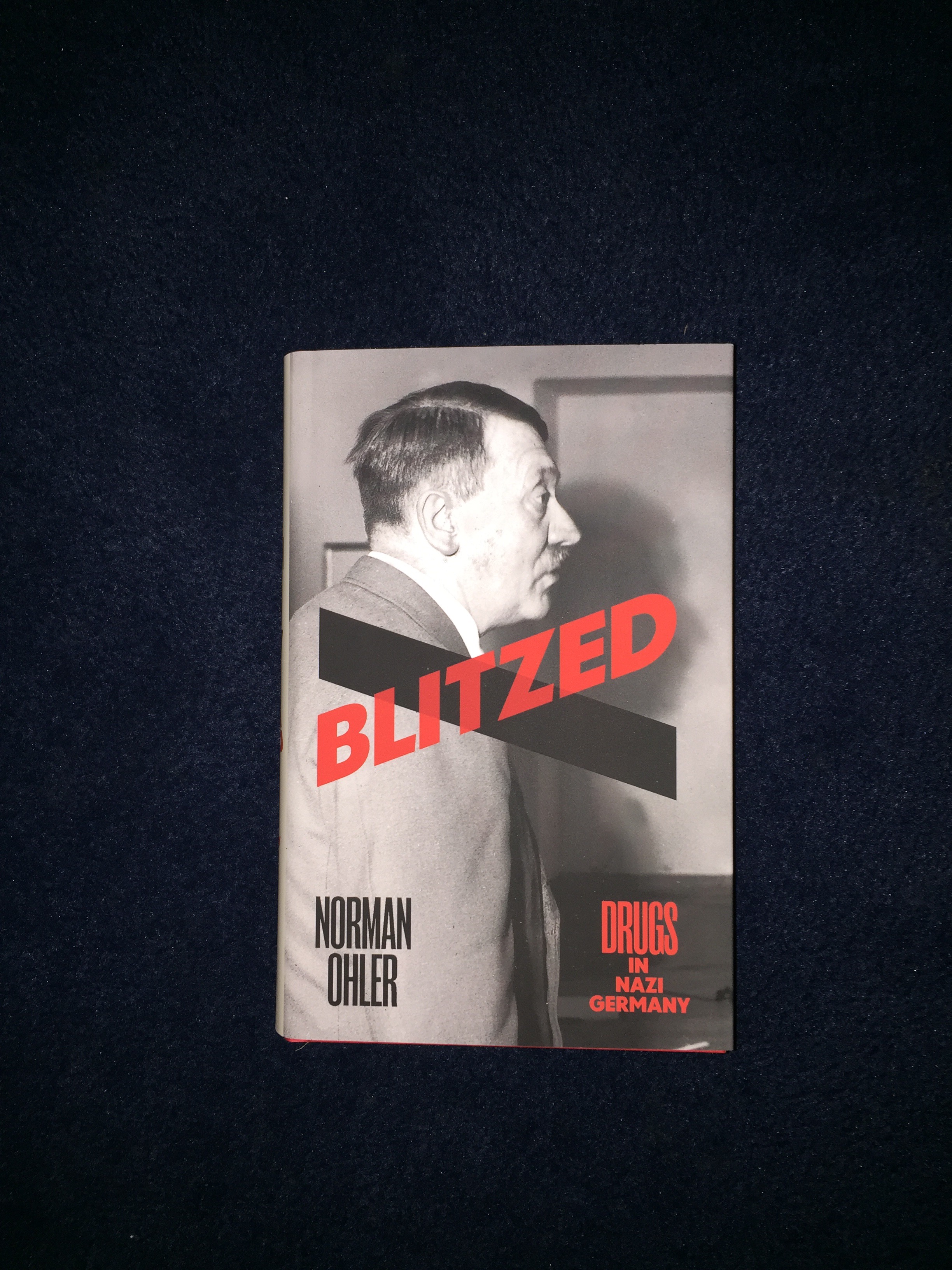
Book of the Week: Blitzed

So, you may have noticed from yesterday’s WiB that I didn’t finish that many books last week. But that was not a problem when it came to picking a BotW, because one of the books that I did finish was Norman Ohler’s Blitzed.

It’s only in hardback at the moment I’m afraid, but I’m just happy it’s been translated at all.

Ohler’s thesis is that large amounts of drugs were consumed by Nazi troops as they steamrollered through Europe, that drugs were equally consumed by people on the homair front and that during the latter stages of the war (from around 1941 onwards) Hitler himself was dependent on hard drugs. Ohler backs up his assertions with primary source research using documents held in archives in Germany and in America and makes a persuasive case.

Now before I go any further, I need to say that although I have a history degree, I have, in the main, avoided study of Nazi Germany because I find it too unbearably terrible. Luckily my school stopped studying WW2 Germany at A-Level the year before I started sixth form* and at university I managed to avoid Twentieth Century history for all but one term** so I am no expert.

I found Ohler’s book incredibly readable and very well researched. It’s an appealing idea. The Nazis were off their heads on drugs. That’s why they did it. It’s comforting and reassuring – it was the drugs which made them do it – and means that you don’t have to worry about what you would have done in their place. I don’t think this is what Ohler is trying to say. In the case of Hitler he’s very specific that it doesn’t explain all of Hitler’s actions – just enabled him to maintain and continue his rule. As for the man on the street, or the soldier in a panzer regiment, the drugs enabled them to keep going for longer than otherwise. So I suppose what I’m saying is that this book shouldn’t be seen in isolation or viewed as the whole story. That would be far too simplistic. But it has new ideas and research I haven’t heard about before and is worth reading, if only so that you know what the historians are arguing about.  Because they are going to argue about this.

Get your copy of Blitzed from Amazon, Waterstones or Foyles or on Kindle or Kobo.  The paperback is out in May – pre-order on Amazon. Or if you don’t want to read the whole thing, Dan Snow interviewed Norman Ohler on his History Hit Podcast and it was reviewed in the December issue of Literary Review (subscription needed).

Happy Reading!

*We did Tudor England, the French Revolution, France 1814-1914 and the Italian Risorgimento which was much more to my taste.

** the second term of my first year, where my seminar tutor was a German Post Grad whose thesis was on “images of death in 20th Century Germany”.