book round-ups, non-fiction, Recommendsday

Recommendsday: Non fiction round up – Literary Figures edition

It’s been a while, so for this Wednesday’s post I have a non-fiction Recommendsday for you. And as promised yesterday, it sort of ties in with D is for Death a little bit which is a delightful coincidence that I didn’t really realise when I started reading D is for Death after I finished Square Haunting last week – which was the last book I needed to finish reading to finish this post off!

Square Haunting by Francesca Wade
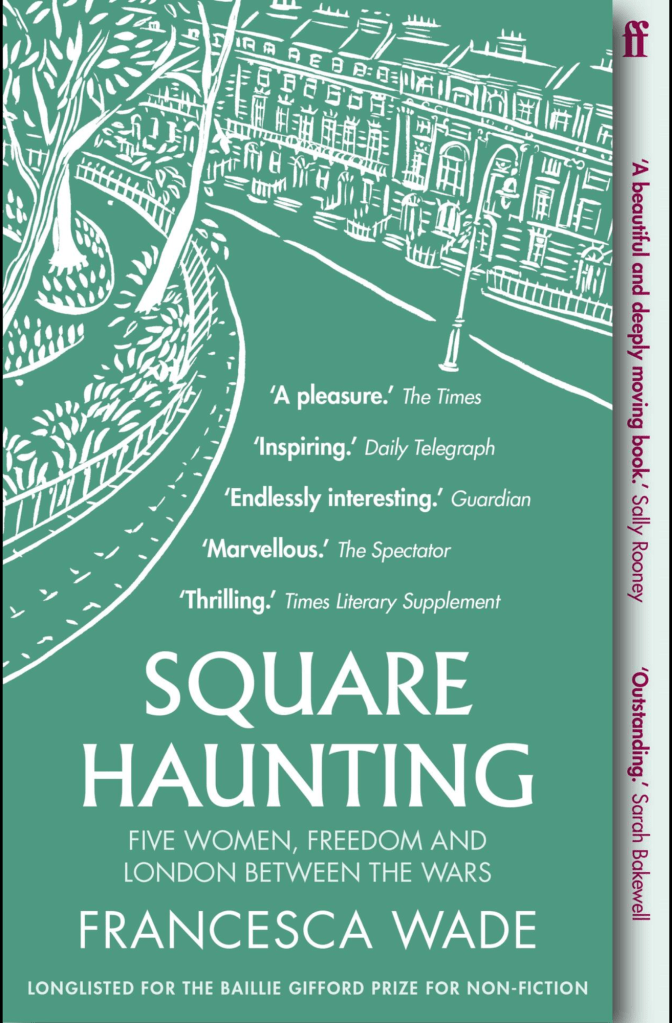
This is a group biography of literary and academic women who are loosely tied together by having lived in Mecklenberg Square. The most celebrated of the five is Virginia Woolf who is the final of the five, but the one that I was most interested in (unsurprisingly) was Dorothy L Sayers – who was living in Mecklenberg Square when she created Peter Wimsey. I’ve written about my love of Sayers’s Gaudy Night before, but the problem at the core of that book, can a woman have her own life and intellectual pursuits and identity and be in a relationship, is a key theme running through this whole book too. The early 20th century was a time when a woman’s right to an academic education was still a matter of debate, and several of the women in this book were at the vanguard of the fight. I found some of the lives more interesting than others (as is always the case) but definitely wouldn’t have heard of or known anything about some of the women without having picked the book up because of the Sayers of it all. Definitely worth reading and one of the more successful group biographies I’ve read. And just to tie it back to D is For Death, here’s a link to a podcast where Harriet Evans and Francesca Wade are talking about Gaudy Night. You’re welcome.

Five Love Affairs and a Friendship by Anne de Courcy
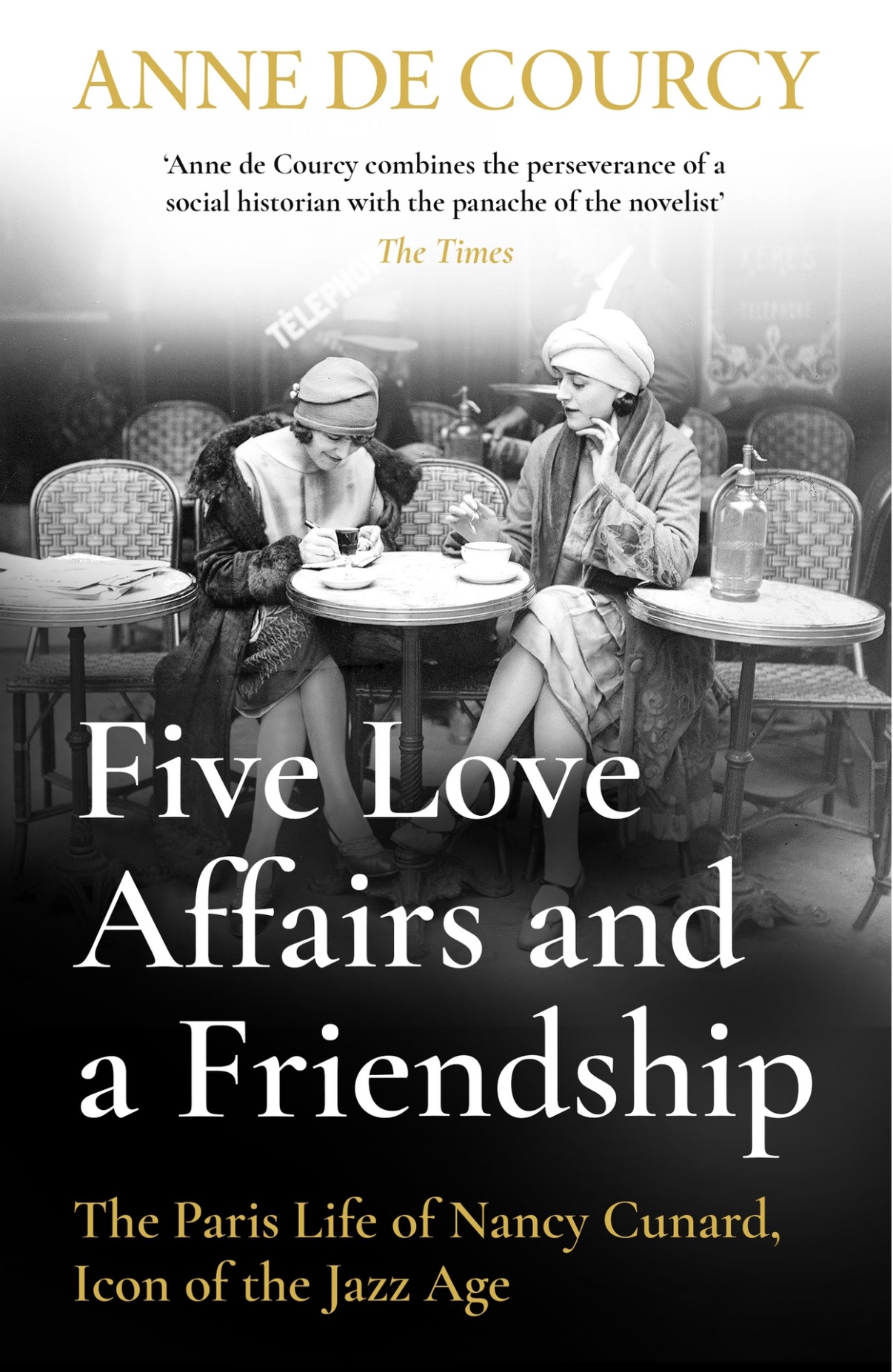
Cover of Five Love Affairs and a Friendship

Anne de Courcy turns her focus on Nancy Cunard in this one. Cunard was an heiress (her father was one of the shipping line Cunards) and was part of a pre-Great War literary circle and then went on to spend the 1920s deeply enmeshed in the literary movement in Paris. She was a muse to many writers of the time – some of whom were also her lovers – and set up her own literary press, before going on to fight racism and fascism. She led quite a sad life in many ways – and this book doesn’t shy away from that, but it’s a really interesting read and a good look at the Parisian side of the roaring twenties. I’m not sure it’s your best place to start with de Courcy though – if you haven’t read any of her books before I might start with The Fishing Fleet or Chanel’s Riviera.

The Crichel Boys by Simon Fenwick
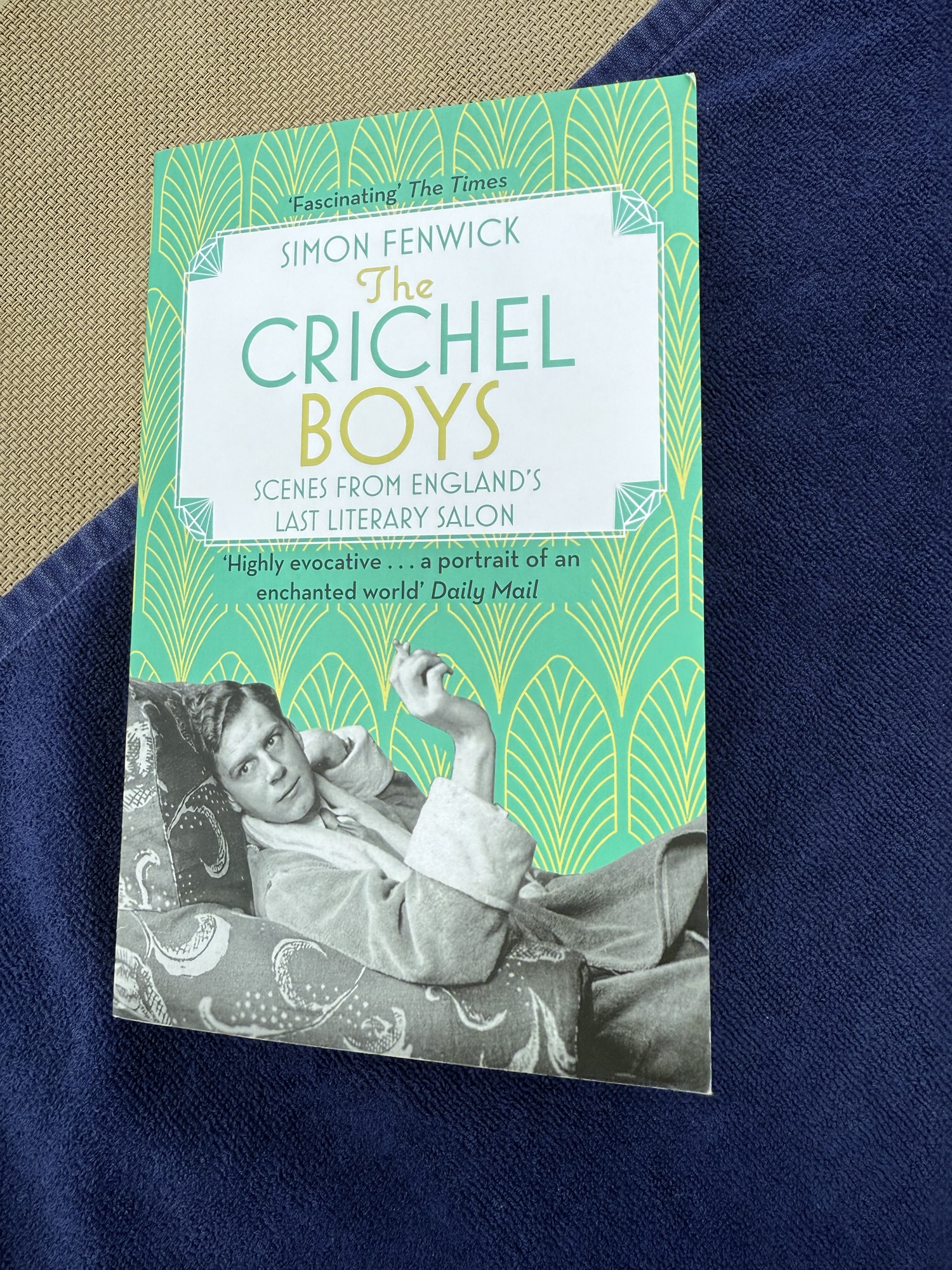
paperback copy of The Crichel Boys on a sun lounger

This is a group biography of Eddy Sackville-West, Desmond Shawe-Taylor and Eardley Knollys who bought Long Crichel Rectory in the immediate aftermath of World War Two. Later they are joined by Raymond Mortimer to form a sort of surrogate family and literary Salon (per the author) that lasted across the rest of the century. I’d never heard of this before I saw the book, but they seemed adjacent to the sort of inter-war Bright Young Things set that I’m always fascinated by (and have read a lot about at this point) so I gave it a go. The big problem for me is that there’s not actually enough to say about the core four (so to speak) so it has to expand out to the rest of their circle. And while that does include Nancy Mitford, Cecil Beaton, various Bloomsbury-set types, Benjamin Britten and more, in doing that there’s a lot of jumping backwards and forwards in time as you get sections on various people and it starts to get very confusing. So not entirely successful, but not a disaster either – Square Haunting definitely worked better!Almost the best thing about it for me was the passing mention of Gervase Jackson-Stops and Horton Menagerie – which is just down the road from where I grew up.

Happy Humpday!

Surviving the 'Rona

Surviving Coronavirus: History Books

This is another post that has been months and months in the making – as you’ll be able to tell if you look at my Goodreads. This started as a non-fiction roundup, but there have been a lot of non-fiction Books of the Week during the Quarantimes, so it evolved into a specifically historical non-fiction post which has taken me (even) longer to pull together than I originally thought. But as always, I got there in the end, even if I’m publishing this after I’m fully vaccinated when I started writing it when a vaccine for Covid-19 was still in the early stages of research.

Alexandria by Edmund Richardson*

Cover of Alexandria

The Alexandria of the title is the city that was “discovered” in the 1830s in Afghanistan, by Charles Masson. Masson was a deserter turned pilgrim turned spy turned many other things who roamed parts of Asia that very few Westerners had visited at the time. I read this before the current situation in Afghanistan deteriorated so far (although by this point it’s more of a complete collapse) and it was already somwhat poignant when talking about Bamiyan Buddhas, but I can only imagine that it will be heart-breaking at this point. It is a fascinating story and impeccably researched but sometimes a little dense. And with so many name changes it’s sometimes hard to keep track of what’s going on with whom. A new area of history for me – in geographical terms, but not in terms of the East India Company and its machinations.

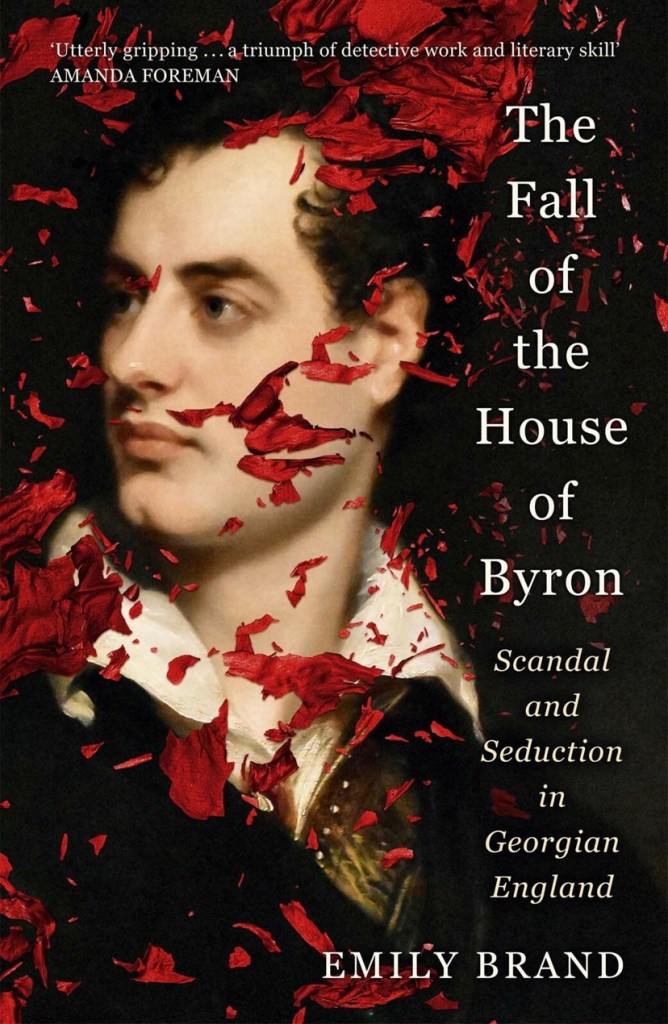
The Fall of the House of Byron by Emily Brand*

Cover of the Fall of the House of Byron

If you’ve only heard of the poet, there’s a lot you’re missing out on about the Byron family – and this book sets out to change that. I had come across Admiral Byron before – but only in passing in history lectures. But it turns out there’s a scandalous sister and a profligate baron who fought in a duel. I enjoyed this, and it’s clearly very well researched, but I found it sometimes quite hard to keep track of the large cast of characters (who often share names) and I found the jumps forward and backwards a little confusing – but that may just be the way that it was formatted in the advance e-copy I had. But if you like histories of aristocratic families, this is worth your while – there is so much going on here in so few generations. And if you’re interested in the poet, then this has valuable insight into his family and backstory – although not a huge amount about him.

Cecil Beaton’s Bright Young Things by Robin Muir

Regular readers will know that I have a fascination for the interwar period – a lot of the fiction that I love was written then, or is set then and I also read a lot of non-fiction and biography from that period. One of the things that I had been really looking forward to doing last spring/early summer was going to the Cecil Beaton exhibition at the National Portrait Gallery. But sadly it was open less than a week before the first lockdown happened. So instead I treated myself (and it was a treat because art books are proper expensive – all those photos) to the book of the exhibition – and it’s so good. It’s got all the pictures that you would expect – and along with writing about Beaton himself, his portraits are accompanied by one or two page biographies of the people they feature. If you like the period, all the notables are here, it’s very dip in and out-able (ideal in these crazy times) and as an added bonus, it’s got a huge bibliography in the back to give you ideas about what to read next on anyone who particularly interests you.

The Romanovs by Simon Sebag Montefiore

Cover of the Romanovs

One last bonus book – bonus because I still haven’t finished it because this is a really long read and a bit gruesome so needs to be read in sensible chunks!  This is Simon Sebag Montefiore’s group biography of the Romanov dynasty. For a lot of people, all they might know about them is the story of the death of Nicholas II and his family in the Russian Revolution but the family had ruled over Russia from the early seventeenth century. I did half of it while running (or what passes for a run with me) because hearing about all the awful ways people got killed made me run faster. But after a couple of generations of people with the same names it started to get a bit hard to keep track of who was who, so I got hold of the ebook and have carried on with that.

Happy Reading!