BBC Four showed one of the Peter Davidson Campion adaptations the other week, so I thought this Friday was a good time to remind you about Margery Allingham’s Golden Age series. I’ve re listened to a lot of them on audiobook as well as having read all bar one I think of the original nineteen novels featuring her response to Lord Peter Wimsey. They are dated in patches – some novels much more than others – but so are some of Agatha Christie and Dorothy L Sayers. If you’re interested in the Queens of Crime and you haven’t read any of these, you should. And you can read my much longer thoughts here.
This week I wanted to highlight a book that might not be as obvious or prominent in the shops. Of course now I’ve said that, it’ll turn out to be everywhere but hey, here we are. I think you can tell from the cover but Sanaka Hiiragi’s The Lantern of Lost Memories is looking to appeal to people who have enjoyed Before the Coffee Gets Cold and its sequels. And I am one of those people, but I’m also someone who quite enjoys the fact that Japanese fiction is just so different from the rest of what I read so I’m prepared to risk tears and melancholy in it even when I’m not in anything else!
It’s about a magical photo studio where people go after they die to view key moments of their life and relieve one of them before they go on to the afterlife. You can see why I might be expecting some tears. Anyway, I’ll try and remember to report back when I read it…
After writing about The Hazelbourne Ladies Motorcycle and Flying Club yesterday, I got to thinking about other novels set just after World War One and that show the changing world that I could recommend – or in fact have mentioned previously.
I’m going to start out with a book that I hated. I know. I know. I’ll explain. It’s Vera Brittain’s Testament of Youth. And I mention it because it’s a classic and it has all the context you need to understand what was going on during this period. It is Brittain’s memoir of the first 25 years of the twentieth century, and shows the impact of the Great War on young women through her real life story. Why did I hate it? Well I read it as part of my reading for my A Level War Literature module, for which I also read Robert Graves’s Goodbye to All That, Siegfried Sassoon’s Memoirs of a Fox Hunting Man and its sequels, Susan Hill’s Strange Meeting and all three books in Susan Hill’s Regeneration trilogy. Now I may just have been war novel-ed out – and those other books all have characters in common (sometimes in need of decoding) so maybe that explains why I hated it, possibly if I went back now I might feel differently, but there are too many books that I’ve never read and that I don’t know that I hate (yet) for me to go back and revisit something I hated. The same applies logic applies to T E Lawrence’s Seven Pillars of Wisdom, which I hated when I read it at uni a year or two later, and which I have never revisited – although I have tried watching the film again a couple of times because it is genuinely beautiful looking with great music. But no.
Ok, that over let’s move on. Obviously it’s not long since I wrote about the Maisie Dobbs series, but Maisie is another whose life trajectory is changed by the Great War – and many of the cases that she tackles can trace their roots to that conflict too. Another female detective, the delectable Phryne Fisher is also a veteran of ambulance driving during the war, an experience which informs her whole attitude to life as well as some of her cases, one of which involves a shell shocked soldier and another her time in Paris after the Armistice. And of course the first Peter Wimsey book came out in 1923 and the lingering impact of his war experiences are very present in the early books.
Away from the detectives, the Bright Young Things are one of the recurring themes of books set after the war. If you haven’t read it, Evelyn Waugh’s Vile Bodies is a good place to start, and then you can moved on to other stuff, fortified by the knowledge that Waugh was there for the real thing. I’m going to be controversial, but I’ve read this more than I’ve read The Great Gatsby – which is the big classic of the era (and which you should also read if you haven’t already). Beatriz Williams also has several novels set in the 1920s – my favourite of them is probably Cocoa Beach. And her frequent collaborator Lauren Willig has The Other Daughter.
And I think that’s probably your lot for now, except to say that I have got some more stuff set in this period waiting on the shelf as well – like Kate Atkinson’s Shrines of Gaiety on the fiction front, but also lots of non-fiction about the era, so no doubt more anon!
A historical fiction pick today, and one that has taken me a while to read on account of my brain’s refusal to concentrate on long books when I’m tired and my uncertainty on how things were going to turn out and my current need for closure and happy endings!
It’s 1919, the war is over and the world is starting to return to normal. Except that normal seems to mean that all the gains that women have made during the war are being rolled back and having had a taste of independence the world is now trying to relegate them back to domesticity. Helen Simonson’s new novel focuses on three characters trying to figure out what their place is in the post-war world. Constance had taken over the management of an estate, but is now losing her job and her home to make way for returning men. After nursing the mother of her employer through influenza, she is sent with her to the seaside, where she meets Poppy and her group of lady motorcycle riders, and Poppy’s brother Harris, an injured wartime pilot who is still coming to terms with his new reality. And then there is Klaus, German by birth but a naturalised British citizen, who has got a job as a waiter again, but is finding that he has to keep a low profile on account of his name and accent.
This is a smart and thought-provoking novel set at an interesting time that is ripe for fiction. It’s also a coming of age story, but there is a deal of darkness to balance the tea dances and parties. The interwar period is one that I love reading about – but I haven’t read a lot of fiction set exclusively at the start of that period, and it gave me plenty to think about as well.
My copy came from NetGalley, but it’s out now and available on Kindle, Kobo and in hardback.
A super busy week – I started it in Lincolnshire, had a couple of nights in London, went to Paris and then finished it at home – so with all that excitement I’m surprised the list is as long as it is. But hey, it’s slightly better list than last week anyway.
I usually try and write here about things that you can go and see. This is a bit of an exception, because it was a one night only thing. But I had a great time, so I’m writing about it anyway.
Bernadette Peters only made her West End Debut I. Sondheim’s Old Friends, but she is an absolute Broadway Legend. If you go on a streaming service and look for Stephen Sondheim songs or cast albums you’ll find her there. And now in her mid-seventies she’s still touring and sounding pretty darn good.
The set list for this included a lot of Sondheim – and pretty much all the stuff that I hoped she would do: Losing Mind from Follies (and Buddy’s Eyes), Send in the Clowns from A Little Night Music, Children Will Listen from Into the Woods, You Gotta Get a Gimmick from Gypsy (with special guests Joanna Riding and Bonnie Langford) and Move On from Sunday in the Park with George. But on top of that she also threw in a couple of songs from Hello Dolly – given that she’s played Dolly and Imelda Staunton is currently headlining that show elsewhere in the West End and things like Nothing Like a Dame, Johanna and Being Alive. It was a wonderful straight through hour and fortyish minutes and from my perch up in the balcony it was amazing. And I think the rest of the audience was as spellbound as I was.
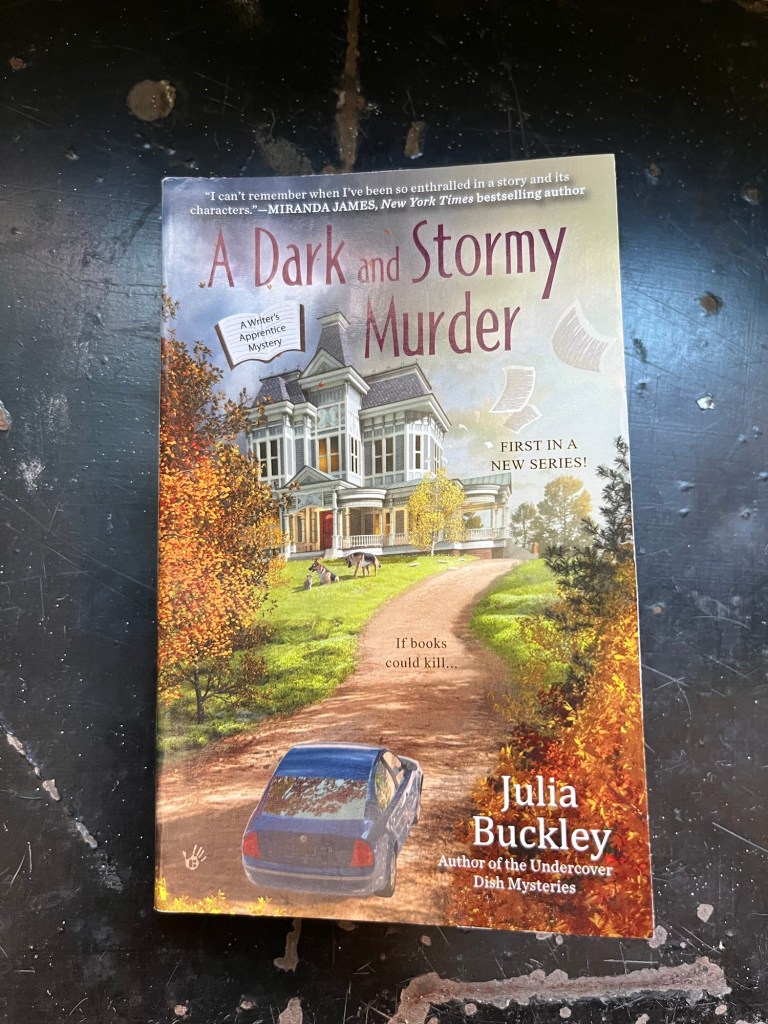
I did Book Con last week, but here’s the other stuff that’s arrive in the last month, not including those ones. So we have two books from Persephone Books – on which more next week. The there is Film Stars at Riverlea which came from a friend, two books from the charity shops – The Fixer Upper and Lilian Boxfish Takes a Walk. I said in my post when the new Lady Sherlock came out we would see how long it took for my preorder to turn up – and here is the answer: it arrived on August 8! Then we have Laurence Leamer’s book Hitchcock’s Blondes, which came down in price in hardback and a cozy crime that I got cheap second hand. All very nice.
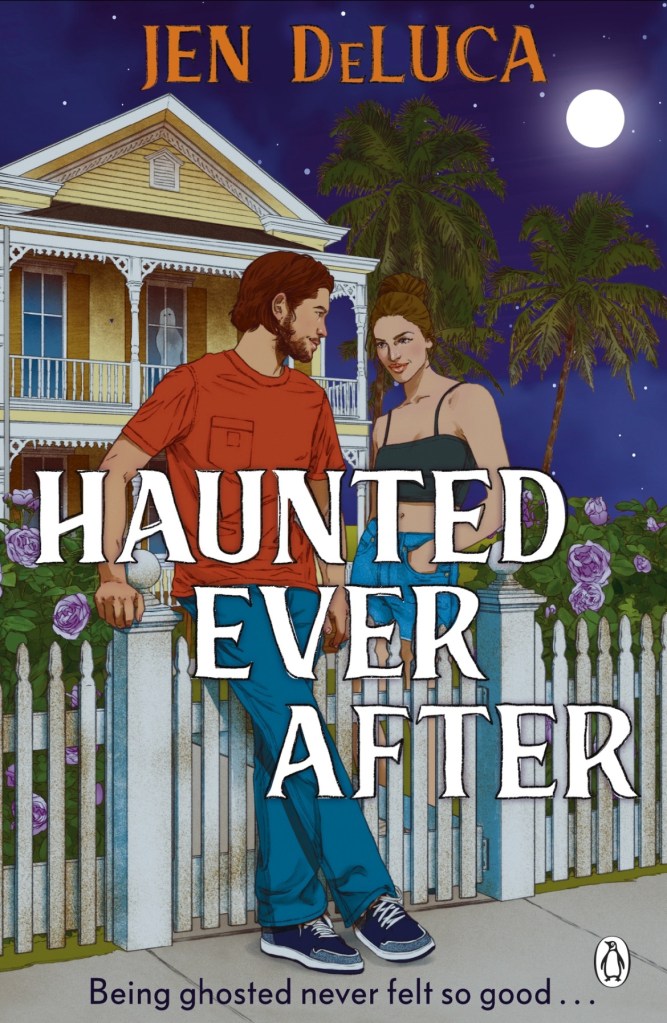
As Jen DeLuca had her new book out yesterday, I’m taking the opportunity to point you at my point about her Renaissance Faire series – variously known as the Well Met, Renn Faire and Willow Creek series, following a group of linked romances all set at or adjacent to a renaissance faire in the town of Willow Creek. I think they’re great fun, and make a great summer read. Here’s my original series post here, and my BotW review of Well Met and preview for Well Travelled as well.
You may recognise Jen DeLuca’s name from the Willow Creek Renaissance fair, but you can see from this cover that this is a new series and a bit of a new direction. The blurb seems to be promising ghosts (as is the cover if you look close enough) as our heroine, Cassie, moves to Boneyard Key and starts to investigate whether her new house is haunted with the help of local cafe owner Nick… I’m looking forward to getting my hands on this at some point when the pile isn’t quite as out of control as at the current moment!