I said last week that I have started my panic for the Fifty States Challenge early this year – and everything I finished this week except Gaudy Night is ticking off one of my missing states! If I can keep this rate up, I’ll be finished before Christmas, but my record on keeping this up is not great so I could still be in a panic on New Year’s Eve like every previous year!
It has been a pretty wet and miserable start to November where I am, so a book from a favourite author that has a cheerful warm cover and makes you laugh is always a nice place to be and given that it’s on offer this month – for the first time as far as I have noticed it seems like a good time to be recommending it.
Kiss Me in the Coral Lounge is Helen Ellis’s latest collection of essays as the subtitle suggests its focus is her marriage and what a marriage can look like more than twenty years in – but it also takes you through the strange days of Covid and the effect that had on everyone. One of the effects on Helen was to become a houseplant person, and that is definitely a thing that happened to me during the pandemic and I felt very seen in the essay when she talks about smuggling more plants into the house and lying about the number of plants she has to her husband!
Ellis’s previous books American Housewife, Southern Lady Code and Bring Your Baggage and Don’t Pack Light have all been books of the week here, across nearly a decade, which means she’s been making me laugh for almost as long as I’ve been writing this blog and so in a way it’s not a surprise to me that I would be writing about this today. On the other hand, not every author that I liked in the early days of this blog has managed to keep up the quality or is still writing things that I like so that should be a testament in itself. I think that the fact that Ellis has another life going on alongside writing (she’s a high stakes poker player) helps provide her with fresh things to write about too, and she’s unafraid to mine her life (and her friends experiences too) or to go and get a new experience for things to write about. Equally, she clearly knows what to leave out – this feels like such a well rounded collection that there must have been more essays written that didn’t make the cut. It’s not a long book, but because it is essays (and because her books don’t come along that often) I rationed myself and managed to spread out my reading of it across more than a week and it was worth it. Now I just have to wait and hope for another collection soon.
I bought this on Kindle, where it’s on offer at £2.99 at the moment. It’s also on Kobo at £3.99 and as an audiobook read by Helen Ellis herself. I have some of her other collections in physical copy (maybe all of them, but I’m not by the shelves to check right now) and I’m not ruling out picking this one up to put on the shelves too, but I don’t remember seeing any of them in the shops. I will check next time I go into a Big Bookshop though.
I was going to say it’s that time of year again where I start to panic about the missing states on my 50 states challenge, except that I actually panicked about three weeks earlier than I usually do which makes me both optimistic about my chances of not ending in a panic, but cautious because I could get complacent. Anyway, four of the seven on the finished list this week
About six – some missing states but also writing the offers post..
Bonus picture: I ransacked the tbr shelves to look for books that would tick off missing states – here they are, in a nice pile to catch my eye and remind me to read them!
*next to a book book title indicates that it came from NetGalley. ** indicates it was an advance copy from a source other than NetGalley.
It’s Tuesday and I’m back with this week’s Book of the Week – which is actually a book that came out last week. I’m even topical. Go me!
The year is 1910 and Haley’s Comet is passing over the earth. On a tidal island of Cornwall, a Viscount is preparing for the apocalypse. But when the staff of Tithe Hall unseal their rooms the next morning, Lord Conrad Stockingham Welt is dead in his office and a murder investigation gets underway. Straight into the police’s crosshairs is Stephen Pike, who arrived at the house fresh from Borstal the day before the murder. But Stephen knows he didn’t do it – he was looking after the elderly aunt of the victim Miss Decima Stockingham, who is foul mouthed, but very, very smart. Soon the two of them are trying to work out who did commit the murder as the policeman in charge of the case makes wild claims to try and pin it onto one of the servants.
This has got such a great premise – I love a cantankerous older woman heroine and the pairing of Miss Decima and Stephen is really entertaining and makes a great use of the above stairs-below stairs nature of the plot. And it’s really quite humorous at times too. I will admit I had the solution worked out well before they did though – but forgive them because there is world building and setting up going on here for a sequel and I am very much here for that when it happens.
My copy came from NetGalley, but it’s out now in Kindle and Kobo as well as in hardback. I’ll be watching out for it in the shops.
It’s definitely heading into winter now. The mornings might be a bit lighter but it’s only temporary and the weather is colder and wetter. And so I’m deep into mystery books because it feels like they suit the season. Last week was fairly calm (especially compared to the week before) and I’m hoping for similar this week. I’ve actually made a proper plan of what I want to read this month, so we will see if I manage to stick to that in any way!
Well. A couple of impulse purchases because the Helen Ellis was on offer as were some Georgette Heyer detective books, although I only bought one of them. I did manage to resist the Foyles double stamps though, but only because I own most of the paperbacks I might have bought already and I had that preordering spree on Waterstones just a few weeks ago!
Bonus picture: autumnal colours in Bloomsbury.
*next to a book book title indicates that it came from NetGalley. ** indicates it was an advance copy from a source other than NetGalley.
It’s Halloween week, and so today’s Book of the Week has ghost in the title, even if it’s not so much spooky or scary as mysterious. You’re welcome.
It’s the end of 1914 and Alma Timperley has just found out that she had an aunt that she didn’t know about, but also that her aunt has died and left her a hotel in her will. The Timperley Spiritualist Hotel is in Cornwall, and caters to a very specific clientele – those who wish to communicate with the dead. And as the first Christmas of the war approaches, there are more people than ever looking for comfort in hearing from their recently departed loved ones. As if that wasn’t enough, soon after Alma’s arrival at the hotel, one of the maids is found dead and there are suggestions that there is a German spy in town. And then there is the fact that Alma can talk to the dead, just like her aunt could.
The spiritualist craze that happened during and after the Great War pops up in a few books – notably (in my reading life anyway) in Dorothy L Sayers’ Strong Poison, where Miss Climpson uses her experience of fraudulent mediums to help Peter Wimsey – but in this case, the mediums (or some of them at least) really can talk to the other side. And in terms of the mystery that needs solving, as a newcomer Alma is able to ask plenty of questions about the hotel and it’s inhabitants without arousing too much suspicion. I have a somewhat mixed relationship with books with supernatural elements as you all probably know by now, but I really, really enjoyed this – it’s a great idea and an interesting twist on a wartime spy mystery and not too heavy on the actual ghosts – I wouldn’t even really say it was haunted. This is F H Petford’s first novel (at least as far as I can find) and the end of the book suggests that there is the possibility of a sequel – which I would read with great pleasure.
My copy of A Ghost Hunter’s Guide to Murder came via NetGalley, but it is out now in Kindle and Kobo, where it is £1.99 at time of writing, as well as in paperback.
Another incredibly busy week, where I went down to Essex and then up to Carlisle as well as work and a trip to the theatre. The list is looking pretty good though, even if the still reading list doesn’t seem to be coming down much. But I can work on that!
Hello everyone. Apologies for the slightly blurry photo – I was finishing this one late night on Sunday, and haven’t been home in daylight to improve this. These things happen. Anway…
What You Are Looking for is in the Library is the stories of a series of people who visit a library in Tokyo and receive book recommendations from Sayuri Komachi, the enigmatic librarian who works there. Each of them is struggling with something in their lives, and although they don’t really tell her that, she senses what the recommendation is that they need. Each chapter follows the person receiving the advice, so you don’t actually see that much of Sayuri – just when they visit her in the library.
This is quite quiet and low stakes, but it’s immensely satisfying and soothing, and I loved seeing little glimpses of the people we had already met in the subsequent chapters. I read this in about 24 hours – starting fairly late on Saturday evening and finishing later than I should have been awake the night before the early train on Sunday and it still almost felt like it was over too quickly. I would happily read a sequel, but so far I can’t see that there is one, although this has been so successful that another one of Michiko Aoyama’s books, The Healing Hippo of Hinode Park, has been published in English already, with another, Hot Chocolate on Thursday, coming early next year although interestingly they both have different translators from this one.
What You Are Looking for is in the Library should be really easy to get hold of – it’s sold a tonne of copies and I’ve seen it all over the bookshops. And of course it’s also on Kindle and Kobo.
Well, I think the thing that should be noted here is that Abdication is more than 500 pages long and quite dense as well as full of lots of people to keep track of. And I finished my craft project (hurrah!) and went out one evening, and went to the cinema as well and so, well yes, the still reading pile has got bigger. But I will work on that this week, even if I am on the move from one end of the country to the other, and going to the theatre again tonight…
On the bright side, I didn’t buy any books that arrived this week, but I did take full advantage of the Waterstones 25% off pre-sale books offer… I got my basket down from over £200 to a much more sensible £60 or so!
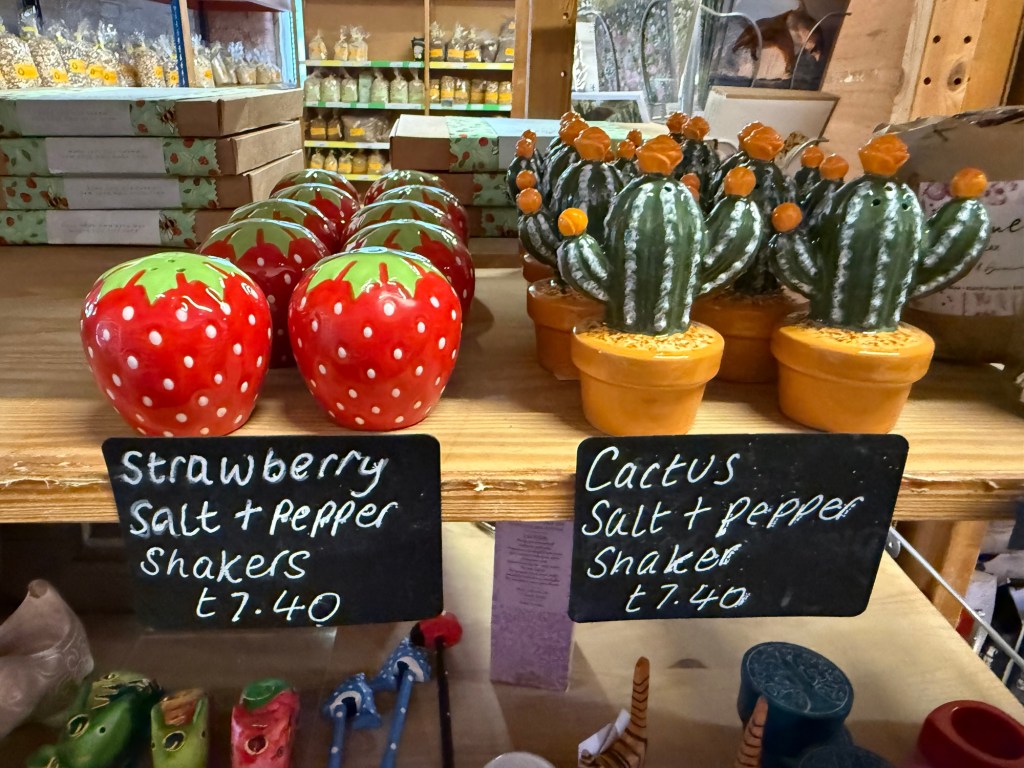
Bonus picture: a sign that made me smile at the book stall at the market (and Diwali fair) on Saturday.
*next to a book book title indicates that it came from NetGalley. ** indicates it was an advance copy from a source other than NetGalley.
Considering how busy last week was, I actually had choices for this week’s BotW, which was a bit of surprise to me, but these things happen and it required some serious thinking to work out what to pick. And hard thinking is tiring. So in the end I went with my first instinct. Whether that will work out in the end, who knows. Anyway…
Red Land, Black Land is Barbara Mertz’s social history of Egypt. It takes you through the daily life of an Ancient Egyptian, although perhaps unsurprisingly considering that most of what we know about them is from their tombs it tends towards the end of their lives and death!
Those of you who have been around here for a while will know that although I love history, it is rare that I venture before the Middle Ages and if push comes to shove, I would say that I’m most interested in the period after 1750*. So why did I venture more than a thousand years before my usual area of interest? Well Barbara Mertz is the real name of Elizabeth Peters, author of the Amelia Peabody and Vicky Bliss series, who did a PhD in Egyptology in the early 1950s and published this and a second book, Temples, Tombs and Hieroglyphics in the 1960s. They have remained in print ever since (having both been revised a couple of times – including in the case of Red Land, Black Land in 2008, which is when the audio book version that I listened to is from.
This is very much an introductory prime, written in an accessible, chatty style. I can imagine it being on the preliminary reading lists for all manner of courses on Egyptology, to get people into the swing of it before they go on to read the drier, more academic texts. In fact in many ways it’s got the same vibes as Ian Mortimer’s Time Traveller’s Guide series (which I also listened to on audio). And if you’ve read the Amelia Peabody series you can see where some of the inspiration for the various plots came from as well as spotting the various real life figures that popped up in that series (Theodore Davis, Arthur Weigel et al) as their discoveries and tombs are referenced.
Your mileage on this may vary depending on how much you like your history books with asides. I really like that (well when it’s an author whose voice I like!) and I found the audio book experience for this a real delight. I listened to the whole thing across about four days, and liked it so much I’ve bought Temples, Tombs and Hieroglyphics in audio too!
Red Land, Black Land is available as an audio book and as a paperback in its current revision, but not on Kindle or Kobo. If you’re tempted to buy secondhand, pay attention to the age and edition that you’re looking at – as from looking at the reviews on Goodreads it would seem that it did change and update a lot over time – especially given that there’s 30 years between the last two updates and scholarship can move a lot in that time!
Happy reading!
*and if you look at the history modules that I did for my degree you will see this born out!