It’s Sunday and once again I’m writing about a show that has already finished – in this case, Tru which had it’s last performance at the Menier last night. But hey, it happens.
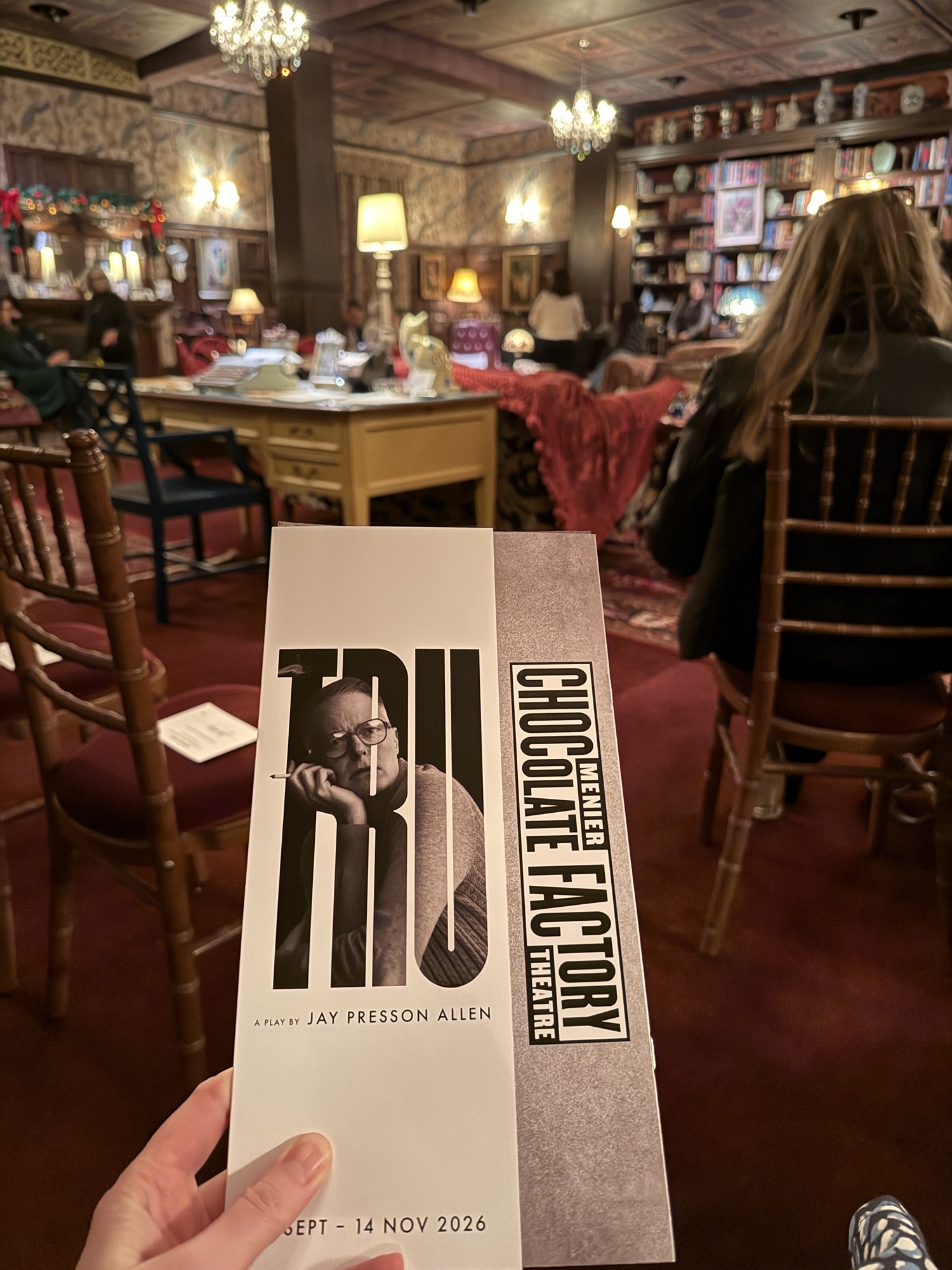
It’s 1975 and Truman Capote is alone in his apartment in the aftermath of the publication of “La Côte Basque, 1965” in Esquire magazine. An extract from his next book, Answered Prayers, it was a thinly veiled portrait of the society circles that he moved within. Except that after it was published, he didn’t move within them any more. His so-called Swans iced him out. You may remember this from my post about the mini-series Capote vs the Swans. In that it was Tom Hollander who played Capote, here it’s Jesse Tyler Ferguson, turning in a truly brilliant performance that elevates the actual material.
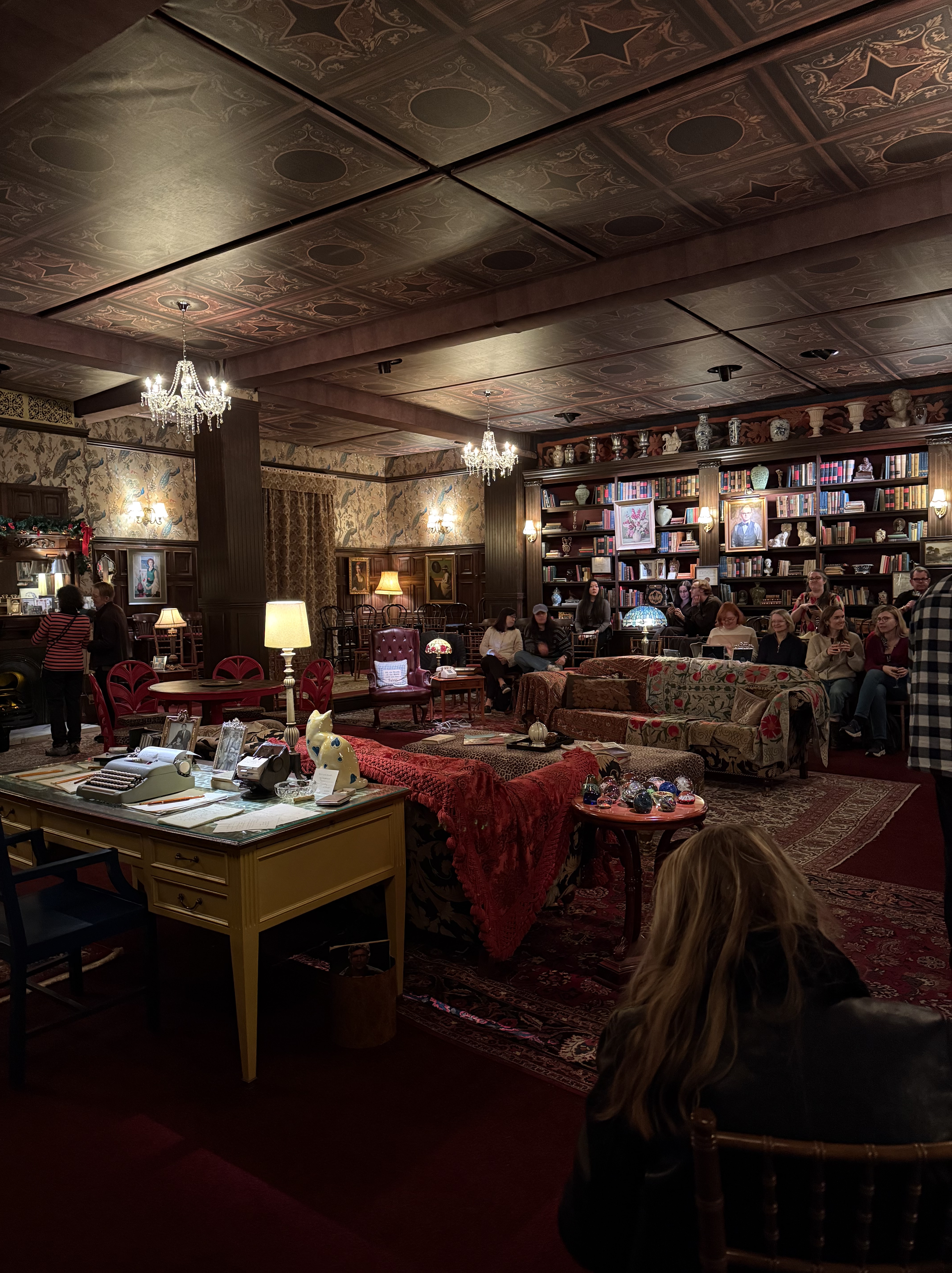
Also elevating the material is the amazing set. I’ve been to the Menier to see at least half a dozen shows at this point (not counting the West End transfers of things like La Cage aux Folles) and one of the things that continues to amaze and astound me is the way they transfer the space. For Midnight at the Never Get it was a New York cabaret club, for The Baker’s Wife it was a French village square and for Fallen Angels it was a corner set. In fact the only time I’ve ever been there and seen a show staged with a stage at the front was The Producers. But this is the most inventive yet. The whole space is turned into a room in Capote’s apartment and the audience seating scattered throughout. With bookshelves on one side, huge windows draped in curtains on another, sofas in the centre, a cocktail station with a record player. Honestly words can’t quite express how brilliant the set was. Tyler Ferguson was great – but the set was (if anything) better.
And he really uses it – at times he sits at a table next to audience members, at others he’s climbing the bookcase next to the stools at the back to find a book to talk about. He’s collapsing on a sofa opposite some audience members in a drunken stupor. And while all this is going on there’s a ghostly swan haunting the apartment. She has only a couple of lines, so it is basically a monologue for most of the 90 or so minutes, but she’s always there, haunting Capote across the course of the single 24 hours of the play while he tells the audience about his life. The title is Tru, which is what he was often called, but it’s also warning: is he telling you the truth about everything – or anything.
As you know, I love reading about Rich People Problems – be they real or fictional – and I’ve read a lot about Capote and his circle. So this really was up my street in terms of topic and I had all the background knowledge to follow exactly what Capote was talking about and that helped overcome any deficiencies in the script for me. How it would work for someone without that background I’m not entirely sure – but you’d at least have an amazing set to look at as you watched a brilliant performance. I guess what I’m saying here that if this ever comes around again in a more traditional set up and with a different actor I don’t think I’d feel the need to revisit!
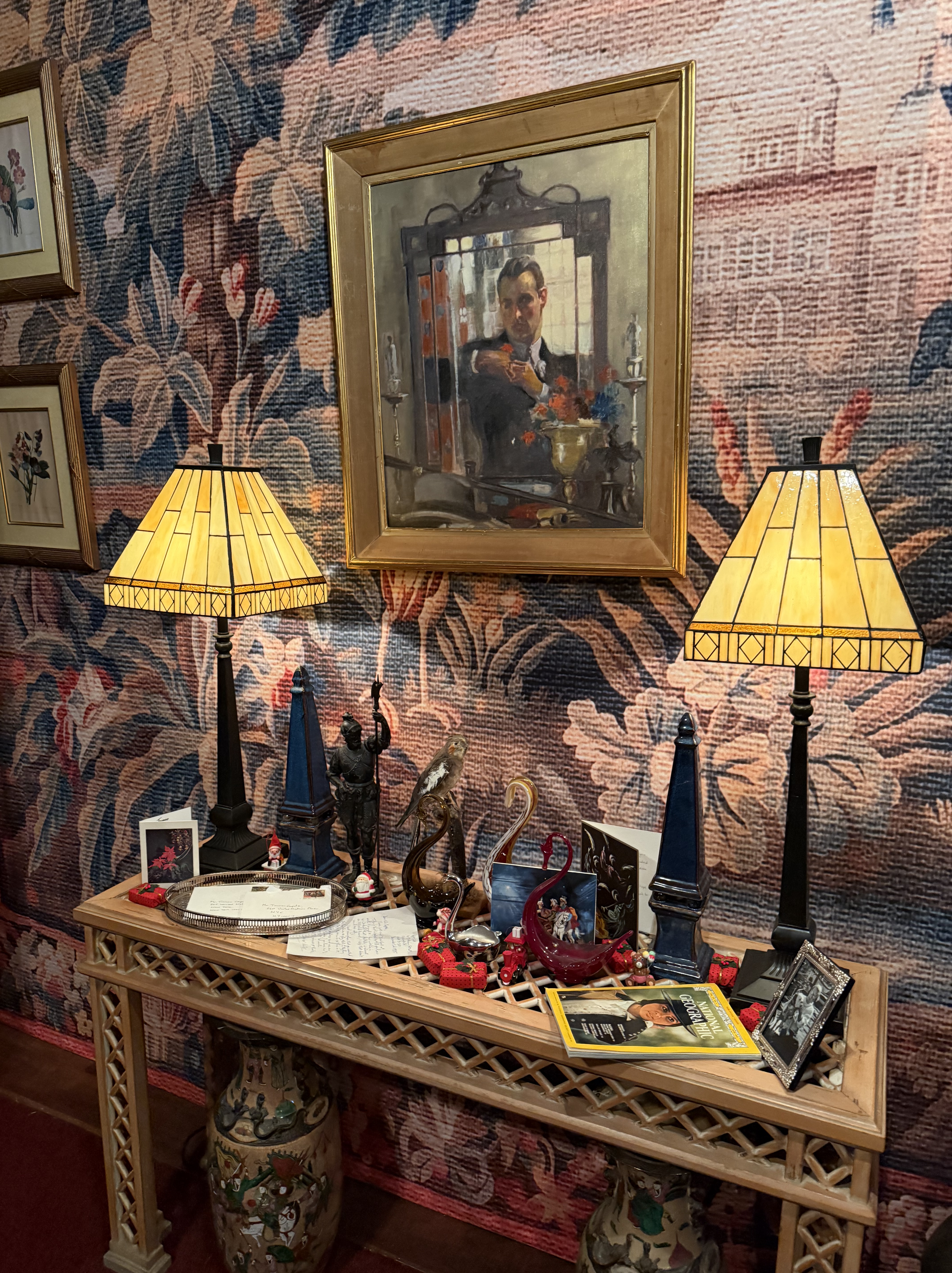
Anyway, I’m off to look out that biography of Capote I have on the shelf, and in the meantime, I leave you with the entrance hall to Capote’s apartment that the audience members have to walk through on the way to be seated. Have a great Sunday!