A total mix of reading this week – non-fiction, fiction, children’s fiction, murder mysteries, new stuff, old stuff. And it’s been a real mixed bag although it was fairly easy to decide what to write about tomorrow! And tomorrow is the start of a new month too, so there’ll be all the usual bits and pieces this week as well.
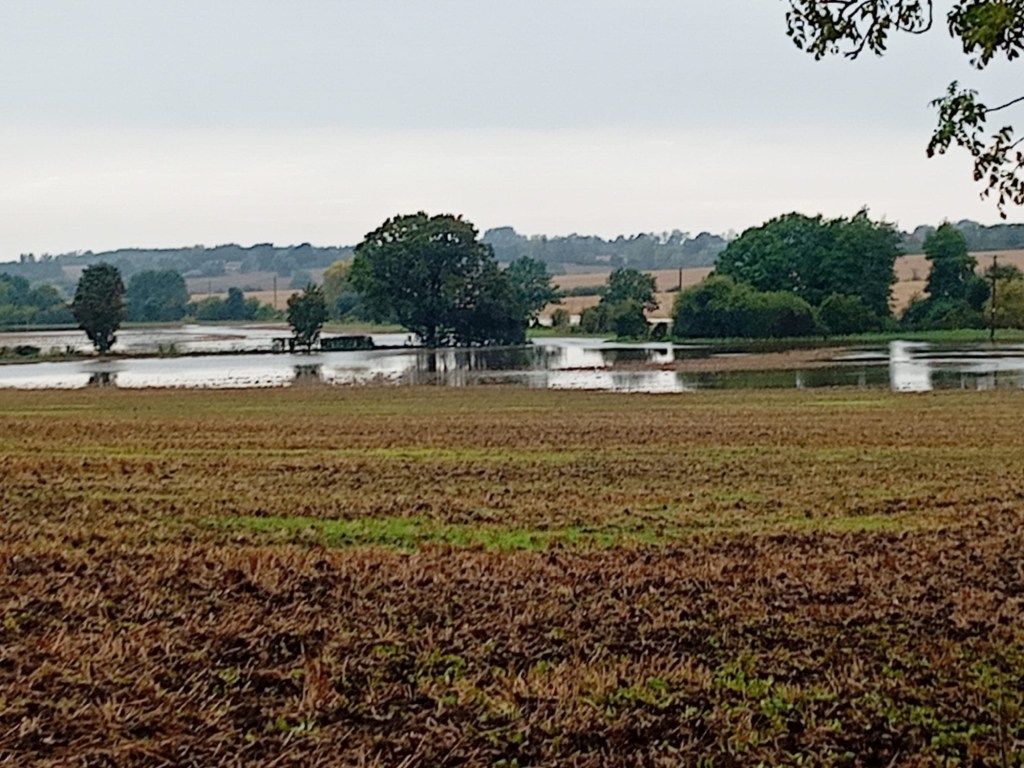
Bonus picture: it has been so wet this week. It feels like it hasn’t really stopped raining, although of course it has. This is a photo from outside town at the start of the week (thanks dad!) – basically you shouldn’t be able to see any water here – the brook runs between the trees to the right – and is usually well out of sight.
*next to a book book title indicates that it came from NetGalley. ** indicates it was an advance copy from a source other than NetGalley.
I’m not going to lie, I had a different post planned for today, but then the news broke on Friday afternoon that Dame Maggie Smith had died and I changed my plans.
There’s been a lot of talk of her two great late-in-life roles – Professor McGonagall and the Dowager Countess in Grantham Abbey – but I’m that little bit older, so for me the first time I saw her was in The Secret Garden and then in the Sister Act Movies. And she was as perfect in those as she was in those later roles, and in fact in everything else she did. You all know my tastes by now – so it’ll be no surprise to you that I’ve seen more of her comedic performances (I’ve got Death on the Nile on the TV as I watch this) on film than I have of the serious stuff, but five years ago I was lucky enough to see her performing in what turned out to be her final stage role in A German Life.
I’ve been really lucky in my theatre-going life to see a lot of the acting greats – and great performances. When A German Life was announced – more than a decade after her last stage role, I bought a membership to The Bridge Theatre just to get the priority booking – and the trip was not just me and Him Indoors, but also my sister and her now-husband and my parents too. And it was so worth it.
In A German Life, she played Brunhilde Pomsel, a German woman who had been a secretary to Goebbels during the Second World War. She spent the whole show alone on stage, sitting a chair telling you about her life – and I think it was the most mesmerising thing I have seen on stage. You couldn’t drag your eyes off her – in fact it was only right at the end, that I realised that her chair had been moving forward and the set receding the whole time. She was that good – and she was in her mid 80s. It was just astonishing.
I should also say that I’ve seen her son Toby Stephens live on stage too – twice in fact because I thought he and Anna Chancellor were so good in Private Lives that I went back for a second visit – with Him Indoors and my parents. So as well as being sad for the loss of one of the greats of British acting, I’m also thinking of him and his brother Chris Larkin and the rest of her family. Their statement announcing the death on Friday was very touching.
I’ll be checking the TV listings to see if any of her film performances pop up over the next week or so as a tribute, but in the meantime as well as Death on the Nile I have both Sister Acts on the TiVo, so I’m sure I’ll find a chance to watch that at some point in the coming days.
Last week I wrote about Shakespeare and Company, this week we’ve got the other bookshop I visited on that Paris trip – Eyrolles, which is just around the corner (in Paris terms) and also has a stationery section. My sort of shop. Sadly I forgot to take a photo of the front, so apologies for that.
The first time I went into a French bookshop, I think one of the biggest differences in noticed compared to a British one was the white spines. And then I noticed the size difference. And how many of them were published by Folio. It was only when I got my first French book back to the shelf that I noticed that they write the opposite way on the spine to British books. And it’s been… well a while since that first visit, and French publishing has changed reassuringly little. There are a few differences though
And it’s not just the nonfiction shelves, a lot of fiction is the same. Except for crime fiction. A lot of them get black spines. And I spent a lot of time in French bookshops during the year that I lived there, and I’ve still not really worked out what the rule is for what gets what on that front. And my French translations of Agatha Christie have yellow covers and spines.
The bit where I noticed a change was in the romance and Romantasy where there were they now seem to be using some of the same covers as other countries rather than going for something completely different: I mean look at the cover on the French translation of Casting Off that I bought – I think we’re on the fourth generation of covers for the Cazalet series in the UK and that is nothing like any of them.
I guess it’s too early to tell if this is the BookTok influence – meaning that people all over the world want their covers to match the ones they’ve seen the US book influencers waving, no matter which language it’s in, but considering how different I know the covers used to be (which I don’t with some of the other countries where I’ve seen the same trend) it’s where I’ve wondered about it the most.
But somethings don’t change – here you see that the spines might not be white, but they’re not all the wrap around cover-spine thing that we get so much in the UK. As I said, I bought a copy of Casting Off in French, some very nice stationery (I love Seyes ruled paper, and have produced some of my best handwriting on it over the years) and felt like proper Parisians, then we went off down the road to Shakespeare and Company to be touristy!
The eighteenth in the Lady Emily series came out this week, so it’s an ideal time for me to point you back at my series post about Tasha Alexander’s (very) late Victorian and early Edwardian sleuth and ancient history enthusiast. I’m still a couple of books behind – I’ve actually only read one more than I had back when I wrote that last post, because the later books remain a right pain to try and get hold of and mostly in hardback to boot an you know the state of my to-read pile so you can see my issue. Anyway, book 18 sees Emily and Colin in the Bavarian Alps, staying within sight of Mad King Ludwig’s castle and solving a mystery with its roots in the past.
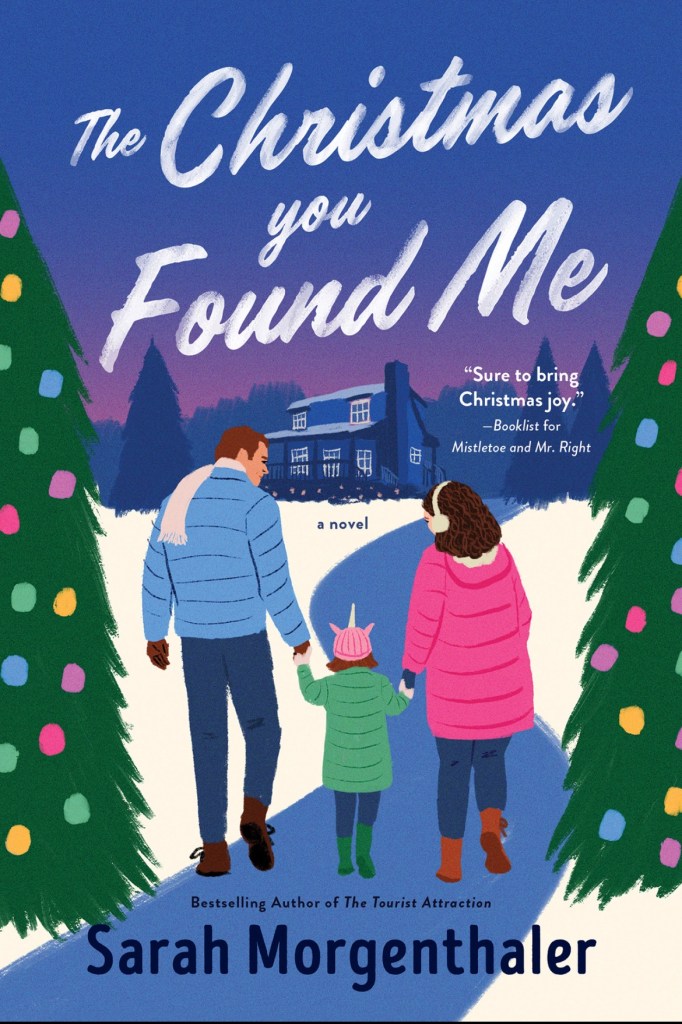
This really is the weirdest time of year for book releases. We’re not past Halloween yet, but the we’re already into the Christmas-themed book releases. And yes, I’ve picked on today, I can’t help myself, because its the new book from Sarah Morgenthaler – after a four year gap since the end of her Moose Springs series.
The blurb for The Christmas You Found Me has a single dad answering an advert that was meant to be a joke and a fake marriage plot with a recently divorced ranch owner, so that he can prove that he has the money for the mediations his daughter will need after a potential kidney transplant. Which sounds like a lot, and a bit of a turn from the Moose Springs books which were unabashedly Grumpy-Sunshine romances, but I really liked Enjoy the View (it was a BotW after all) so I will keep my eye open for it for that, but also because it’s set in Idaho, which is traditionally one of the harder states to cover in the 50 States challenge! Morgenthaler in fact was my regular solution to Alaska, so I’ve had that as an issue the last couple of years. And this year in fact…
I don’t know about you, but there’s something about some books that means I just want to get them out to read them in the autumn. Curl up on the sofa with a blanket and re-read a favourite type things. So here we are today with some of the books that I think would make a great read at this time of year.
I would say there are two big themes in the autumn. One is back to school and the other is Halloween. Well the spooky books can wait til next month, but I have a boat load of school books on my shelves as you know, but most of them are for kids and are somewhat… classic. So I’m going to suggest Jenny Colgan’s Maggie Adair series – I’ve read the first two which were originally published under the pseudonym of Jane Beaton, and there are now two more. They’ve been blurbed as Mallory Towers but for Grown ups if that helps with the vibes. The first one is Class, then Rules, Lessons and most recently (earlier this year) Studies and they should be relatively easy to get hold of.
Autumn is also the perfect time to start a new to-you series. I often do a re-read of The Cazalets at this time of year, and given that I bought Casting Off in French the other week, I could try my luck at that if my brain is feeling in gear. But I think Angela Thirkell’s Barsetshire books also make for good autumn reading. You don’t have to read them in order, but the earlier ones are better – my choices for good ones that feel autumnal include the first one High Rising, or Pomfret Towers or The Brandons. And there are also a couple of school-set ones if you want to continue the back to school vibes. And it’s also a pretty good time to start a Cozy Crime series – and goodness knows I’ve written about enough of them over the years, although some feel more autumnal than others – probably due to where they’re set. So for example Jenn McKinlay’s Cupcake Bakery series feel like more summery books to me because they’re set in sweltering hot Arizona, but her Library Lovers series definitely feels autumnal because it’s set in Connecticut and there’s often talk of stormy weather. I know. I’m weird.
If you want a more recent release, I think recent BotW The Hazelbourne Ladies Motorcycle and Flying Club would be a good pick – because it’s about new starts and despite having been out of school for a while I always think of the new school year as a new start.
It’s been a while since I picked a British Library Crime classic, but I’m back with another one this week because it’s really good.
So, four men are due to fly on a plane to Dublin, but only three board. When it goes down in the Irish Sea, there are no bodies and the police have no idea who the man was who didn’t board the plane. And so they turn to the Wade family, who knew the four men due to fly, and question them to find out. Over the course of the book we find out about the dynamics of the household and try to work out who on earth was the man who didn’t fly.
According to the introduction it was the first novel to be nominated for the both the Golden Dagger and its American equivalent – and I can see why. For perspective also nominated for the Golden Dagger (then called the crossed red herring) that year was Ngaio Marsh’s Scales of Justice. The following year it was won by previous BotW pick The Colour of Murder. It is not a conventional murder mystery and I’m going to warn you now: there are a lot of unlikeable characters in this one. But it’s so good. I read it in basically an evening and I didn’t care if it ended up making me go to sleep late. It’s that sort of book.
My copy came from a friend – who left a stack of secondhand BLCC’s with me because her bags were too full – but as with the others in the series it’s also on Kindle and I’m sure sooner or later it will turn up in their KU selection.
A slightly shorter list than I would have hoped this week, but Kingmaker is *really* long – 500+ pages all in – but it’s also really good, so I’ve spent a fair bit of time reading that this week. And I’m nearly done with Hitchcock’s Blondes too – I’ve reached Tippi Hedren, but as I said last week, it’s a hardback and they don’t travel to work with me. Anyway, fingers crossed this week I’ll actually finish them as we barrel towards the end of September.
One book and one ebook bought – and a couple of last week’s purchases arrived too!
Bonus picture: after mentioning Maigret in my post about Parisian books on Wednesday, I noticed this themed display tower in Waterstone’s Gower Street when I was in there on Thursday!
*next to a book book title indicates that it came from NetGalley. ** indicates it was an advance copy from a source other than NetGalley.
You know there are some films where if you come across them on TV you just end up watching them again? Hot Fuzz is one of them for me – and the 1999 version of The Thomas Crown Affair is another.
Pierce Brosnan’s Thomas Crown is a wealthy industrialist and playboy. And as we discover in the opening sequence, he’s taken to stealing art from museums for kicks. Rene Russo is Catherine Banning, the insurance investigator sent to find out what happened to the Monet that has gone missing from the Metropolitan Museum of Art. She soon grows suspicious of Crown and the two start a romantic cat and mouse game.
This has got romantic tension and intrigue galore and two brilliant heist sequences to boot. You can’t help but root for Thomas, even though he’s stealing things, and Rene Russo is impossibly glamorous as Catherine. This is a remake (although somewhat tweaked and updated) of an earlier Paul Newman and Faye Dunaway movie of the same name, which I keep meaning to try and find and then never getting around to. But in terms of a film where people have cool jobs and live amazing lives in New York, this is right up there. Just try not to think too hard about how much money this must all cost – although at least to give this some credit Thomas is explicitly super wealthy and Catherine explains she gets a percentage of the value of the artwork that she recovers, so it fairs better on that front than say You’ve Got Mail or When Harry Met Sally!
The Thomas Crown Affair pops up fairly regularly on the various ITV channels in the UK, and it’s also on the MGM subscription service within Amazon Prime. And just a couple of weeks ago it was announced that there is third version of the story coming – this time directed by and starring Michael B Jordan. I’ll be going to see it just to see how different it is from the other two…
This week’s Recommendsday was inspired by the trip to Paris, so it’s only fair that I write about a Parisian bookshop – and this is probably Paris’s most famous bookshop of all.
It should first be noted that this is the second bookshop called Shakespeare and Company that Paris has had – the first was set up by Sylvia Beach just after the First World War and was where Hemingway and all the Lost Generation crowd hung around in the 1920s and 1930s. That Shakespeare and company was forced to shut down by the Nazis in 1941 and never reopened.
This Shakespeare and Company opened as La Mistral in 1951 and was renamed in 1964 on the 400th anniversary of Shakepeare’s birth in honour of Sylvia Beach and her store. And it is now iconic in its own right. It sells new, second-hand and antiquarian books and the crowds to get in start early. We came past about an hour before opening time on the day we visited and there were already a couple of people waiting. We went and had breakfast, stopped at another bookstore (about which more next week!) and came back and the queue had grown somewhat…
This is one of my photos from the queue – you can see some of the queue but also the wonderful (working) water fountain. Luckily it was quite a fast moving queue that morning – we were probably only waiting about ten or fifteen minutes to get in, which was less than I was expecting so I was pretty happy on that front.
You’re not allowed to take photos inside, so this is all I can offer – but you can see the sort of higgledy piggledy ambiance that’s going on, which is just the sort of bookshop that I love. There’s no rush to get you in and out and there are plenty of spots to sit if you want to – but we were a bit tight for time, so we had a really lovely wander around – I picked up that second hand Elizabeth Taylor you saw in Books Incoming and my sister got a cute childrens book – mine got the famous stamp, hers got the sticker, and we were very happy. It’s literally just across the river from Notre Dame, so if you’re heading there to see how the rebuild is going, it’s really easy to find.





 Verity Reads Books (lots of them)