Inspector Cockerill is on holiday. He’s already regretting leaving Britain on a package tour by the time the plan lands in Italy, but by the time the tour group make it to a tiny island off the Italian coast the whole tour group is consumed with tension and rivalries. And then one of them is murdered in the hotel. Cockerill believes the killer must be one of the people who was on the beach with him and sets out to try and figure out who is responsible before the local police pick who they think is the culprit.
This is the sixth mystery featuring Inspector Cockerill and was first published in 1955. It contains some of the attitudes to foreign people that you often spot in British books of this era, but the difference between this and say, Shirley Flight – Air Hostess, is that I’m fairly sure Christianna Brand is doing that as satire – or at least for humorous reasons. The actual murder itself is a really cleverly constructed “impossible crime” and there are certainly plenty of people with motives for it. And when the solution is unravelled you see that all the clues were there and you just missed them. It’s pretty good.
This only came out in July – and it’s currently in Kindle Unlimited, which means you won’t be able to get it on Kobo at the moment. But the BLCC have published several other Christianna Brand books and some of them are not in KU at the moment so you should be able to get hold of those on Kobo if you want – and they’re petty good too. Green for Danger was a BotW as well and I’ve reviewed Suddenly at His Residence as well.
It’s been a while since I picked a British Library Crime classic, but I’m back with another one this week because it’s really good.
So, four men are due to fly on a plane to Dublin, but only three board. When it goes down in the Irish Sea, there are no bodies and the police have no idea who the man was who didn’t board the plane. And so they turn to the Wade family, who knew the four men due to fly, and question them to find out. Over the course of the book we find out about the dynamics of the household and try to work out who on earth was the man who didn’t fly.
According to the introduction it was the first novel to be nominated for the both the Golden Dagger and its American equivalent – and I can see why. For perspective also nominated for the Golden Dagger (then called the crossed red herring) that year was Ngaio Marsh’s Scales of Justice. The following year it was won by previous BotW pick The Colour of Murder. It is not a conventional murder mystery and I’m going to warn you now: there are a lot of unlikeable characters in this one. But it’s so good. I read it in basically an evening and I didn’t care if it ended up making me go to sleep late. It’s that sort of book.
My copy came from a friend – who left a stack of secondhand BLCC’s with me because her bags were too full – but as with the others in the series it’s also on Kindle and I’m sure sooner or later it will turn up in their KU selection.
Yes this is something of a cheat, because I finished this on Monday, but it would have been Sunday night if I hadn’t been so very tired after book conference. So here we are, and let’s hope now that I’m not scuppering myself for next week’s pick!
When an Amy Snowden marries a much younger man, her neighbours are outraged. When she then apparently kills herself a few months later, her husband then disappears. The coroner rules it suicide, but Sergeant Caleb Cluff isn’t convinced. He knows the area and Amy and thinks someone is getting away with murder. So he sets out to find out the truth about what happened to Amy, despite the disapproval of his colleagues.
This was originally published in 1960, but like the Lorac the other week it is another that is really good at conjuring the location and the people and is very atmospheric. It’s also quite creepy – as a reader you’re not in a lot of doubt about whether it was a murder at the start but it builds and builds. Yes there are some slightly dubious attitudes here, but it does all make sense within itself. This is the first in a series and I will look out for more.
This is in Kindle Unlimited at the moment, so if you don’t read on kindle you may have to buy the paperback or wait for it to cycle out of that for it to pop up on Kobo.
As I said yesterday, a busy week in life and also a fairly busy week in reading. And I’m back with a British Library Crime classic pick today, because this is really good – and also has a beautiful cover.
It’s just after the war and Inspector MacDonald is hunting for a coupon racketeer who has gone missing in London, reported missing by his fiancée. In Lancashire Giles Hoggett, a book dealer turned cow farmer, has found something strange and potentially sinister in his fishing cottage. His wife is sceptical but he writes to a Scotland Yard detective who solved another case locally not that long before. Soon MacDonald is visiting for the weekend and it seems that his coupon case may be connected to the missing items at the cottage.
I really like E C R Lorac. Almost every time I read one her books it’s up there for Book of the Week – and it was a surprise to me that it’s been a year since I picked one. She is so good at writing about Lancashire and the communities there, and this really evokes the tight-knit community in the countryside as well as the immediate aftermath of the war. As the granddaughter of farming families (on both sides!) I really love the way she writes about people who know their land, the rhythms of the seasons and that you have to respect nature. Oh and the mystery is pretty good too!
The Theft of the Iron Dogs is available as a paperback in the British Library Crime Classics range and it is in Kindle Unlimited at the moment, which means it’s not on Kobo right now, but as I’ve said before the BLCC titles rotate in and out of that still be back on Kobo at some point.
So another year, another British Library Crime Classic BotW pick – but hey I made it into February before I recommended one!
The Belting Inheritance is not a murder mystery. Well it is, but that’s not the main thing it is. It’s the story of a supposedly dead son arriving back home, and the events that ensue. It’s told by Christopher, who is not a son of the house, but whose moved there after the death of his parents when his mother’s aunt swept in and moved him from his old life to Belting. Lady Wainwright reigns over the house with her two remaining sons in residence. Except one day, just her health is failing, a man appears claiming to be her son David who was shot down in the war and reported killed.
This isn’t the first book I’ve read with a plot about someone returning from the dead – I studied Martin Guerre as part of my history degree, and Josephine Tey’s Brat Farrar is brilliant too. This is equally twisty and peopled with characters that you really dislike which adds an extra twist to it all. I raced through it and although I wanted more at the end, that was just because (as ever) I wanted to know more of what happened next. Definitely worth picking up if you see it.
My copy was via Kindle Unlimited, which means it won’t be on Kobo at the moment, but I’ve definitely seen it in the usual bookstore who carry BLCC books so hopefully it’ll be findable if you are interested.
I know I mentioned a BLCC book in last week’s Quick Reviews so it’s two in a week, but I didn’t realise at that point that I was going to read another really good one so soon! Anyway, it is what it is – there were some fun books last week but a lot of rereads or authors I’ve already written about recently, so I’m just going with it…
It’s a cold evening in the winter of 1942. The blackout is in effect and passengers are stumbling their way towards the commuter trains home from London at Euston station. One of the passengers is Councillor Grayling, carrying £120 in cash that will be used to pay staff the next day. But after he gets off the train the cash goes missing and he ends up dead. But who did it? When the police start to investigate they discover that there are dark secrets among the passengers who he shared a train compartment with and that more than one of his fellow passengers might have wanted Grayling out of the way.
This is a really interesting mystery but it’s also a really atmospheric look at life on the Home Front during World War 2. First published in 1943 it’s another one of those war time books where the writers didn’t know who was going to win the war – and you can definitely feel that in the writing. There are lots of books set in the Second World War, but not that many of them (or not that many that I’ve read) where you really feel the uncertainty and fear of the population – that they really didn’t know how it was all going to turn out. There’s no hindsight or picking events because they foreshadow something else or because something is going to happen there (all the authors who send people to the Cafe de Paris I’m looking at you) – it’s just how things happened or felt at the time. The only other one I can think of that does this – although it’s not a murder mystery is Jocelyn Playfair’s A House in the Country – which also has a feeling of uncertainty going through it even more than this because at the end people are going back to the fronts and you don’t know if they’ll make it.
Anyway, that aside there are plenty of people who wanted Grayling dead as he’s not a particularly likeable sort of person and the book takes you around the carriage as Inspector Holly investigates the case and tells you the backstories behind each of them. I found myself having quite strong opinions on who I didn’t want to have done it which is always good I think. Raymond W Postgate didn’t write a lot of mysteries – in the forward to this it suggests that may be his first one, Verdict of Twelve, was so well received that it was hard to follow. I haven’t read Verdict of Twelve (yet) but if this is the less good second novel it must be really blooming good!
I read Somebody at the Door via Kindle Unlimited (which also includes Verdict of Twelve at the moment, so I think you know I’ll be reading that soon!) but as with all the British Library Crime Classics they cycle in and out of KU and when they’re not in they’re also available on Kobo. And they’re all in paperback, which you can buy direct from the British Library’s own online bookshop here. They do often have offers on the BLCC books (like 3 for 2), although they don’t seem to at the moment.
Pinch, punch etc. Just the two for the quick reviews this month because it’s been a fairly re-read heavy month and I’ve already written about a lot of the new and new-to-me stuff! But hey, two is better than nothing right?
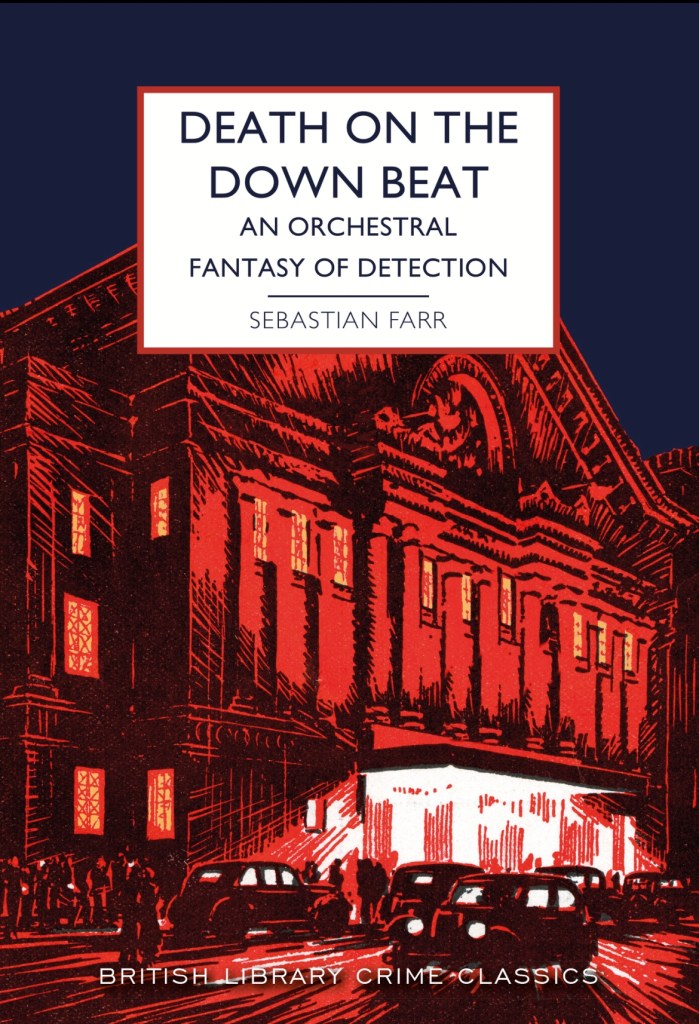
Death on the Down Beat by Sebastian Farr
Well this was a lot of fun. It’s both a musical mystery and a story told entirely through correspondence so that makes it a touch different to a lot of the other Golden Age Murder mysteries that you might come across. Our victim is a much-disliked conductor shot dead mid performance, seemingly without anyone seeing anything amiss until he keeled over. Our Detective is DI Alan Hope and the story is told thorugh the letters that he sends to his wife about the case – and the documents he includes in with that – which are a mix of letters from suspects, newspaper clippings and other similar items. It’s a really clever way of doing things – and it’s a shame that Farr never wrote any more, although I suspect it would not be an easy trick to pull off more than once. If you know a bit about music you’ll be able to follow this – I think if you know more about music than I do (grade 6ish clarinet and piano, bad at music theory) then you’ll get even more out of it. How it would work for a non-musician I don’t know!
A Lady’s Guide to Scandal by Sophie Irwin
As you might remember I read and really enjoyed Irwin’s first book when it came out last year, and so I’ve now come back to report in on her latest. My main critique of the first book was that there was just so. much. plot going on but that it moved so fast that you didn’t notice it. This second book doesn’t work as well – or at least didn’t for me – and the main culprits (I think) are that firstly that the two love interests in the heroine’s love triangle are both not great (at 50% I was wondering if we were going to get a late arriving third contender) and secondly that the heroine is just… hard to root for. She is both a pushover and ridiculously foolhardy by turns and it just gets very wearing really quite fast. And then – like the first book – it’s got a lot of plot, which leaves not a lot of time for it all to be resolved satisfactorily and when you don’t love the main characters you notice that. There’s a big revelation at more than 80% through that there is not time for a redemption for and the final resolution and reveal is just… too much too quickly. I’m sad I didn’t enjoy it more to be honest.
This week we have the latest in my occasionalseries of round-ups of books in the British Library Crime Classics series. I’ve readquite a lot of them now, so we’re a even further into the more recent releases – so even more forgotten section of their books, but there are still some good books to be found there
The Black Spectacles by John Dickson Carr
Poisoned chocolates are not exactly unknown in detective fiction, but this is a really good example. A young woman is suspected by her village of having planted poisoned chocolates in the village sweet shop. The local landowner stages a memory game to try to prove his own theory about how they could have been poisoned – and ends up dead himself. And it’s all on film. The crime is seemingly impossible, and yet someone has done it and Dr Gideon Fell is going to figure it out. It’s really good and really clever and keeps the level up all the way through. I’ve only read about half a dozen of John Dickson Carr’s mysteries, but this is one of my favourites of them – Til Death Do Us Part was a BotW and if you liked that, you’ll probably like this too.
Suddenly at His Residence by Christianna Brand
I’m working my way through the Christianna Brand books that are available from in the British Library Crime Classics series as they become available in Kindle Unlimited. I think Green for Danger is still my favourite, but I enjoyed this one more than Death of a Jezebel. This features a grandfather with a complicated family life who is found dead the morning after saying he would change his will. There are a lot of people who wanted him dead, and a crime that seems very hard to have committed. It’s set while World War Two is still going on (1944 to be precise) and although it was published in 1046 so it doesn’t quite have the same sense of not knowing what would happen that Green For Danger has, but it still has lots of wartime detail that adds to the mystery and setting. A very easy and interesting mystery.
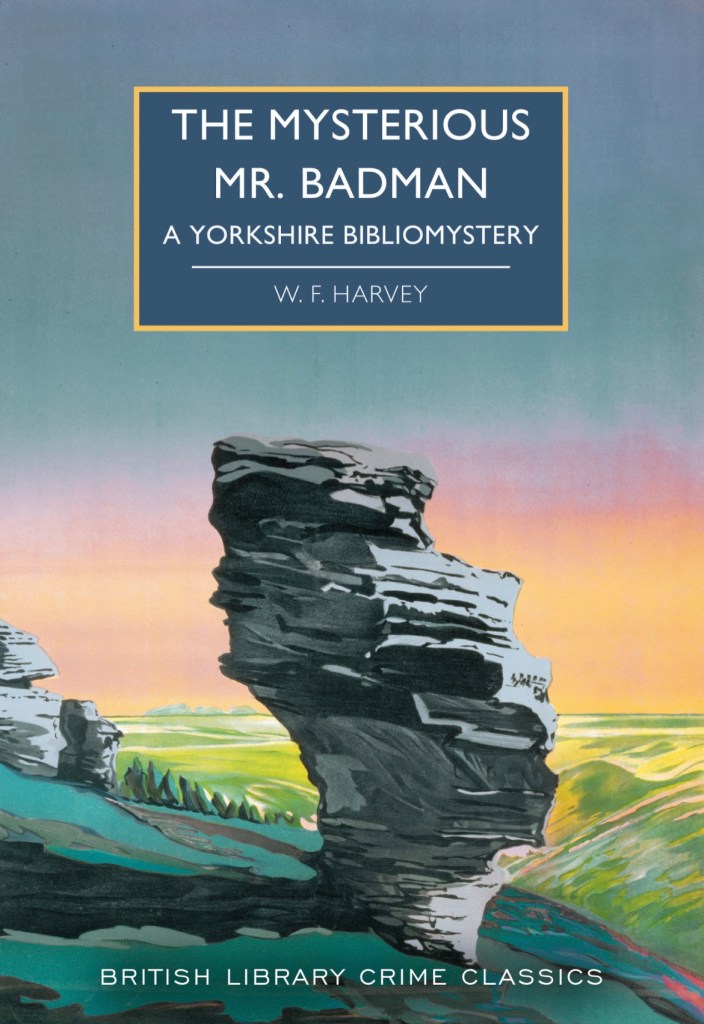
The Mysterious Mr Badmanby W F Harvey
And finally one from the thriller-y the end of the British Library Crime Classic collection. The Mysterious Mr Badman features a a mystery that starts with the nephew of a blanket manufacturer agreeing to mind the bookshop below his lodgings for an afternoon and three men coming all looking for the same book by John Bunyan. From there, it turns into a murder mystery with political overtones, the morals of which you may or may not agree with, but that will still manage to sweep you along while you’re reading it. I nearly called it a caper, but that’s not is not really the right word when there is murder involved. but think 39 steps, but with a book and a murder at the heart of it. Not bad at all.
As I said on Sunday, I’ve already written about so many books this month that I don’t have much left to tell you about. But I’ve managed to write a few sentences about a couple more books from the June pile for you!
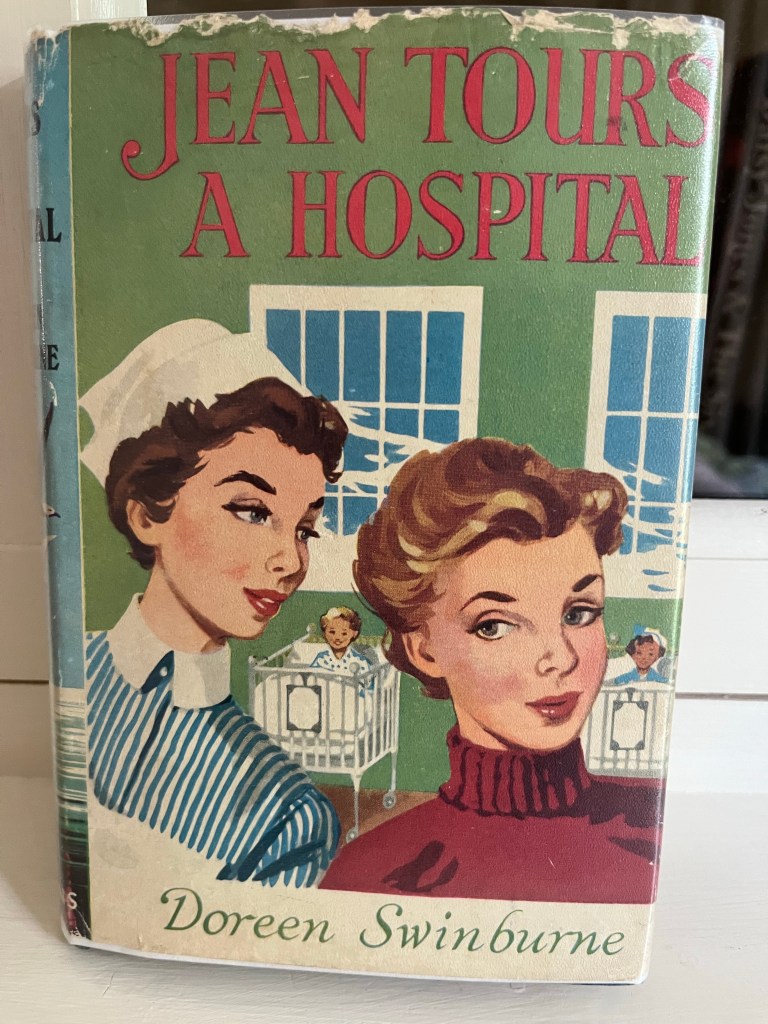
Jean Tours a Hospital by Doreen Swinburne
I’m starting with something completely left field that I’m not expecting any of you will ever read. This was one of my purchases at Book Conference last summer and as the title suggests is a career book encouraging girls into nursing for a profession. It’s not a great work of literature, but it is a fascinating look at what nursing was like in the 1950s – lots of cleaning, nothing disposable, lots of people on bedrest and not a drop of blood insight on Jean’s tour! Of course nursing is for girls and doctoring is for boys and there is the usual suggestion that if you’re a good girl you might get to marry a doctor but there’s also some interesting (for the time) ideas from the Matron about nursing becoming a degree subject. Not a masterpiece, but fun half hour for what I paid for it!
Final Acts ed Martin Edwards
This is another collection of classic crime short stories all set in or around theatres. I know I mention the BLCC stuff a lot – but usually in the context of the novels (see last week’s BotW for example) because I find the short story collections can be a bit patchy. But this one is a good one, with some big names you’ll recognise including Dorothy L Sayers doing a not Wimsey story and Ngaio Marsh Alleyn short, and some smaller names you may have read full length novels from like Christianna Brand. I do like a theatre-set story (be it murder mysteries or romances) so maybe that biased me, but it’s in Kindle Unlimited at the moment so worth a look.
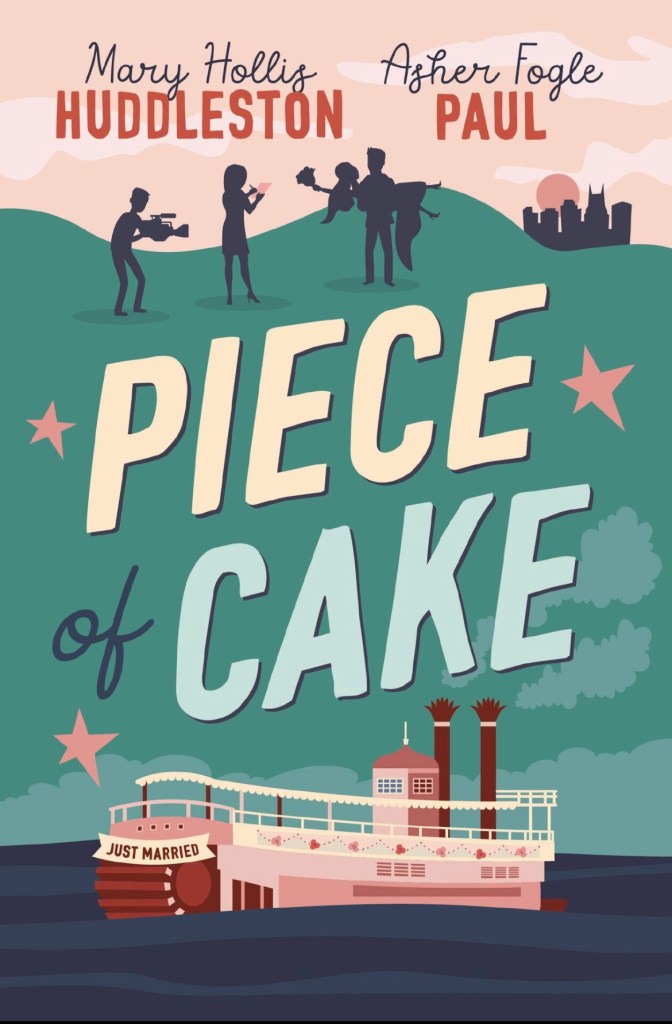
Piece of Cake by Mary Hollis Huddleston and Asher Fogle Paul*
This is a contemporary romance set in Nashville about a woman working at a struggling wedding magazine who has to work with a social media star on a video series that they hope will secure the magazine’s future. I read the previous book from these authors (borrowed it from the library) and liked the premise but thought that there was too much going on and that the romantic element was unsatisfying because all the options had issues. So I read this to see how the authors managed to redeem Claire – who was the villain of the piece in the last book. And the answer is: they didn’t really. And therein lies the problem. If you haven’t read the previous book, you spend a lot of the time wondering how bad she could really have been – and then when you find out what she did, I assume you lose any sympathy you have left for her – if you’ve managed to keep any with the “oh I’m so poor” thing, whilst living in a flat of her own and driving an expensive car. But, on the plus side – this has less plot elements and there is only one romantic option and he seems like an OK kind of guy – it’s just the heroine that’s the problem. So all in all, I think this is probably a sign that these authors are not for me. But it may work better for other people as these things often do and so I mention it anyway.
This week I’m back with a murder mystery – and another British Library Crime Classic – after a run of more than a month without one! This time it’s an impossible murder in the a Highlands by Anthony Wynne.
The murdered lady of the title is Mary Gregor, the sister of the laird of Duchlan, who is found stabbed to death locked in her bedroom of the family castle. Our amateur sleuth is Dr Eustace Hailey, who is in the grand tradition of the Golden Age mystery, and who happens to be staying nearby when the body is discovered. Despite being told that the victim was a kind and charitable woman, he soon uncovers evidence that suggests the reverse and that the situation at the castle was not a happy one. In fact even after her death, Mary Gregor still seems to loom over the building – and then more deaths happen.
This is definitely one of the more fantastical of the BLCC’s I’ve read, with a strong vein of highland superstition and mysticism. In fact there was a while when I was wondering is the solution was going to involve the supernatural so impossible did it seem for anyone to have carried out the crime. But it does stick to the rules of the detective club – although the solution is quite something, it is just about plausible.
I bought my copy at the Book Conference second hand sale, but this is also available on Kindle and Kobo and is actually pretty bargainous at £1.99 as I write this, although it should be noted that the ebook edition isn’t a BLCC one (there are some of these where the paperback and ebook rights appear to have got separated) so I can’t vouch for the quality of the ebook version. And if you want more impossible/locked room mysteries, I have a post for that too.






 Verity Reads Books (lots of them)