Now I know that not everyone is like me in having a to-read pile a mile high, so if you’re in the market for some more reading material – here are some of my favourite bargain deals around at the moment.
If you haven’t read Jane Lovering’s Please Don’t Stop The Music yet – where have you been? It was the RNA’s Romantic Novel of the Year in 2012 and it’s only 99p on Kindle this month.
Christina Jones is another of my favourite authors – and the older parts of her back catalogue are being republished as e-books at the moment. My backlog is such that I haven’t managed to read them all yet – but I did really enjoy Tickled Pink a few weeks back – £1.53 on the Kindle at the moment
Previously reviewed on the blog, Trisha Ashley’s Every Woman for Herself is currently £1.49 for Kindle – I loved it, if you haven’t read any of Trisha’s books before, this wouldn’t be a bad place to start (although my favourite is still A Winter’s Tale which is a fairly bargainous £1.99). If you want a paperback Trisha fix, the paperback of Good Husband Material is available on sale for £2.99 on The Works’ site – which leads me nicely onto…
If you’re an M C Beaton fan, The Works have a selection of her books including Hamish Macbeth, Agatha Raisin and some of her historical romances for around £2 or £3 and a bundle of five Hamish books for £7.99 here.
Also on The Works website there are all three of Carola Dunn’s 1960s set Cornish mysteries for £2.99- ideal if you want a bit of cozy crime for your autumn nights – the first in the series is Manna from Hades.
I’m a big Lucy Dillon fan – and The Works have several of her books – not only A Hundred Pieces of Me – which I read and adored earlier in the year in the pre-blog era (you can see my rave review on Goodreads here) – but also Walking Back to Happiness and Lost Dogs and Lonely Hearts – all for less than £3 each.
And the goodies just keep coming on the Works site (and they’re doing 6 for £10 so you can really splurge) with Laurie Graham’s A Humble Companion. I love her books – although my favourite Gone with the Windsors is hard to get hold of – and this was her 2012 book which is an insider look at the Royal Household during the time of George III. Well worth a look.
I’m hoping this list has something to tempt you – if you’re heading to the supermarket this weekend, I’m hoping some of the new releases I’ve reviewed recently will be in their deals – certainly Daisy Goodwin’s The Fortune Hunter should be. I did try to find out what the deals were this week in WH Smith, but drew a blank. If you spot any good bargains you think I might like – post them in the comments below!
Edited – I originally posted that Gone with the Windsors was out of print, I’ve since found some copies in some places – so I’ve upgraded it to hard to get hold of. It’s definitely not on Kindle though, which is a big loss.
We’re off schedule again people… But this time I’m properly rested and hopefully coherent (at least until nightshifts start again tonight). It is, of course, because of the nights that we’re departing from the schedule – I didn’t realise that Part 2 was nearly here until I saw someone else review it… Anyhow we left A Place for Us with me begging to find out what happened next in a slightly sleep deprived manner, after the end of Part 1 dropped a fairly major bombshell on the reader.
Well, what can I say. In Part 2 the bombshell is unloaded onto the rest of the characters – along with a few other secrets – and then we’re left on another cliff hanger. Honestly, this serialisation malarkey isn’t good for my blood pressure. There. That’s all I can say about the plot without giving too much away. Except that we learn more about the characters – and in particular the absent Daisy.
I am desperate to know what happens next (again) and Harriet Evans has surprised me with some of the twists and turns we’ve had in this second part. She’s also written a novel which (so far) seems to really lend itself to being broken up into chunks to torment the reader. I think this part is shorter than part one – but it’s packed with character development, plot movement and surprises so you don’t notice. I’m very excited about part three – because based on what’s happened so far, I’m fairly sure I have no idea what’s going to happen next.
A Place for Us Part 2 is here for Kindle and if you haven’t read Part 1 then you really should. I’m off to make a note in my diary about the release date for part 3 (25 September).
I was very excited when I won a copy of Stephanie Lam’s debut novel The Mysterious Affair at Castaway House – the cover looked gorgeous and the blurb was intriguing.
The Mysterious Affair at Castaway House is a time-slip novel set in the 1920s and the 1960s. The 1920s strand follows the visit of Robert Carver to his wealthier cousin Alec Bray, who lives in the titular house. A poor relation, Robert has always admired Alec, but he discovers that the Brays are damaged and gets dragged into their web. Forty years later, the second strand follows Rosie Churchill, an 18-year-old girl who has run away from home and is living in Castaway House, now subdivided into flats as she finds out about what happened to Robert, their stories intertwine… I’m hoping that doesn’t give too much away, because I think this is a book that is best to go into unspoiled – for maximum impact.
The very pretty and retro cover of The Mysterious Affair at Castaway House
The book evokes two very different periods in exactly the same setting – and does so very successfully. You can feel the difference in the world of the Twenties where Alec is trying to project an image of glamour and privilege and that of the sixties where everything is rougher, darker and poorer.
There is plenty of mystery and suspense – expect sharp intakes of breath as the secrets are gradually revealed. Stephanie Lam has done a really good job of setting this up so that you can’t see the twists coming – or at least I couldn’t. I thought I knew what was going to happen (jaded time-slip reader that I am) but I was surprised by the ingenuity of what the actual plot was. She also credits the reader with the intelligence not to need everything spelling out – particularly when it comes to the resolution.
I really enjoyed The Mysterious Affair at Castaway House – and I will be looking forward to more from Stephanie Lam. I’ve already recommended it to several friends. Published today by Penguin, I’m hoping it’ll be nice and prominent in the bookshops – here it is on Foyles website and here for Kindle.
This post was Not In My Plan for this week. My carefully constructed plan of what to post when, in a nice pattern, on a regular schedule, constructed (and written) around my current batch of nightshifts. Then I started reading Unfinished Symphony of You and Me on my dinner break at 3.45am on Wednesday morning. And I’ve just finished it (it’s Saturday afternoon at the moment, but it’ll be Sunday when this publishes, because I can’t let go of the plan so much I post twice on the same day!) and it was too good for me to just add it to the books read list this week and say how much I’d enjoyed it.
I really loved this. I laughed, I cried, I couldn’t wait to find out what happened – but I didn’t want it to be over at the same time. I’m kicking myself for not reading it sooner.
Lucy Robinson’s created a fabulous cast of characters and a heart-wrenchingly brilliant story that shows you the importance of living your life, taking control and following your dream and not waiting for someone* to sort it out for you.
I loved crazy, messed-up Sally’s journey to find herself as she takes her courage in her hands and faces her fears. I was desperate to find out what had happened that summer in New York to turn her from the mousy wardrobe mistress into a student opera singer. And I didn’t get too grumpy at the reveal being dragged out, once I finally found out what had happened and how totally ingenious it was. There were a couple of points where I could see the car crash (metaphorically) coming and wanted to scream with frustration at Sally for being so stupid – but then it was so brilliantly done in the end that I Didn’t Mind**.
I don’t want to say too much else about the plot, because it’s another book where it would be all too easy for me to ruin it for everyone who hasn’t read this yet (go and buy it). I will say though that Barry is my favourite mad housemate since Bing in Bernadette Strachan’s Reluctant Landlady. And that’s saying something.
This is a perfect summer read. Although if you read it at the beach, people may point at you when you start crying (I held out until nearly the end, which is surprising considering that post-nightshifts I get incredibly emotional). And, of course, my idiocy means I’m reviewing it too late in August for many people who, unlike me, have already had their summer holiday.
Still, recapture that holiday reading feeling and go and buy yourself a copy of Unfinished Symphony of You and Me. My copy came from Netgalley (in return for an honest review etc) but you can find it here, here, here and here (on Kindle) and I hope still in W H Smith and maybe even the supermarkets too. So really you have no excuse. I’m off book some tickets to the opera and to add everything else Lucy Robinson has written to my to-read list – and to try to resist the urge to Buy Them Now (because of that pesky backlog I’m trying to deal with). Go. Buy. Read. Enjoy.
Oh dear. I think this may be another of my overly emotional crazy posts. Like my moment over the first part of Harriet Evan’s new book. This is why I plan things so I don’t have to be coherent on here during my nocturnal moments.
* A man
** And when you consider that I can barely read one of my formerly most read books any more because I’m so angry at the way that the third book in the series turned out, you’ll know that that’s a big deal.
Finishing off a busy week over here on the blog with a review of Kate Williams’ The Storms of War – which I started during #Sunathon and has taken me longer to read than you’d expect considering how much I enjoyed it – because of the fact that it’s a hardback and I can’t lug it around with me on the train.
Firstly, I love a good saga – I worked my way through Barbara Taylor Bradford’s Woman of Substance trilogy when I was 16 (back when it was still a trilogy!) and then moved on to Elizabeth Jane Howard’s Cazalet books, which I adored – so this looked just up my street, especially when you consider that I studied First World War Literature for my A-Level English Literature.
It’s a big hardback – but it’s got such a pretty cover
So, the plot: The de Witts are an Anglo-German family, who, at the start of the Great War, are preparing for the marriage of their eldest daughter to a member of the English Nobility. Rudolph, the father, is from Germany and has made his money through meat factories. Verena, the mother, is the daughter of a lord and they have four children Michael, Emmeline, Celia and Arthur (who is away from home at the start of the war). The book follows them through the war, as Rudolph suddenly becomes an outcast in the country he considers his home and the children face not only the consequences of that – but the effects of the war in general.
I really enjoyed this – as I’ve already said on Twitter – I would describe it as Cazalets do World War One, but with added tensions caused by the family’s German links. The characters were interesting and engaging and having read a lot of books about World War One over the years, both novels and non-fiction, their experiences seemed realistic and rang true with what I have read – which to be honest is only what you’d expect as Kate Williams is a “proper” historian. The fresh angle here is that Anglo-German twist that I’ve already mentioned – and I thought that was handled really well. Book two is promised for next year – and I look forward to seeing how the family fares in the post-Great War world. I foresee interesting possibilities – particularly as there are ends left untied here and a development at the very end of the book creates potential for fresh conflict within the family.
I’ve read some of Kate Williams’ historical biographies in the past – but it was a few years ago and I found the writing style a little harder to get on with than some others in that genre. This, however is an absolute joy to read – and very difficult to put down (despite its size!) – and it has inspired me to bump one of her other books that’s still sitting on the to-read pile up to the top of the list. The front cover has a quote from Alison Weir recommending it to fans of Downton Abbey and although I think that’s a bit of a simplistic view of the market for this book, I think that it is a great way of getting people to pick up what is a large and intimidating looking hardback.
There’s a wealth of books about World War One out there (and lots of new ones appearing at the moment because of the anniversary) so there are lots of other books to read if you like this – I’ve already mentioned the Cazalets which is a slightly later period, but is a similar sort of family saga – but there are also books like Pat Barker’s Regeneration and a wealth of accounts written by people who lived through the Great War – like Erich Maria Remarque’s All Quiet on the Western Front and Robert Graves’ Goodbye to All That.
Kate Williams’ The Storms of War should be in all good bookshops – as the phrase goes – and here are my traditional links to Foyles for the hardback and Amazon for the more portable Kindle edition. This is the sort of book I always want an actual copy of though – as I know I’ll want to lend it to my mum and sister if it’s any good.
I read a lot of books. I have read a lot of books. I like to think I read widely and across a lot of genres. But I have not read a lot of award-winning books. Why is this – and what am I going to do about it?
In researching this article, I printed myself out a list of the winners and nominees of the Booker and the Orange/Bailey’s prize and the winners of the Costa awards. I settled down with a pink highlighter to mark up what I have read. There is not a lot of pink on the lists. But there are a lot of books that I think I should have read – and others that I would like to read, but have never got around to.
What do I mean by not a lot? Well, I’ve read seven books from the list of Booker winners and nominees – yes, just seven. Of that seven, two are winners (Ghost Road and Wolf Hall), one I studied at A-Level (The Handmaid’s Tale), two have been read in the last month (Mrs Palrey at the Claremont and Loitering with Intent) entirely coincidentally and the remaining two have been read in the last year as well (Good Behaviour and Restoration). You may have noticed from that little list that I have only read two books from the last 20 years of Booker nominees. Now considering that I think of myself as a book person, I’m a bit ashamed of myself.
Handmaid was one of my A-Level books (the battered cover is from my schoolbag!), whilst Restoration is a more recent acquisition
There are some authors on the list where I have read some of their other works – just not the prize-winning ones, people like Muriel Spark, Nina Bawden, Penelope Lively, Jill Paton Walsh and David Lodge. But there are some authors where, despite their reputations and in some cases multiple entries on the list, I haven’t read any of their books – let alone the prize-winning ones. People like Salman Rushdie (although I listened to some of Midnight’s Children when Radio 4 serialised it when I was about 14), Iris Murdoch, Doris Lessing, Beryl Bainbridge and Ian McEwan to name a few. There are some who I have books by on the Kindle waiting to be read – two of this year’s list including the winner – that I haven’t got around to because there’s always something “better” there as well.
So what’s my problem?
Well, I think it’s partly in my head – I think they’re going to be boring and hard-going. My mum used to read the Booker winner every year – a habit she gave up when she got stuck while reading Ben Okri’s Famished Road. I can remember her saying that there was no point in reading something you didn’t enjoy, that she hadn’t enjoyed the last few winners and she wasn’t going to force herself to read them just because they were winners anymore. I think this has stuck with me – I avoid them because they’re award winners or nominees, even if the blurb on the back makes them look interesting – I think it’s a trick.
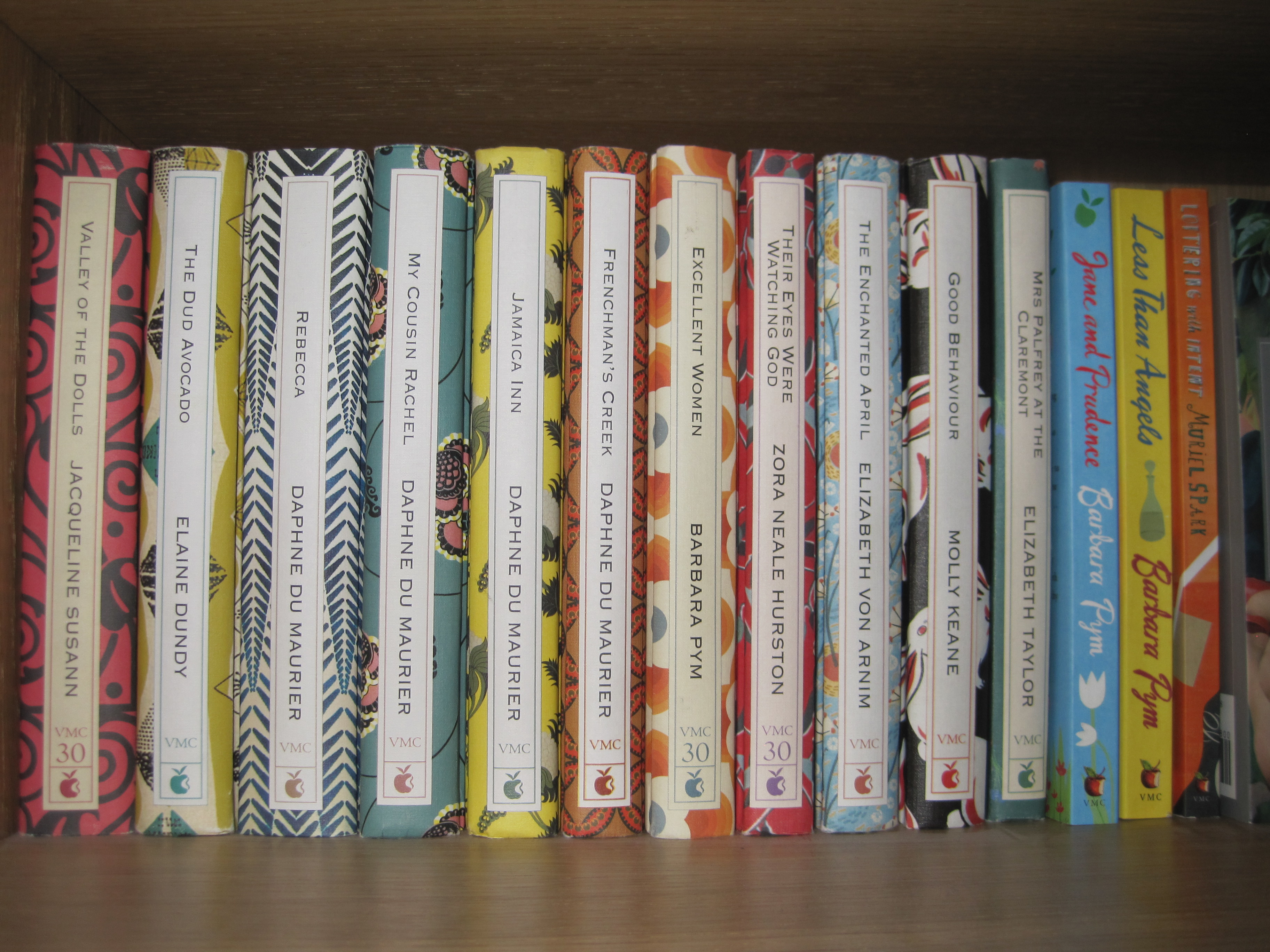
My collection of pretty Designer Virago books – and a couple of other VMCs by award nominees
Now I am starting to get over this – the two nominated books I’ve read in the last month, I’ve enjoyed – and I didn’t know they were nominees when I picked them out and read them. In fact I was surprised when I found out – because they were interesting and funny. I’d also like to thank Virago for their role in this – they keep turning out attractive looking reissues of intelligent (and often funny) women’s fiction. I have half a shelf of their Designer hardbacks – many of which I’ll admit I first picked up because they looked beautiful – and I have a lot of their paperback Modern Classics too. They are widening my horizons.
The other issue – that I can think of anyway – is the size of the to-read pile and the Goodreads challenge, both of which mean I often go for books I know I can read quickly so I can get them off the pile. I leave long books and “difficult” books on the shelf – favouring short ones and “light” fiction.
As you can see, there are a few books by nominated authors waiting to be read
Writing this has made me feel a bit embarrassed – and very ill-read. So. I’m going to try harder. I’m going to try to do better. I’m going to try to improve my hit rate with prize winners and prize-winning authors. I’ll start by working my way through the books on the to-read pile that are award nominated or written by prize winners. And to make sure that I do do better and read these books that I say I will – I’ll keep you posted too.
Help me on my way by recommending me your favourite prize-winning or award nominated books in the comments below.
A few friends have already asked me for ideas for books for their summer holidays, so I thought now might be the time to come up with a proper set of recommendations for holiday reads. It is a tradition in our family that you get a holiday book – this was started by my mum back when I was small and I have various books on my shelves with neatly written notes in the front from my mum telling me which holiday she gave them to me for. My sister and I have continued this as grown-ups – The Boy thought it was weird at first but I now have him so used to it that he starts to offer suggestions for what he’d like me to get him. I have terrible trouble deciding what to take to read on holiday (thank goodness for the kindle) so I’ve tried to include a range of options.
The One that Everyone’s Reading
The Rosie Project by Graeme Simison –I know. It really is everywhere. But I read this on our trip to Rome earlier this year and laughed so hard that people on the plane started staring at me. It has had a lot of hype, but it is very, very good. I don’t want to say too much about the plot, but watching Don Tillman hunt for love is properly funny – and in places you’ll want to read through your fingers as you cringe at his mistakes. I’m already looking forward to the sequel.
The One if you like “Chick Lit”
I guess this could be considered my home genre (unless you count historical novels. Or cozy crime), anyway I read a lot in this sort of genre. So I couldn’t just pick one. Books I’ve recently really enjoyed are The Little Beach Street Bakery by Jenny Colgan (which is definitely a holiday read – it’s set in Cornwall by the coast!), Trisha Ashley’s Every Woman for Herself (which has a full review here) and Sinead Moriarty’s Mad About You (although I think I’d have liked it more if I had read the other books about the characters) which all should be available in the sort of multi-buy offers you get at WH Smiths and the Supermarkets.
The One if You like Cozy Crime
It’s not really new, but try Manna from Hades by Carola Dunn if you like the sort of cozy crime that’s set in the past – this is in 1960s Cornwall where Eleanor Trewynn has retired to after a life working for charity abroad. It’s as readable as the author’s Daisy Dalrymple series. If you like your cozy crime modern, I reviewedJenn McKinlay’sDeath of a Mad Hatter a few weeks back which is fresh on the market – or you can’t go wrong with Donna Andrews’ Meg Langslow series – Death with Peacocks is the first one and as it came out 10 years ago, you can get it for cheap second hand.
The One if you like Non-Fiction
This is a tough one for me – because I’m very behind with my non-fiction pile. Of books released recently, I enjoyed Neil McKenna’s Fanny and Stellawhich is the story of two young men who dressed as women in Victorian London and the scandal that ensued when they were caught. Apart from that, all my recent non-fiction reads have been published some time ago. I hesitate to recommend anything I haven’t yet read, but the excellent Helen Rappaport has a new book out (in hardback sadly) – Four Sisters: The Lost Lives of the Romanov Grand Duchesses which has been picked out as a recommendation at various places. If you haven’t read her Magnificent Obsession (about Queen Victoria’s relationship with Prince Albert) that is available as a paperback and is well worth a look – as is her Beautiful Forever which is about a cosmetician and con-artist in Victorian London – who coincidentally also gets a mention in Fanny and Stella.
The One if you like Thrillers
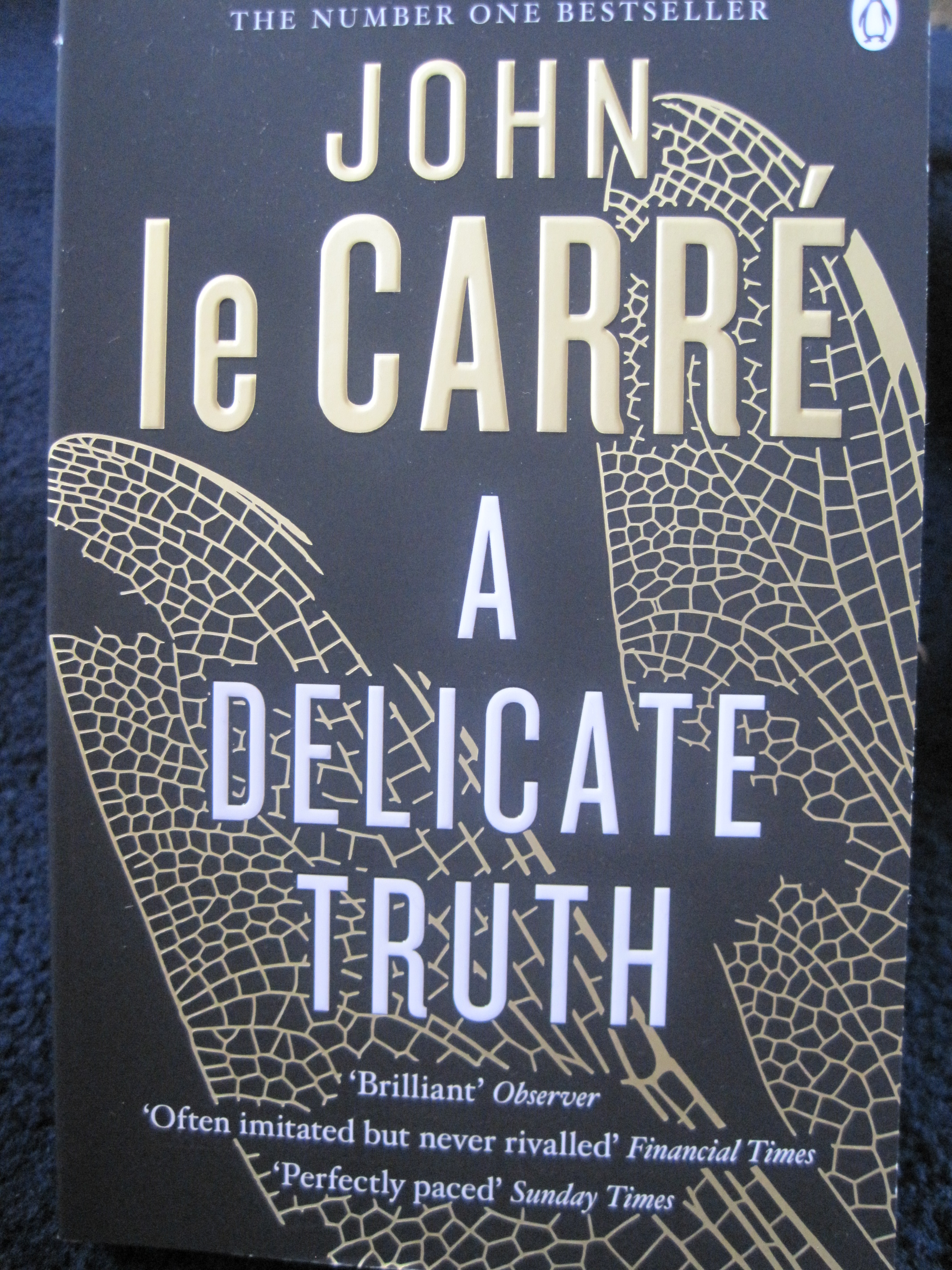
A Delicate Truth by John le Carré –I got given copy of this a month or two back – you can see the long review here. Its pacey, suspenseful and disturbing. If you haven’t read any le Carré, go get yourself some of the Smiley series and try them out – they’re Cold War and this is modern, but all the ones I’ve read have been very, very good.
The One that’s a Kindle Bargain
Vintage Girl by Hester Browne – This was 56p when I wrote this blog – which by any standards is a bargain, let alone when it’s as fun as this. Valuer Evie gets sent to Scotland to asome heirlooms – romance, family secrets and Scottish Dancing ensues. (NB previously published as an e-book called Swept Off Her Feet – so don’t buy it twice!)
The One(s) if you want a series to start
The Amelia Peabody books by Elizabeth Peters. I have a terrible habit of starting a series and keeping going with it, ignoring all other claims from the to-read pile. E-readers make this so easy and if you’re a quick reader, you may need more than one book for your week at the beach (hell I need more than on book for a DAY at the beach). Amelia is a Victorian feminist who sets off for Egypt to do a spot of archaeology. I can’t come up with the words to do her justice, but’s like a funny female Indiana Jones. There are 19 books in the series (more than you could read on one holiday surely!) and the later ones feature various members of her family too – her son is a scream!
So there you are. I hope there’s something for everyone in the list – I think most of them should be easy to find and in some cases as available in multi-buy deals. As usual most of my links are to Foyles – because I like independent bookshops and the name of their loyalty scheme Foyalty. And if you’ve got any recommendations for books I should be reading this summer – please do put them in the comments below!
I have a rather complicated history with detective stories. When I was 11, I scared myself silly by forgetting I’d put a pillow in my bed to confuse my sister while I was downstairs watching Joan Hickson’s Miss Marple with my parents. Once I’d seen Miss Marple on the TV, I promptly read all the Agatha Christie books that my mum owned, bought more with my pocket money and then in a fit of angst over death (in particular my own), gave all my purchases to the jumble sale and hid mum’s copies out of sight. I know. I was a strange child.
After that, I left detective stories alone for probably about five years. Then a friendly librarian, who found out that I was a bellringer, pointed me in the direction of The Nine Tailors, which I duly read, enjoyed and then forgot about – although by this point I had started reading Agatha Christie again.
Fast forward nearly 10 years and I’m living in Essex, working the early shift at a radio station, a bit lonely and hitting the library hard. I don’t know if I started reading them because I was reading Margery Allingham (who had lived locally) and seen comments that Albert Campion had started as a take-off of Peter Wimsey, or because I’d seen a recommendation, or because I happened across them in the stacks at the library and remembered I’d enjoyed The Nine Tailors, but I did rediscover them and boy did I love them.
My little local library didn’t have many books in the series – and once I’ve found something I like, I want to read them all, as quickly as possible. So I started buying them in the local book shop. But it didn’t have many in stock. So I picked up a few second hand paperbacks from my friendly book dealer who happens to do detective stories as well as classic school stories, then I started buying the ones that I’d read at the library (because I *had* to have the whole set) and so my rag tag collection was born.
My Dorothy L Sayers collection
For those who have had the misfortune to have never come across Lord Peter Wimsey, he is the archetypal gentleman detective – much copied and never equalled. The second son of the Duke of Denver, born in 1890, educated at Eton and Oxford, he is a bon vivant with a private income who solves mysteries because he can. But Peter is troubled – he’s battle scarred after the First World War, with shell-shock and a fear of responsibility; which sits badly with sending men to the gallows. He’s much more than just an idle rich man with a vaguely foolish face – which is the image he likes to project to the world. Assistance comes principally from his faithful valet Bunter (who had been in his unit in France) and Chief Inspector Charles Parker of Scotland Yard. The books were published between 1923 and 1937 – and Peter ages in real time as the series progresses.
The four books that feature Lord Peter Wimsey and the mystery writer Harriet Vane
My favourite four books are what I call the Peter and Harriet Quartet – that is Strong Poison, Have His Carcase, Gaudy Night and Busman’s Honeymoon – the novels that feature Harriet Vane, first encountered in the dock at the Old Bailey on trial for murder – who Peter falls in love with and pursues across the next three books. As well as my paperback copies, I have all four as audiobooks or radio plays – and they run in high rotation on my generic mp3 device on my journeys on the train, on my lunchbreaks and late at night when I’m staying away from home and need something to listen to to get to sleep. I didn’t read them in order – Have His Carcase came first, then Busman’s Honeymoon, Strong Poison and finally Gaudy Night.
I’m firmly convinced that Busman’s Honeymoon is probably the most romantic detective novel in existence. In the dedication at the start Sayers writes:
It has been said, by myself and others, that a love-interest is only an intrusion upon a detective story. But to the characters involved, the detective-interest might well seem an irritating intrusion upon their love-story. This book deals with such a situation.
And to me, that pretty much sums it up perfectly. Busman’s Honeymoon is a perfectly formed detective novel (I didn’t figure out who did it until the reveal) but also is a beautifully romantic story about the start of a couple’s married life. And if you’ve read the three books that lead up to it, it’s the perfect end to a long and sometimes painful courtship, which must have felt tortuous to readers when the books were first published – because Strong Poison was appeared in 1931 – and Busman’s Honeymoon came out six books later in 1937.
Gaudy Night is the weakest of the four when it comes to the detective plot – it’s not an actual murder but a poison pen mystery and actually has very little Peter to a lot of Harriet. But it’s still a very good book and you learn a lot more about Harriet, her life, her side of the courtship and what she was doing while Peter was solving the mysteries in the two novels of that part of the series that she doesn’t feature in. Strong Poison and Have His Carcase have two of Sayers’ best puzzles – they’re utterly ingenious and perfectly plotted.
Among the other novels, my favourite is Murder Must Advertise, where Peter – under the psedonym of Death Bredon – goes to work at an advertising agency where one of the copywriters has fallen to his death, leaving a letter hinting at scandalous goings on in the firm. Sayers was herself a copywriter for a decade – and the book is a fascinating glimpse into the world of advertising in the early ’30s as well as a really very clever murder mystery.
My collection (unusually for me) has several different styles of cover
I could write at even greater length about the wonders of these novels, but this post is already massively long. I hope that if you’ve read this far and you haven’t ever read any of Lord Peter Wimsey mysteries, you might be tempted to go and try one. My recommendation as a starting point would be Strong Poisonor Murder Must Advertise, although equally Nine Tailors or even the very first book Whose Body?would be a good introduction. Don’t start with Busman’s Honeymoon (I’m not even linking to it to deter you further) as you’ll regret it if you don’t read Peter and Harriet for the first time in the order in which they were intended – I know I do and as soon as I had finished Gaudy Night for the first time I went back and read all four again in the right order!
As usual, my links are to Foyles – because I love them, their Foyalty points, their order in the morning and pick it up from a store in the afternoon feature (which even gives you discount) and I’ve found that for this sort of book (ie not a mass-market new release) they are often cheaper than the alternatives – but equally you can find Lord Peter in your high street bookshop, at major online booksellers and often in charity shops. They’re also widely held by libraries because they are, after all, classics of the genre.
I won this book in a Goodreads giveaway (I know! Two giveaway reviews in a week! This doesn’t usually happen – I’ve only won three giveaways ever!) but that doesn’t influence what I write.
Back on more familiar territory for me here, with a fun murder mystery story from American author Jenn McKinlay. Death of a Mad Hatter is the second book in the Hat Shop Murder series (and is the first book I’ve read by this author) and centres around American Scarlett Parker and her cousin Vivian Tremont, who run a hat shop in London. As usual I’m trying to avoid spoilers in my synopsis, and I can’t say too much about the set up without giving away the plot of the first book (or at least I think I can’t!), so here goes: In Death of a Mad Hatter, an unpleasant man dies at a themed party which the girls have provided the hats for. When a trace of poison is found in the hat, the girls get involved in trying to track down who was really responsible.
I love it when you get some extras with a book!
This is a cozy murder mystery with a fun premise and an ingenious solution. The plot is well worked out, the dialogue snappy, the humour works and the characters are engaging. I was never bored and always wanted to know what was going to happen next. In fact the book almost seemed to wrap up too soon – although that’s not to say that the denouement was in anyway rushed, I just couldn’t believe that the book was nearly over (which is always a good sign). I read the book in a day and enjoyed it.
For me it ticks similar boxes as Donna Andrews’ Meg Langslow series, although this series is obviously set in the UK. And therein was my only problem with it – as a Brit there were a few things that jarred for me as being just not “right”. Now I know that this book is written for the US market – and in fact I don’t think it has been picked up by a publisher over here – so for the vast majority of people reading it, this won’t be an issue. Mainly the problems came with things that the British characters said that weren’t “right” – although as we have the NHS here the idea of a British family having a event to raise money to build a new wing at a hospital struck me as a bit odd – but hey, it could happen, after all Great Ormond Street Hospital’s charity is probably one of the most famous charities in the country!
Now this is me being really very nit-picking – because the “wrong” moments were my only problem with the whole book and it’s really a very minor issue in the grand scheme of things, because in the main the British characters and British bits were so well done that the bits that weren’t “right” bit surprised me! And I’ll still be looking out for more from Jenn McKinlay – from the cards and bookmarks that came with my copy I think her other series may be right up my street too!
Death of a Mad Hatter is presumably available all good bookshops and book retailers who stock Mass Market paperbacks in the US and over here in the UK you can get it from Foyles and Amazon (and presumably anyone else who’ll order in from the US). Jenn McKinlay’s website is jennmckinlay.com, she can be found on twitter as @JennMcKinlay and on Facebook
Disclosure: I won this book in a Goodreads giveaway – not that that influences what I write…
So, as you may have noticed from the previous posts, I’m not a big thriller reader. Detective or mystery stories, yes, lots of them and preferably set in any period not now (I’m not a CSI girl). I have read some John le Carré before – because before watching the film of Tinker, Tailor, Soldier, Spy, I wanted to have read the book – to see if it was going to be too violent for me to cope with (for my post about the contradictions of my job and my aversion to violence in films see this post on my other blog). I enjoyed it so much that I not only watched the film and most of the Alec Guiness TV adaptation, but also read The Spy Who Came in from the Cold – which is also really good. I’ve been keeping my eyes out for more of his Smiley series at the library – but hadn’t read any of his newer books* – hence my entry into the Goodreads giveaway (despite the enormous size of the to-read pile) and I was really pleased when I won a copy.
Paperback copy of A Delicate Truth by John le Carré
I’m always very careful not to give away plot spoilers in my synopsis, and it’s quite hard with A Delicate Truth to say much about the plot without saying too much, so I’ve taken my cue for this from the Goodreads synopsis. The story centres around a top, top secret counter-terror operation in Gibraltar – what happened, how it was set up and whether it was the success that it was meant to have been.
The intertwining plots are carefully and meticulously constructed – I never thought that I knew what was coming next and at the end I still had questions (in a good way) and wanted to know more. The characters are believable – in some cases horribly so – and you really can imagine that these events could possibly have happened – although you hope fervently that they haven’t.
Le Carré still has the knack for describing the workings of government in a way that feels real, and in addition, in this book he turns his focus on the world of private defence contractors. I’ve read a lot of news articles about this new aspect of the military world and I can’t claim to know first hand what any of them are really like, but it’s clear that the author isn’t keen, shall we say, on this latest development. And if anything near of the shenanigans that go on in this book have gone on in real life (and I devoutly hope they haven’t) then he’s got reason.
This is an exciting and page-turning book – which I gobbled up in a day’s commute and an evening’s reading. I would recommend it to anyone who has read his earlier works or people who like a thriller at the cinema and want a book for their summer holiday. I’m not surprised this has done so well – I’ll certainly be passing it on to the thriller readers in my family (my dad and The Boy).
A Delicate Truth by John le Carré can be found on Kindle or as a proper book all over the place (although my link is Foyles, for reasons previously explained) and you can also see more reviews on Goodreads.
* I nearly put “contemporary books” but then I remembered that the Smiley books were written at the time that they were set in, it’s just me that’s reading them now!