
It’s summer and we’re trying to take advantage of the good weather to get out and about a little bit and make use of our National Trust cards a bit. We live in a little bit of a National Trust desert, so you have to go a little bit further afield meaning we often end up doing things on the way home from somewhere else. Our latest jolly was over to Norfolk for a couple of nights, mostly to a concert at Sandringham, but it we did two Jacobean mansions on the trip.
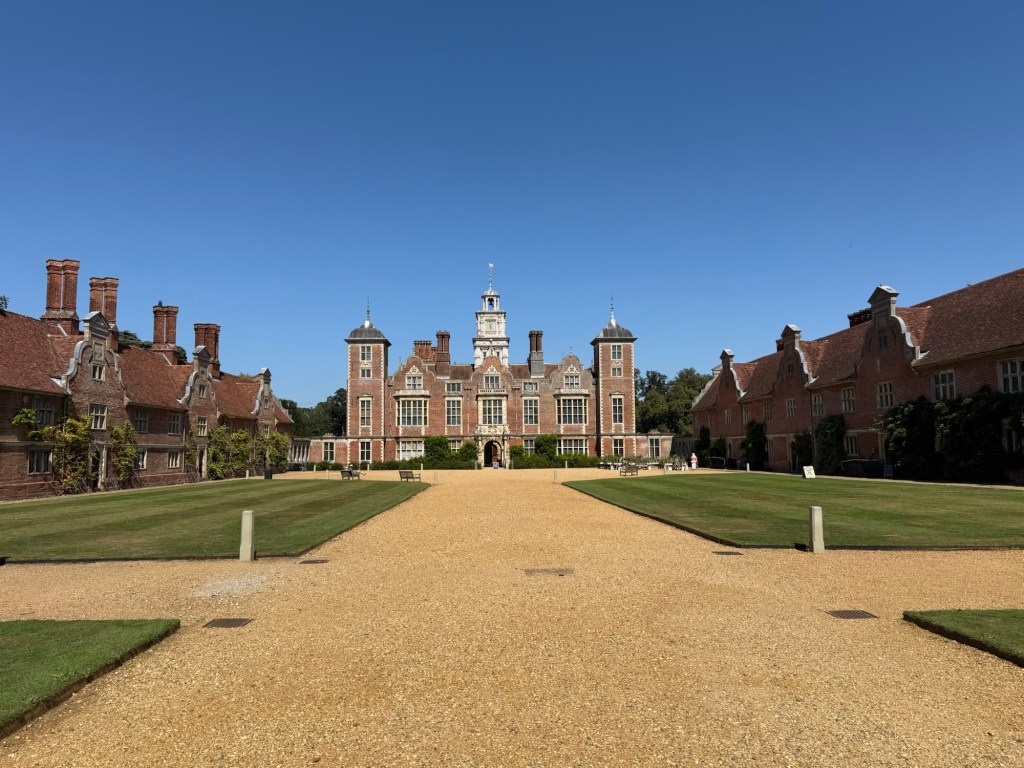
Lets start with the bigger of the two: Blickling. This is a Jacobean house built on the same site as an earlier house that is believed to be the birthplace of Anne Boleyn. Designed by the same architect as Hatfield House, it has a main building with two wings alongside and framing the main building. The main house has an important and large collection of books and manuscripts in the various libraries and galleries. It’s got huge grounds including a lake, a big walled kitchen garden and a parterre. It’s also got a museum dedicated to the RAF base that was set up nearby in World War 2 and whose personnel were housed at the house. It’s also got a big second hand bookshop. There is plenty to do and see – we were there on a really, really hot day, so we didn’t do any of the walking trails (there are loads) because we didn’t want to melt, but you could really easily spend the whole day here.
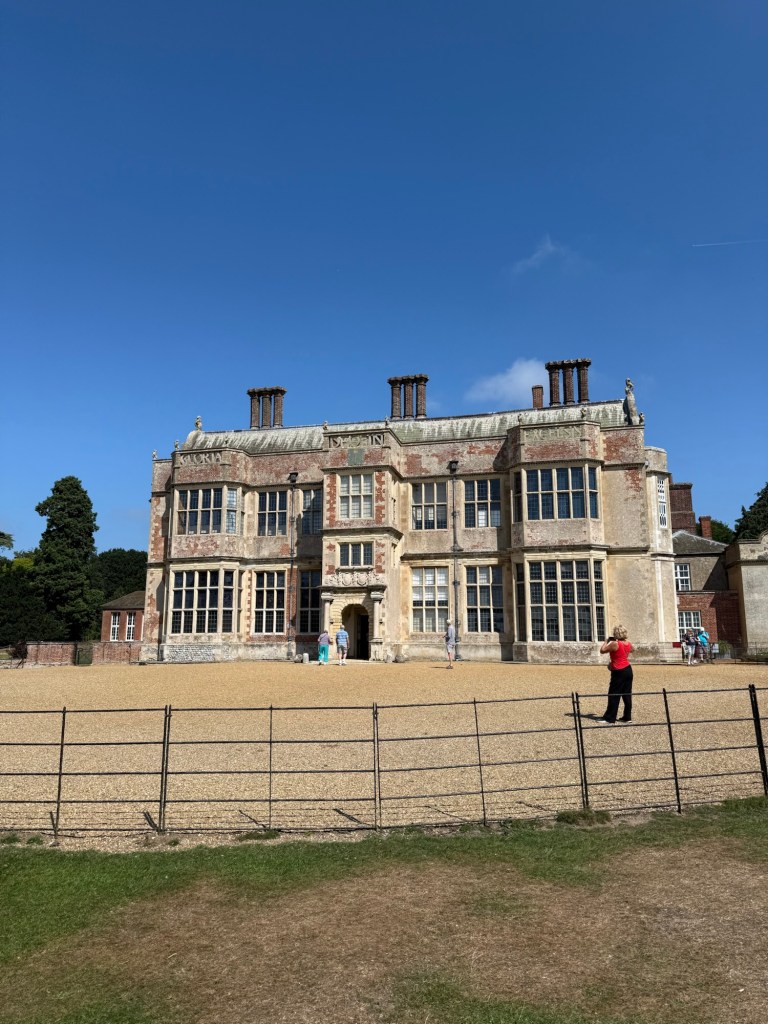
Felbrigg is the smaller house – and we were expecting it to be the quieter one, but it actually seemed a bit busier, possibly because we arrived just as the house was opening for the day and so maybe it seemed like there were more people in the house than at Blickling. It was in the same family for most of its life and has a really interesting collection of artefacts from the family’s travels over the centuries. It also has a fair bit of bird taxidermy, which is in the process of being conserved. In fact there are a few conservation projects going on here, including on their state bed, and I appreciate the information that the National Trust now gives you about the work that they’re doing on their properties.
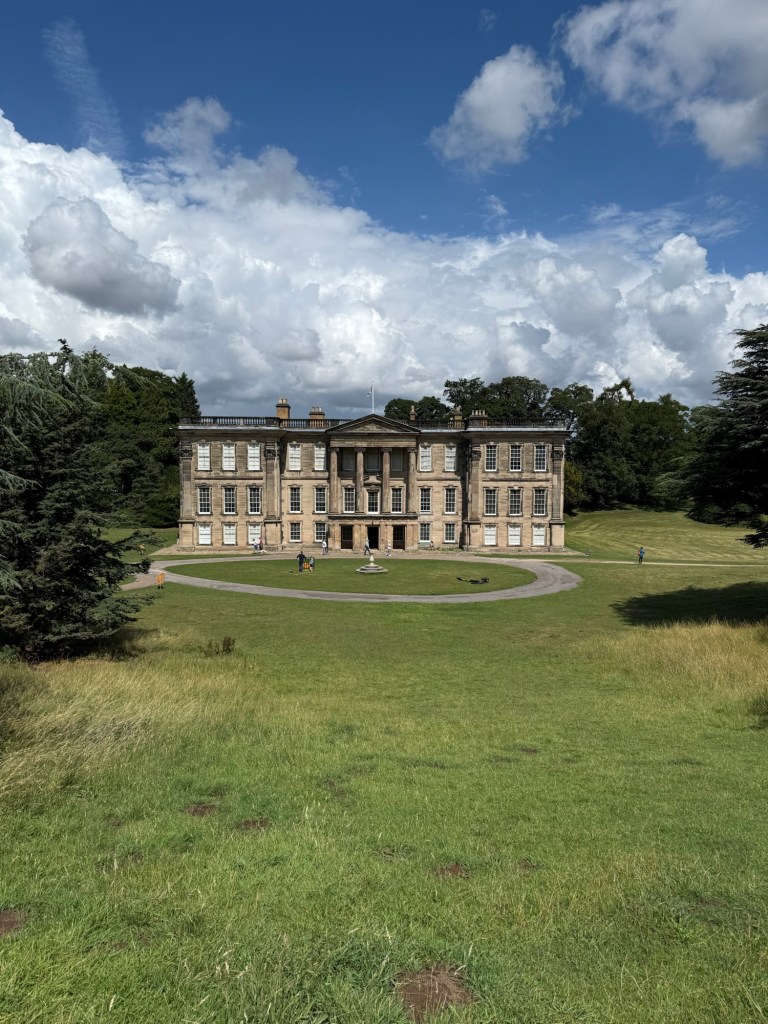
Talking of taxidermy and conservation, I present Calke Abbey in Derbyshire, which we visited a few weeks ago after a night out seeing Tim Minchen in Nottingham. This is a very different stately home, because it has had very little restoration and is largely in the state that it was when it was handed over to the trust, at the end of about a century of decline. The work at the Abbey has been about preventing further decay and stabilising what remains. So many grand houses were lost in the 20th century as the world changed and the families who owned them could no longer afford the upkeep and Calke demonstrates that – as the money started to run out, the family just shut up more and more of the house and lived in smaller and smaller portions of it. So there is peeling wallpaper, abandoned rooms, and so much taxidermy. I cannot tell you how much taxidermy. Honestly, the last time I saw this many stuffed animals and birds was when we visited the National History Museum at Tring. And yes, Tring has more, but it’s a museums you expect that!
One thing that all three of these had in common was that the National Trust have made a big effort with the activities for kids this summer. All three of these had a Summer of Play area with games and activities to do, there are passports for children to get stamped and trails and treasure hunts. I’m pretty sure I would have been a lot more enthusiastic about National Trust trips when I was little if all this had been about then!
Have a lovely Sunday everyone.
 Verity Reads Books (lots of them)