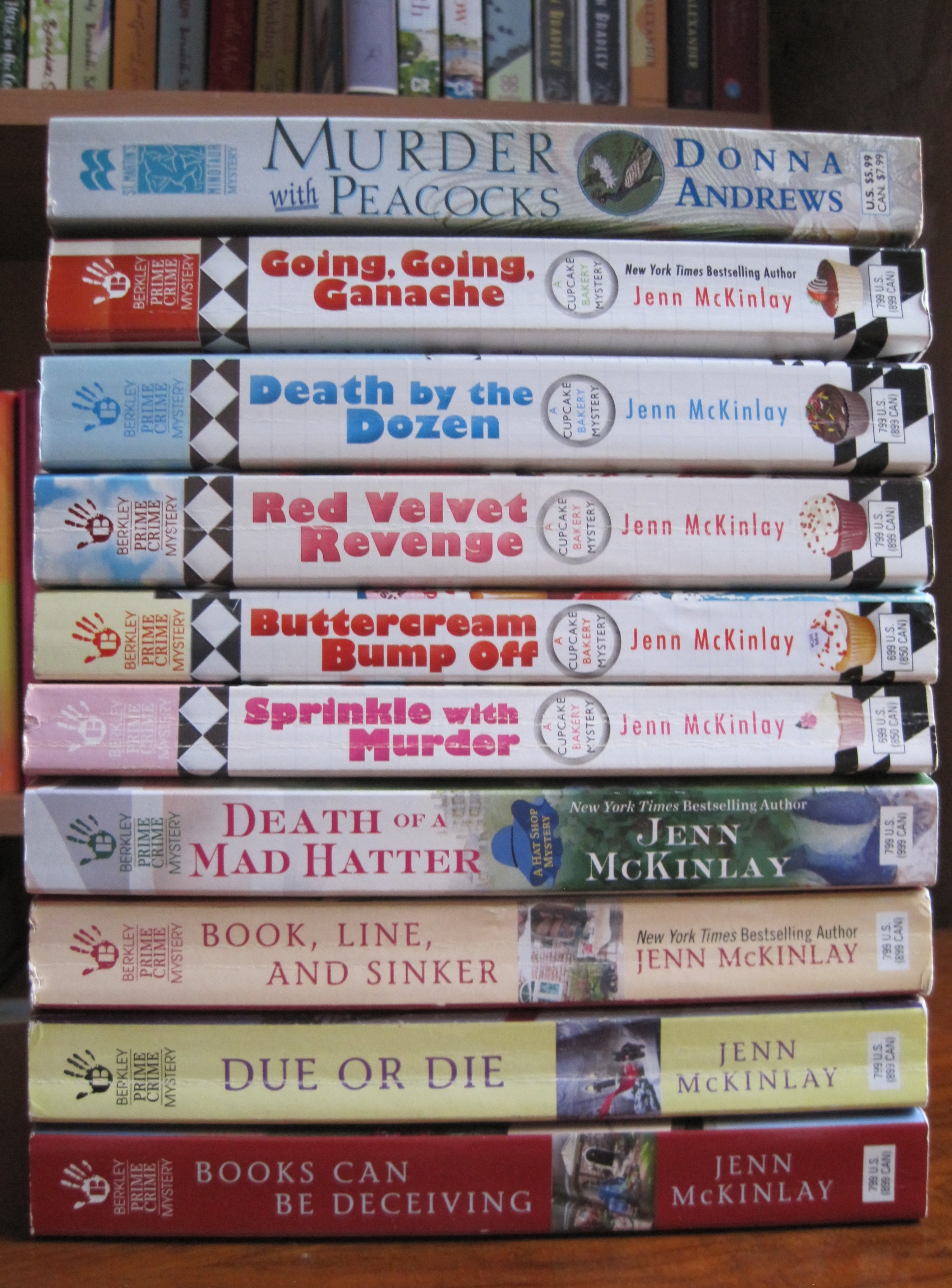
Authors I love, Book of the Week, Children's books, Series I love

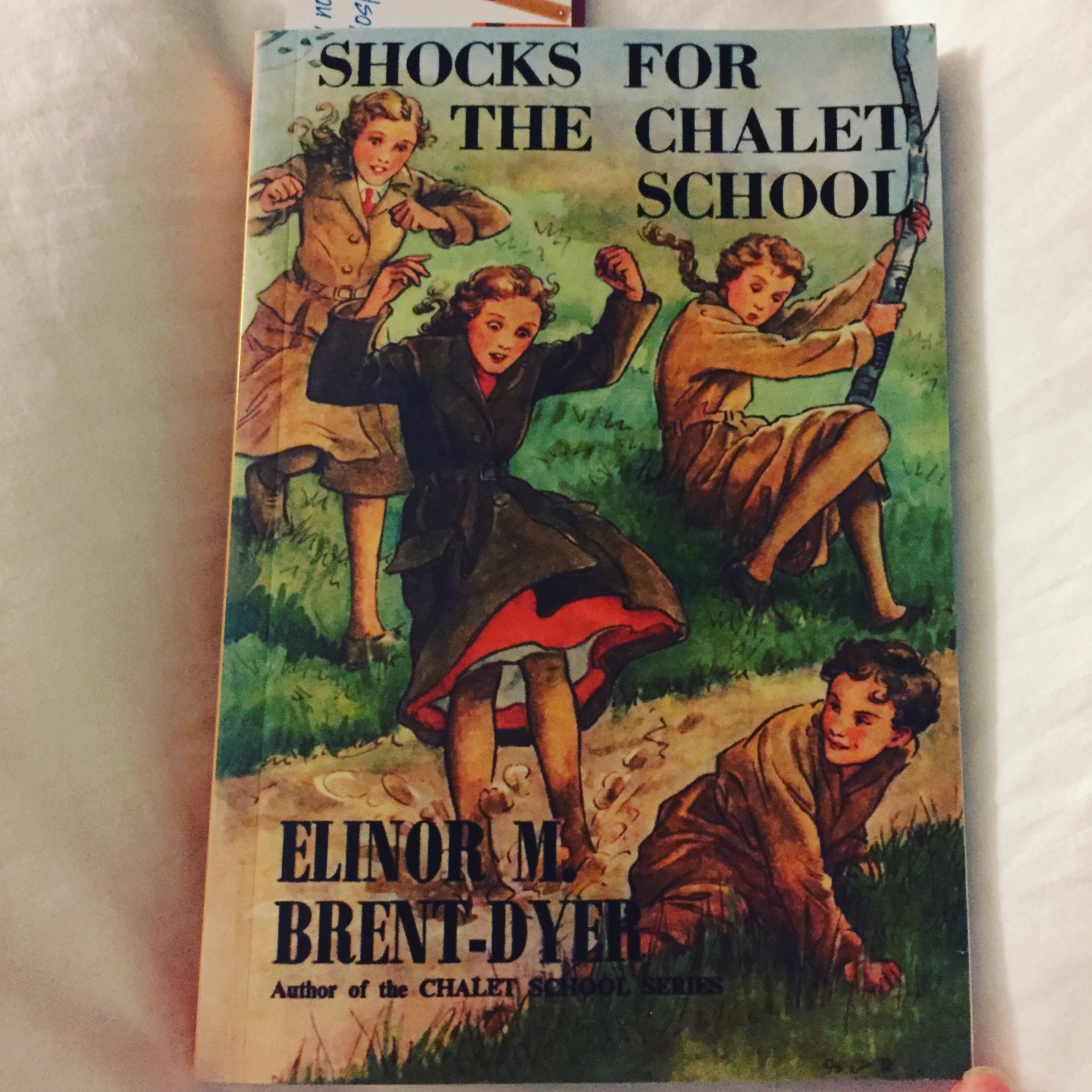
Book of the Week: Shocks for the Chalet School

An unusual choice for BotW this week – Shocks for the Chalet School was one of my post-Paris purchases from Girls Gone By and it turned out to be that rarest of things – a Chalet School book that I hadn’t read.  I know. Who knew.  And this also gives me hope that there may be more!

  
Shocks for the Chalet School is the book where Emerence Hope bursts onto the scene.  Now I think that the reason why I thought that I had read this is partly because her early antics are talked about so much in the later books, and partly because it takes place at the same time as Chalet School in the Oberland.

For those of you who are not Chalet afficionados (and I appreciate that early/mid 20th century boarding stories may not be your speciality) a quick recap on where we stand at this point in the series: It’s after the war and the school is on St Briavels Island after the problem with the drains at Plas Howell. The new term means a whole new team of prefects – as the finishing branch is just starting in Switzerland and many of the Sixth formers have left to go there. Mary-Lou is still a Middle-schooler, Jo and her family are in Canada with Madge and her family and the book opens with news of the arrival of Jo’s Second Twins and a letter from former teacher Miss Stewart (now married) apologising for having unwittingly unleashed Emerence on the school.

With me so far?  Really all you need to know is that a (very) naughty new girl is arriving at an established boarding school, where an inexperienced team of prefects will have to try and deal with her.  Who knew it was that simple to explain!

I’ve mentioned my abiding love of the Chalet School before on this blog, and reading one for the first time reminds me how much.  Yes, they are dated – and in the Girls Gone By reprints you get the original unabridged text complete with smoking teachers and problematic racial sterotypes. They are of their time.  The plots are some times repetitive; Elinor M Brent-Dyer has favourites and doesn’t know how to make lists (or do continuity in some cases); there’s an unbelievably high number of dead parents and “kill or cure” operations; there are huge families, religious messages and you would never try and bring children up like this today.  But with an appropriately sceptical eye and a tongue in cheek where necessary, they are joyful.  No one gets bullied, very few problems are completely unsolvable, no one is homesick (for long at least), Joey (the series’ main heroine) can sing people out of comas and if you’re a good girl, you’ll get to marry a doctor and live happily ever after, popping out babies in a Chalet near the school!

  
Basically a new (to me) Chalet School book was exactly what I needed to bring me out of my World Events-based slump.  And I got an unabridged copy of Rivals for the Chalet School a couple of days later too so got to read the missing bits in that as well.

If you’re not already a boarding school fan, then these probably aren’t for you – so may I instead recommend Cathy Bramley’s Wickham Hall serialisation – the final part of which came out last week. 

audiobooks, books, fiction, Series I love

Audiobooks

Hello, my name is Verity and I am bad with silence.  I am not good at being left alone with my own thoughts.  No idea why, but the fact remains that I need something to listen to when I’m walking somewhere, or trying to go to sleep, or taking a shower.  As a teenager, I listened to hours of news and sport radio as I did my homework.  When I did my year in France as a student, it took two months for my brain to get good enough at French that I could go to sleep listening to French talk radio.* These days, now I work in news, I tend to want to listen to something that’s not to do with the job when I’m on my way home or trying to go to sleep. So audiobooks have become my friend – I’ve had an Audible subscription since I first started doing the mega train commute, and now my one book a month subscription has evolved into a big old library.

But as I looked at my collection the other day, I realised that it’s mostly made up of books that I’ve already read, and that I listen to the same books over and over again.  And I got to thinking about why that might be.

Firstly I think it’s because I listen for comfort.  Some of my audiobooks are like old friends.  Novels that I love that I can re-read by listening to them at times when I can’t be physically reading a book.  If I’m going to sleep, I don’t want to be surprised, or scared – and I don’t want to lose my place if I fall asleep before the off timer runs out.  So I’ve probably listened to Dorothy L Sayer’s Busman’s Honeymoon (the third audiobook I got from Audible) 100 times in the four years that I’ve had it.  I’m not exaggerating.  When I was little, I had this story tape of Paddington Goes To Town (I can’t believe it’s on YouTube – it’s made me all nostalgic) – and my mum used to joke that if you set her going and then turned the tape off, she would be able to keep going until the end.  I think I’ve got to the same stage with Busman’s Honeymoon.  I’ve listened to the various Peter Wimsey mysteries so many times, that when I read the book now I hear Ian Carmichael’s voice in my head.  I have one (Murder Must Advertise) that isn’t read by him and I’ve listened to it maybe three times – because the voice isn’t right.  Instead I listen to the BBC radio adaptation of it, which is shorter, but has Carmichael in the cast playing Wimsey.

The second reason is because some of the time, I’m not giving my audiobook my full attention.  If I’m listening on the train, I’m probably reading a proper book at the same time.  I’m listening to the book with half an ear – but when I get to where I’m going I’ll stop reading and listen to it properly – and if I already know the book’s plot I won’t be confused because I’ve missed a major plot point.  If I’ve got an audiobook I haven’t already read, I’ll make sure that the first time I listen to it I do it when I can give it my full attention – like when I’m washing up, or doing the housework – or walking somewhere.  Once I’ve listened the whole way through, if I liked it, it’ll go into rotation.

Of course this preference for things I’ve already read brings with it its own problems.  My sister and I hated the first couple of Harry Potter films – because the actors were all wrong for the visions we had in our head and that happens to me a lot with book adaptations on TV and on film.  Audiobooks are slightly better, because I can keep the picture in my head of what the characters look like – it’s just the voice that’s got to be right.  So my Miss Marple audiobooks are read by Joan Hickson (who’s not as good on audiobook as she is on TV, but she’s still better than any of the alternatives) and my Murder on the Orient Express is read by David Suchet (it’s actually the same version that we used to listen to on tape in the car on the way to Bournemouth/Devon for our holidays all those years ago).  But sometimes the voices are Wrong.  In the early days of my audible membership I got a lot of Georgette Heyers – read by various people – and had issues with a few (notably These Old Shades) because the readers were just somehow inexplicably Not Right.

But for all those occasions there are some narrators that are just Right – take Stephen Briggs’ Discworld narrations.  He’s perfect.  He makes the Discworld sound even better on audiobook than it does when you read it on the page.  He gets it right.  Dwarves are always Welsh in my head now.  There was a slight slip in the audiobook of Raising Steam, where Adorabelle Dearheart’s accent has changed slightly from the previous two books she features in – but you’d only notice that if you’re like me and listen to one of the Moist books at least once a month!  I have one of the Nigel Planer Discworlds – and apart from the fact that it’s a really poor cassette to digital transfer (I complained) – it’s just not the same.

I’ve been experimenting recently – with a couple of the Miss Fisher Audiobooks (I get a special rate because I already own the kindle copies) and some of the abridged Inspector Alleyn books.  The jury is still out on the Phryne ones – I’m yet to listen to one with a lot of men in it  – and I’ve discovered that although I prefer Benedict Cumberbatch’s Alleyn narration, the other options are ok too – partly because the series covers so much time and has so may different characters.  I’m debating whether to try the Daisy Dalrymple audiobooks and the Gail Carriger ones too, but haven’t plucked up the courage yet.

I also have a collection of non-fiction books that are helpful when we go on holiday – The Boy is also bad with silence, and on those occasions he’ll demand something to listen to to go to sleep to.  I have a selection of non fiction for that purpose – and some Agatha Christies that he likes.  It’s also become a tradition that if we’re driving on holiday we have to listen to some of the brilliant Cabin Pressure  – which in case you’ve never encountered it is a radio comedy about a charter airline starring Benedict Cumberbatch (again) – on the way. I dare you to resist this level of genius

or this in fact

Anyway.  Back to the audiobooks.  I’m open to recommendations – what else should I be listening to?  Is there anything I should be avoiding?  And does anyone else have a problem with being left alone with their own thoughts?!

Background noise to the composition of this post has been provided by the Overture to Gypsy, Murder on the Orient Express Suite by Sir Richard Rodney Bennett, a medley of the incidental music from the James Bond films, Patti LuPone singing Anything Goes and this beautiful version of Ol’ Man River from last year’s Last Night of the Proms:

*Music doesn’t help me go to sleep.  My brain needs something to think about to stop me from overthinking things.  I can’t explain it better than that.

Authors I love, Book of the Week, Fantasy, new releases, reviews, Series I love, Young Adult

Book of the Week: The Shepherd’s Crown

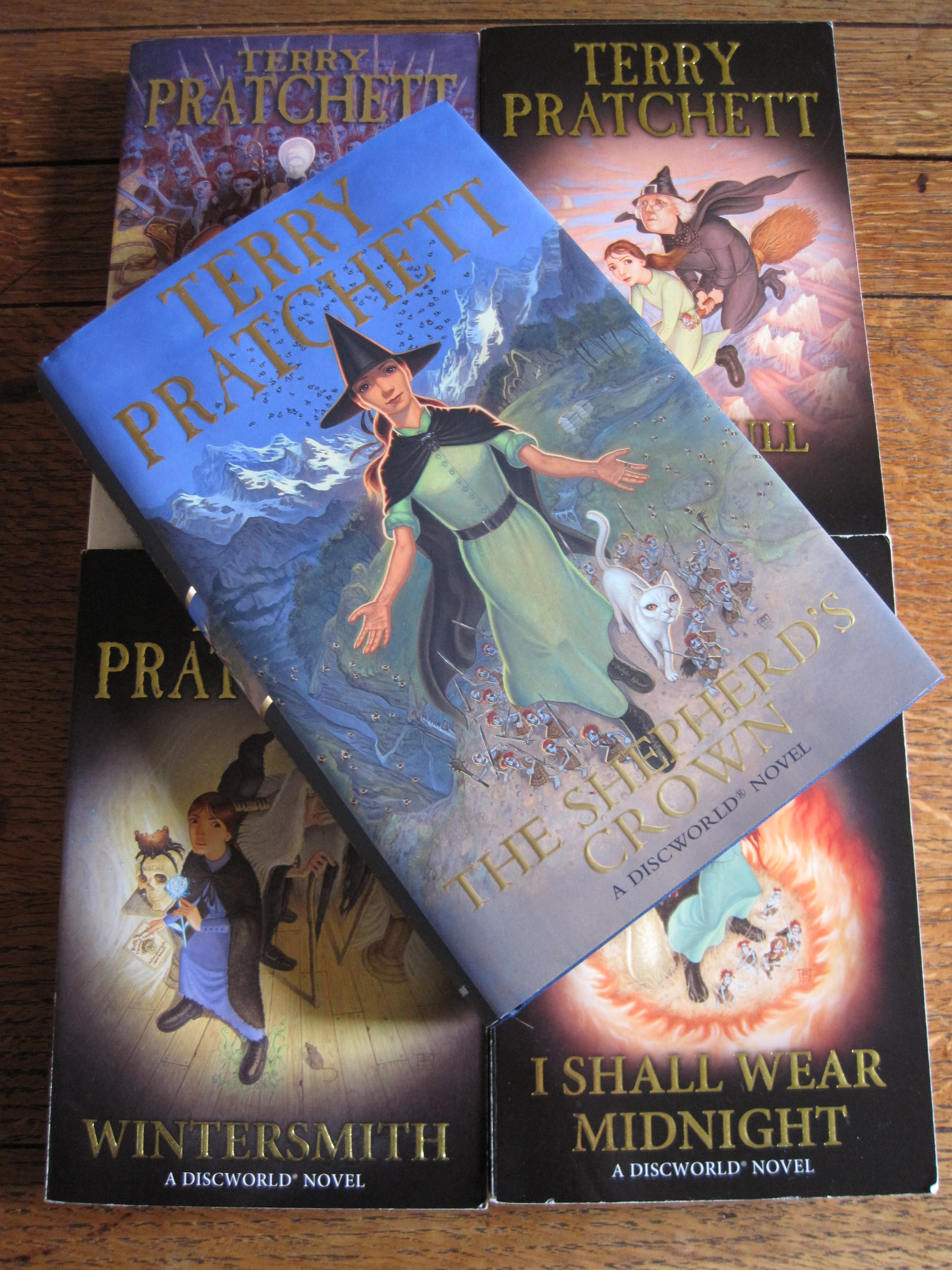
Crivens! This week’s BotW will come as no surprise – it’s the final Terry Pratchett novel, the 41st Discworld book and the fifth to feature Tiffany Aching.  I managed to force myself to read it slowly (for me anyway) and made it last a week. I’m already listening to the audiobook on my walks to work.


As you can see I have the others in the series in paperback, but I wasn't prepared to wait this time.
As you can see I have the others in the series in paperback, but I wasn’t prepared to wait this time.

In the Chalk, something is brewing.  Tiffany can feel it coming, the Kelda can feel it coming. An old enemy is gathering strength.  To quote the back of the book, Tiffany stands between the light and the dark, the good and the bad.  And there will be a reckoning.

And to be honest, that’s about all that I can say about the plot of The Shepherd’s Crown without giving too much away. I encountered a massive spoiler in the Audible sample a week before the book came out – and my sister ran into the Guardian review which reveals the same Major Event – and I’ve become really concious of the fact that I  don’t want to ruin the story for anyone reading this the way that plot twist was spoilt for me.

What I can say about the book is that it made my cry, repeatedly.  But it’s not a sad book.  As the back cover says, it is a time of endings and beginnings, and they’re handled beautifully.  It is a Young Adult book and there are Serious Issues in there, but it deals with them very well, with Sir Terry’s trademark wit and warmth.  I laughed and smiled and really enjoyed Tiffany’s adventure.

I wish there were going to be more. But as I said earlier this year (in this post), we knew that the end was coming sooner than anyone could have wished for.  I still want the Moist the Tax Collector book.  I am greedy for more from the Discworld.  And the afterword in Shepherd’s Crown drops tantalising hints about what could have been.  But I absolutely respect (and agree with) Rhianna Pratchett’s decision that if her father is not here to write them, there will be no more new Discworld books.

And if the end had to come, The Shepherd’s Crown is a very good place to finish.  There are plenty of old favourite characters and there are some new favourites too.  Of all the Discworld regulars, Mistress Tiffany has more life ahead of her than the others (unless you count Young Sam Vimes) and so it seems fitting that she is the centre of the last book.

The Shepherd’s Crown doesn’t feel like a goodbye, like a world is coming to an end – it feels like the Great A’Tuin is still out there, swimming through space with the elephants and the Disc on his back, it’s just that we won’t get to hear about the goings on there anymore.  And maybe that’s Sir Terry’s greatest achievement – he’s created a fantasy world so real that we can’t believe that it could stop.

The spines of the 5 Tiffany books
It’s not as if I had a matching set to start with, so I’ll cope with the non-matchingness.

I’m planning to re-read the whole series.  If you haven’t discovered Tiffany yet, start with The Wee Free Men and enjoy her whole journey.  If you are a Discworld fan, who’s been hesitant about reading this, don’t worry.  I don’t think this will be a disappointment to you.  It is safe to read it.  It feels right.  You should be able to get hold of a copy of The Shepherd’s Crown anywhere which sells good books – but just in case: Amazon, Kindle, Foyles (sadly no discount), Waterstones.

Enjoy it. Make it last. Raise a glass to it’s creator. And mind how you go.


Authors I love, Book of the Week, fiction, Series I love, Thriller

Book of the Week: Plum Spooky

This week’s BotW post has been really tricky.  If I picked my absolute favourite book from last week – can I then still include it in my holiday reads post (which is why I was reading it in the first place)?  If I don’t pick my favourite, all my other options are going to be repeating previous favourite authors.  If I do pick my favourite it’s a repeat as well.  Tricky.  So people, this week’s book of the week is Plum Spooky by Janet Evanovich.  Yes.  I know.  But There Were Reasons.

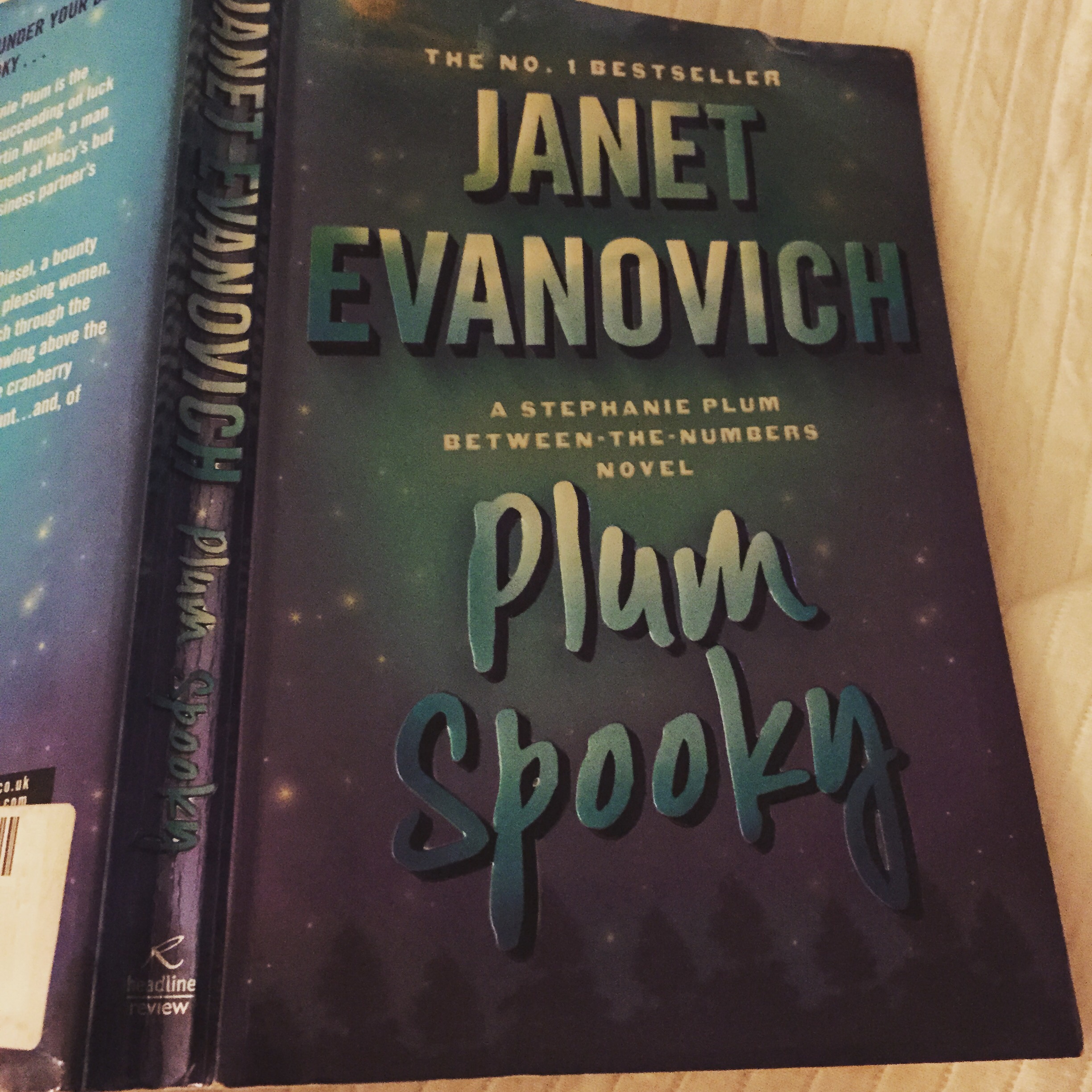
Plum Spooky
I do love a foil cover – but they’re really tricky to photograph

Plum Spooky is the fourth (and last as it stands) in the Between-the-Numbers Stephanie Plum books – which means it’s a bit like a normal Stephanie Plum but with a supernatural twist.  They’re also the books where you meet Diesel – who goes on to get a series of his own (the second of which was my Evanovich Gateway Book back in April – see previous BotW post).  Plum Spooky is the longest (a proper novel rather than a novella) and best of these fill-ins – it has the balance right between NormalSteph and SupernaturalStuff – and is a good read in it’s own right – not just because you like the other Plum books.

In Plum Spooky, Steph’s FTA has got messed up with the guy that Diesel is trying to find – and it all gets a little bit scary/weird in the Barrens – an area which reminds me a lot of the were-panther area in Charlaine Harris’s Southern Vampire Series.  Spooky is very good at balancing the supernatural element of the story with the normal bounty hunter storylines from the regular series.  Having Diesel around does mean less Ranger and Morelli action – but as these are meant to be slightly outside the mains series you couldn’t really have any action that impacts those relationships without causing ructions.

This is great fun – but probably best enjoyed with a bit of existing knowledge of the series – or if you know you like this sort of book. You should be able to get it from all the usual places – and probably your second-hand book store too.

This week I’ve planned my reading better.  And that Summer Reading post is nearly ready, I promise. Just a few more books to read…

Book of the Week, reviews, Series I love

Book of the Week: Mary Ann in Autumn

This week’s BotW is Armistead Maupin’s eighth book in the Tales of the City series – Mary Ann in Autumn.  I discovered the series last year as book nine came out and have loved every installment so far.

  In Mary Ann in Autumn our favourite characters have reached middle age with new challenges and old ones.  Mary Ann has never been my favourite character in the series, but in this she comes across as the most human and real that I’ve seen her.  It does make me sad that Mrs Madrigal is much older and frailer in this book, but that’s life and that’s aging.  And it means we get more of Jake.

I think it’s a real testament that Maupin has been able to keep the series feeling fresh and real and relevant 30 years after it started.  Not all authors would have been happy to keep bringing their characters up to date – and still less of them would have been able to do it and make it beliveable and true.  The “final” book in the series is just out in paperback and I need to get my hands on a copy asap.  Although with the current state of the to read pile I may try to hang fire on that for a week or two.

You should be able to get Mary Ann in Autumn from all the usual sources, but do yourself a favour and start from the beginning of the series. Even The Boy likes them!

Authors I love, Book of the Week, Fantasy, Series I love

Book of the Week: Timeless

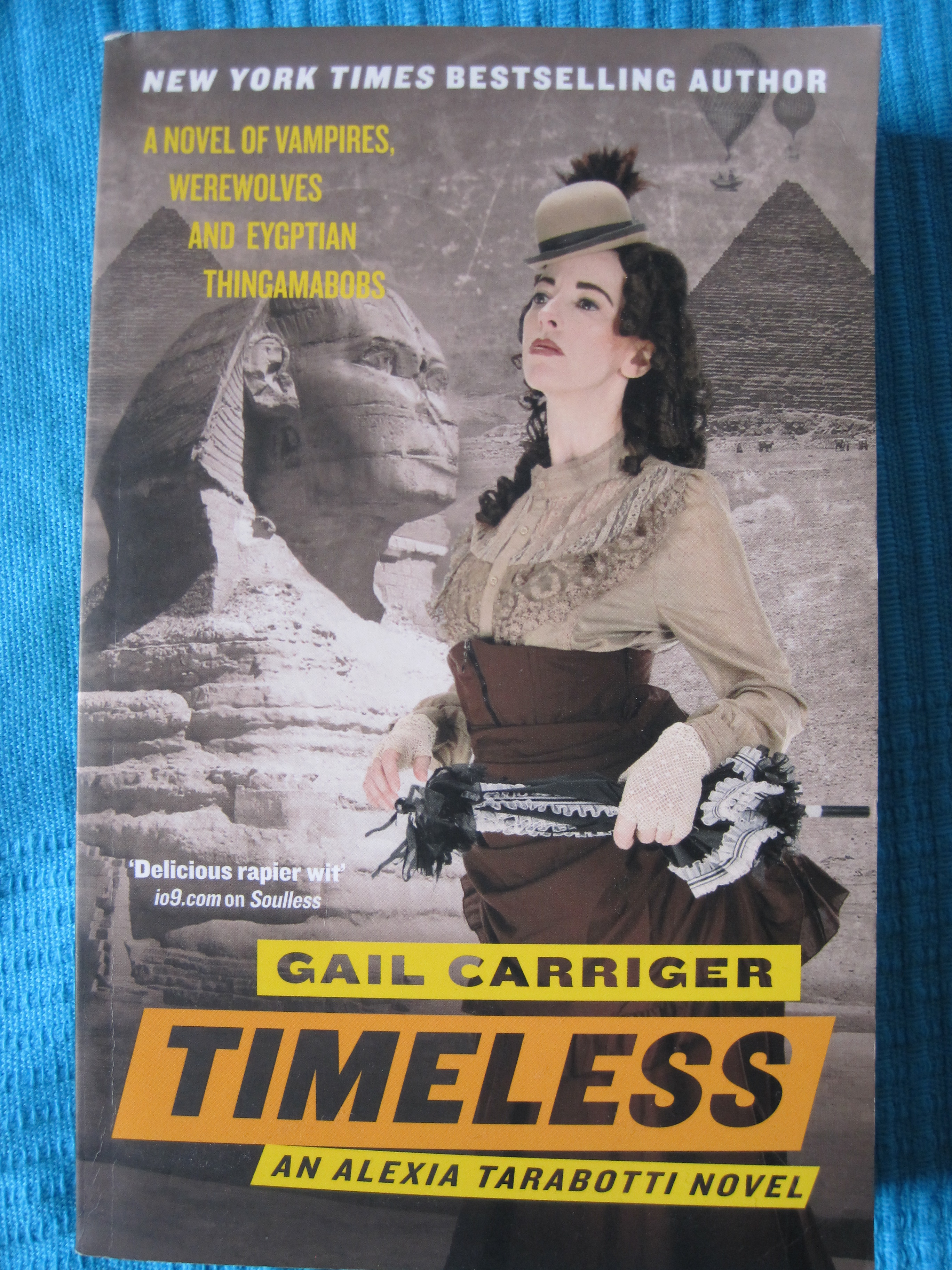
I had real trouble choosing the BotW this week – because I don’t like repeating – and Gail Carriger has a new book out  on Kindle TODAY and in paperback on Thursday (and my pre-order hasn’t dispatched yet – Amazon I’m watching you – you didn’t use to delay posting pre-orders to those of us who refuse to pay postage…) and if Prudence is half as good as her other stuff, it’s going to be a candidate for BotW as well.

But I’ve enjoyed Timeless and the whole Parasol Protectorate series so much, it would have been disingenuous not to pick it as a BotW – especially as it was the my favourite thing I read last week.  It’s my own fault for saving Timeless because I didn’t want Alexia’s story to be over.

Timeless by Gail Carriger
I don’t love this cover shot – although the costume is one from the book, I think the face is… odd!

Timeless is the fifth and final volume in the story of Alexia Tarabotti – a preturnatural in steam punk Victorian London.   And I can’t really say much more than that about the plot of Timeless because anything else would be Spoiling The Previous Four Books.   Ms Carriger was on my list of Discoveries of 2014 – and I said then that she was well on course to be on my automatic pre-order list if Timeless didn’t do something dreadful and disillusioning.  And it didn’t.  It’s not my favourite of the series, but it is still pretty darn fantastic and ties up a lot of the dangling threads from the previous books and then sets up a few new questions too.

Alexia is a fabulous creation – and the world that she lives in is equally brilliant.  Carriger has worked out how her world works and wears that very lightly – in fact she’s a big old tease.  She really doesn’t want to tell you her secrets – unlike some authors who can’t wait to dump all the rules of the world on you.  Even in this last book in the series we’re still discovering new things about Alexia’s abilities – and you get the feeling that Carriger has had this planned all along – none of it comes across as invented for this book.  Which either means she’s brilliant at long term plotting – or she’s really good at faking it.

I’ve read all the Finishing School books* that have been released so far – and I can’t wait to see how that pans out – because the world of 20 years before Alexia is very different.  And I’m so excited to read Prudence and see what happened next.

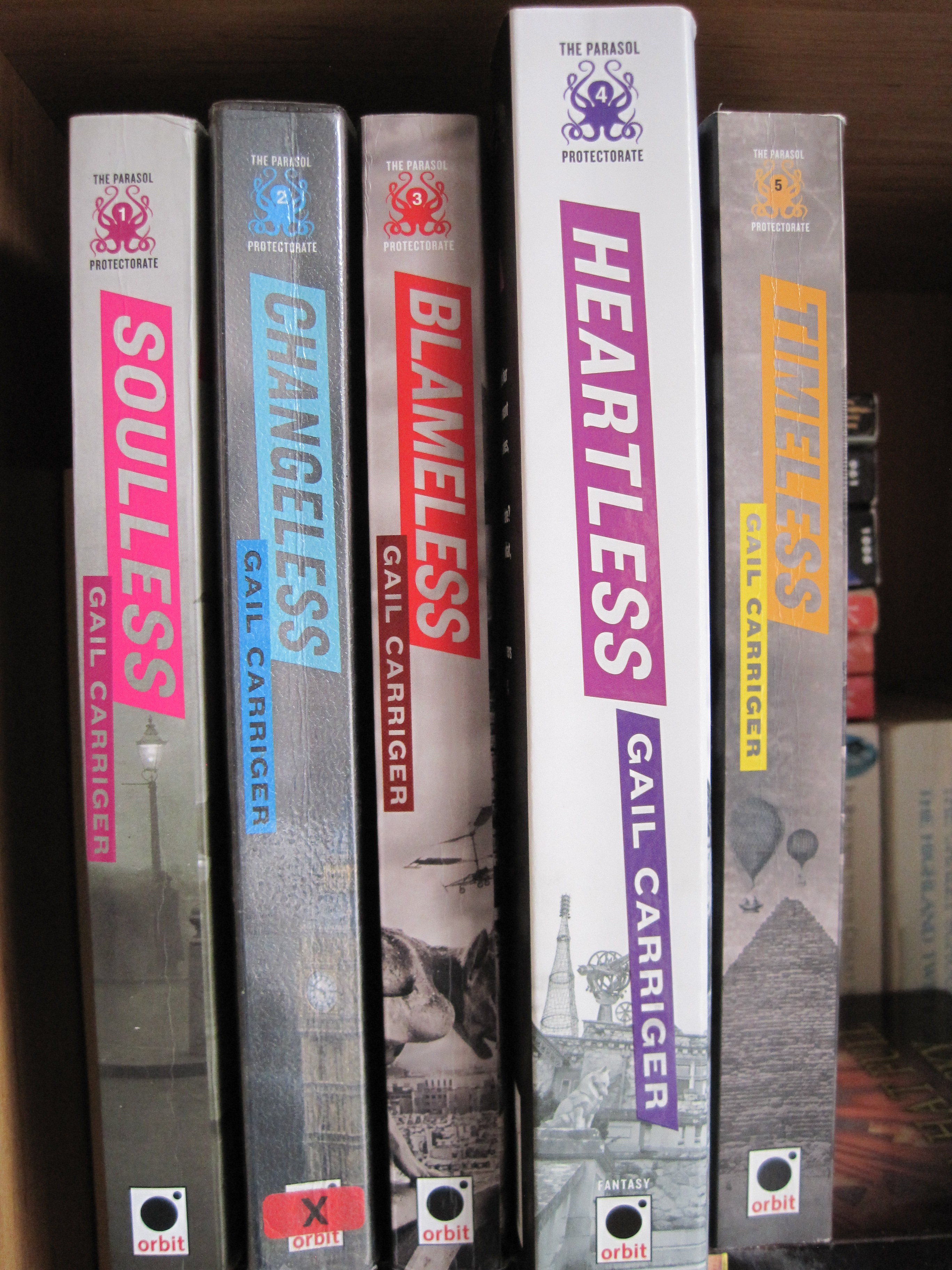
The Parasol Protectorate books
My soul is so outrage that the set doesn’t match I can’t shelve them like this

Gosh this review is gushy.  Sorry.  Now this is where I would usually put links to the book of the week so you can run away and buy it.  But if you haven’t read the other four books in the series first, you really won’t appreciate it – so go and buy Soulless from Amazon or Foyles or Waterstones or on Kindle and get started on Alexia’s story.  I’m off to re-read them.  And don’t tell me off if there’s some more Carriger on here soon…

* In fact Etiquette and Espionage was my first Carriger book – thank you NetGalley for throwing that one in my path – and after I read that and Curtsies and Conspiracies  and then started on The Parasol Protectorate.  NB in light of the Wrong Size issue in my Parasol set, I am reading Finishing School on Kindle – and waiting til the end of the series to buy myself a matching set.  What kind of crazy person am I?!

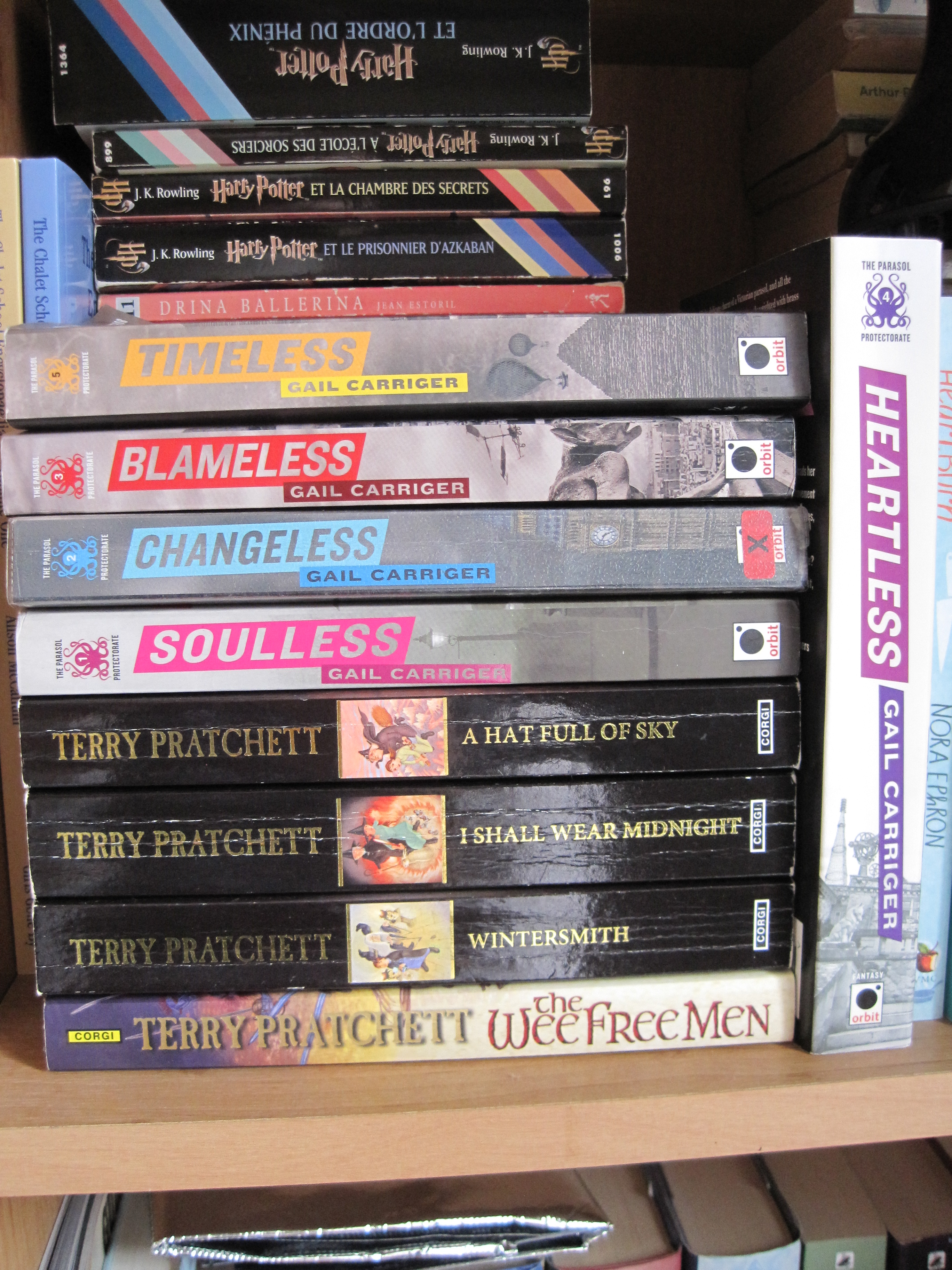
My Shelving solution
My Shelving Solution – but I cannot allow a repeat of this situation with the Finishing School books!
detective, Series I love

Series I Love: Phryne Fisher Mysteries by Kerry Greenwood

Here it is finally – the post about Kerry Greenwood’s Phryne Fisher series that I’ve been promising for so long!

Phryne was my discovery of the year in 2013 – I read the first book, Miss Phyrne Fisher Investigates* on June 1 last year – and by September I’d read the first 18 books in the series (books 19 and 20 took a bit longer because they initially fell outside my Kindle book cost limit as they were so new – although I stretched my limits on occasion for some of the others) reading them almost in one sitting.  I’ve just re-read the whole lot to see if they’re as good second time around – and they really are.

So who is Phryne?  Well  firstly, it’s pronounced Fry-knee (not Frinn as I had it in my head until she told some one how to say it!) and the Honourable Miss Phryne Fisher is a 1920s aristocrat, who spent her childhood in poverty in Melbourne before her father came into his title.  She returned to Australia in her mid-twenties to investigate a mystery for a friend of the family (and to get away from said family).  She liked Melbourne so much that she stayed and has established herself as a Private detective.  She’s smart, she’s pretty, she’s brave, she knows what she wants – and she has the money to do it.

There aren’t a lot of (good) female leading ladies in historical detective fiction**.  This is mostly because for the vast majority of history women haven’t really had the power to do much on their own – and it’s hard to construct realistic stories around what they would have been able to accomplish.  From this point of view, Kerry Greenwood has done a perfect job in creating Phryne.  The post-war period brought greater freedom for women, particularly if you had money – which Phryne does.  Greenwood has also given her a stonking – and realistic – back story which explains why Phryne has the attitudes that she does and also creates openings for stories that aren’t too far fetched.

And in a genre where men often get all the action in the bedroom, Phryne more than holds her own.  She may on occasion pine for a man – but not to marry, she just wants them in her bed!  Her lovers rarely last more than a book – but they always leave on good terms. Lin Chung is the notable exception to this rule – but I’m not going to tell much more than that because I don’t want to ruin it for you.

Like every good detective, Phryne has a gaggle of loyal helpers including her maid Dot (frequently described as a “good girl” who tries not to be scandalised by her employer), her adopted daughters (picked up during a case) and Bert and Cec, the wharfies-cum-taxi drivers-cum-red raggers.  And as she’s not actually a policeman, she has her own Inspector Japp in the form of Inspector Jack Robinson and his constable, Hugh Collins.

I don’t know a lot about inter-war Australia, but I can’t remember a jarring word or phrase in the books, and rarely has anything struck me as being too far-fetched.  There’s often a bibliography at the end to reassure you that the author really has done her homework. In fact the more I read about what people could get up to in the 1920s (Kenya’s Happy Valley, some of the Bright Young Thing’s antics), the more I think that Kerry Greenwood’s been positively restrained!

So, in short, if you like your period crime novels with strong heroines, interesting plots and a little bit of bedroom action (fairly subtle, not too graphic) and you haven’t read any of Phryne’s adventures, may I point you in the direction of Miss Phryne Fisher Investigates in paperback or on Kindle.  She’s well worth it.


*  The first book was originally published as Cocaine Blues – I’m assuming they changed it for the UK market to make it clearer that it’s the first in the series.  I can’t think of any other reason.  It’s still called Cocaine Blues in Australia.

**I’m planning posts on some of my other favourites as well – and I’m always looking for recommendations – please leave a comment if you have suggestions for more that I should read.

Classics, detective, Series I love

Series I love: Lord Peter Wimsey

I have a rather complicated history with detective stories.  When I was 11, I scared myself silly by forgetting I’d put a pillow in my bed to confuse my sister while I was downstairs watching Joan Hickson’s Miss Marple with my parents.  Once I’d seen Miss Marple on the TV, I promptly read all the Agatha Christie books that my mum owned, bought more with my pocket money and then in a fit of angst over death (in particular my own), gave all my purchases to the jumble sale and hid mum’s copies out of sight.  I know.  I was a strange child.

After that, I left detective stories alone for probably about five years.  Then a friendly librarian, who found out that I was a bellringer, pointed me in the direction of The Nine Tailors, which I duly read, enjoyed and then forgot about – although by this point I had started reading Agatha Christie again.

Fast forward nearly 10 years and I’m living in Essex, working the early shift at a radio station, a bit lonely and hitting the library hard.  I don’t know if I started reading them because I was reading Margery Allingham (who had lived locally) and seen comments that Albert Campion had started as a take-off of Peter Wimsey, or because I’d seen a recommendation, or because I happened across them in the stacks at the library and remembered I’d enjoyed The Nine Tailors, but I did rediscover them and boy did I love them.

My little local library didn’t have many books in the series – and once I’ve found something I like, I want to read them all, as quickly as possible.  So I started buying them in the local book shop.  But it didn’t have many in stock.  So I picked up a few second hand paperbacks from my friendly book dealer who happens to do detective stories as well as classic school stories, then I started buying the ones that I’d read at the library (because I *had* to have the whole set) and so my rag tag collection was born.

Lord Peter Wimsey books
My Dorothy L Sayers collection

For those who have had the misfortune to have never come across Lord Peter Wimsey, he is the archetypal gentleman detective – much copied and never equalled.  The second son of the Duke of Denver, born in 1890, educated at Eton and Oxford, he is a bon vivant with a private income who solves mysteries because he can.  But Peter is troubled – he’s battle scarred after the First World War, with shell-shock and a fear of responsibility; which sits badly with sending men to the gallows.  He’s much more than just an idle rich man with a vaguely foolish face – which is the image he likes to project to the world.   Assistance comes principally from his faithful valet Bunter (who had been in his unit in France) and Chief Inspector Charles Parker of Scotland Yard.  The books were published between 1923 and 1937 – and Peter ages in real time as the series progresses.


Four books
The four books that feature Lord Peter Wimsey and the mystery writer Harriet Vane

My favourite four books are what I call the Peter and Harriet Quartet – that is Strong Poison, Have His CarcaseGaudy Night and Busman’s Honeymoon – the novels that feature Harriet Vane, first encountered in the dock at the Old Bailey on trial for murder – who Peter falls in love with and pursues across the next three books.  As well as my paperback copies, I have all four as audiobooks or radio plays – and they run in high rotation on my generic mp3 device on my journeys on the train, on my lunchbreaks and late at night when I’m staying away from home and need something to listen to to get to sleep.  I didn’t read them in order – Have His Carcase came first, then Busman’s Honeymoon, Strong Poison and finally Gaudy Night.

I’m firmly convinced that Busman’s Honeymoon is probably the most romantic detective novel in existence.  In the dedication at the start Sayers writes:

It has been said, by myself and others, that a love-interest is only an intrusion upon a detective story. But to the characters involved, the detective-interest might well seem an irritating intrusion upon their love-story. This book deals with such a situation.

And to me, that pretty much sums it up perfectly.  Busman’s Honeymoon is a perfectly formed detective novel (I didn’t figure out who did it until the reveal) but also is a beautifully romantic story about the start of a couple’s married life.  And if you’ve read the three books that lead up to it, it’s the perfect end to a long and sometimes painful courtship, which must have felt tortuous to readers when the books were first published – because Strong Poison was appeared in 1931 – and Busman’s Honeymoon came out six books later in 1937.

Gaudy Night is the weakest of the four when it comes to the detective plot – it’s not an actual murder but a poison pen mystery and actually has very little Peter to a lot of Harriet.  But it’s still a very good book and you learn a lot more about Harriet, her life, her side of the courtship and what she was doing while Peter was solving the mysteries in the two novels of that part of the series that she doesn’t feature in.  Strong Poison and Have His Carcase have two of Sayers’ best puzzles – they’re utterly ingenious and perfectly plotted.

Among the other novels, my favourite is Murder Must Advertise, where Peter – under the psedonym of Death Bredon – goes to work at an advertising agency where one of the copywriters has fallen to his death, leaving a letter hinting at scandalous goings on in the firm.  Sayers was herself a copywriter for a decade – and the book is a fascinating glimpse into the world of advertising in the early ’30s as well as a really very clever murder mystery.

Peter Wimsey
My collection (unusually for me) has several different styles of cover

I could write at even greater length about the wonders of these novels, but this post is already massively long.  I hope that if you’ve read this far and you haven’t ever read any of Lord Peter Wimsey mysteries, you might be tempted to go and try one.  My recommendation as a starting point would be Strong Poison or Murder Must Advertise, although equally Nine Tailors or even the very first book Whose Body? would be a good introduction. Don’t start with Busman’s Honeymoon (I’m not even linking to it to deter you further) as you’ll regret it if you don’t read Peter and Harriet for the first time in the order in which they were intended – I know I do and as soon as I had finished Gaudy Night for the first time I went back and read all four again in the right order!

As usual, my links are to Foyles –  because I love them, their Foyalty points, their order in the morning and pick it up from a store in the afternoon feature (which even gives you discount) and I’ve found that for this sort of book (ie not a mass-market new release) they are often cheaper than the alternatives – but equally you can find Lord Peter in your high street bookshop, at major online booksellers and often in charity shops.  They’re also widely held by libraries because they are, after all, classics of the genre.

Go – discover Peter – and enjoy.

books, Children's books, Series I love

Children’s Bookshelf: The Drina books

Paperback books in the Drina series
It took 20 years – but I finally have a matching set

I know exactly when I got my first Drina book – because when my mum gives people books, she always writes a message in them.  She gave me Ballet for Drina in June 1991 – when I was seven – to read while she was in hospital for an operation.  In the front she wrote that it was one of her favourite books when she was little – and I loved it as well from the moment I first read it and wanted the rest of the books in the series.  Several of the others in the series have inscriptions in them marking them as being holiday books from various trips around the south coast.  I’ve had the whole set since I was about 14 – but a couple of them didn’t match (smaller size! Different cover style!) and thanks to the wonders of eBay I got the “missing” matching books last year and was finally able to put them in order without the fretting over the fact that they didn’t look right!  As you can see they’re all very well-loved  – except Drina, Ballerina, one of the new additions, but I can assure you that my old copy is practically falling apart further down the shelf.

The Drina books are responsible for my childhood dream of being a ballerina – a dream which lead eight-year-old me to try to sew my own pointe shoes from an old cotton shirt from the ragbag, some loo roll and some hair ribbons!  Drina is also responsible for some notable mispronunciations in my vocabulary – from the say-it-how-you-see-it school of reading – to this day I still struggle to pronounce Igor as Eegor rather than Eye-gor. Particularly because my stepgran had a beautiful Persian Blue called eegor that I used to feed when I went to visit and I always associate names with the first person/animal I knew with that name…

For those of you who haven’t read the series, it’s the story of Andrina Adamo – known as Drina – an orphan who is being brought up by her grandparents and who finds out when she starts ballet lessons in the first book that her mother was actually famous ballerina, who was killed in a plane crash along with her husband on a flight to New York where she was due to dance.  Drina is desperate to be a ballet dancer – but wants to succeed on her own without any help (or hindrance) from her famous mother’s name.  At the start of the second book the family move to London for her grandfather’s job and Drina starts at ballet school.  The rest of the series follows Drina’s trials and tribulations in her quest to succeed – including overcoming her grandmother’s reluctance to let her follow in her mother’s footsteps,  twisted ankles, school rivalries, her grandfather’s health problems which lead to her having to spend time away from her training and falling in love (at 14) with a glamourous New Yorker a couple of years older than her called Grant.

It’s hard to pick favourites – but I think mine are Drina Dances Again – where she plays Little Clara in The Nutcracker and Mr Dominick and Madame Volonaise find out Drina’s closely guarded secret about her mother’s identity; Drina Dances in Paris – where Drina goes to dance in The Nutcracker in Paris and Grant (the New Yorker) comes to visit her, Drina Dances on Tour – where her big secret finally comes out, she joins the company, experiences what it’s like to be in the corps de ballet and where Grant arrives in London and comes to find her and Drina, Ballerina which sees the series end with her dancing her mother’s most famous role and marrying Grant.

Looking back at what I’ve written, it sounds like a very far-fetched tale, but then how many children’s stories aren’t! I read them over and over when I was younger, and even as a teenager when I was poorly I’d get out my Drina books and start reading them all over again.  Even today, just flicking through them so that I could write this post I’ve come over with the urge to sit down with them and have another read.

Looking at Amazon, I don’t think they’re in print anymore – which is a real shame – because there are still as many ballet mad little girls out there as there always were.

But that does lead me to another thought that has crossed my mind more than once – I am part of the last generation who will read these sort of stories and be able to see my own life in them?  For all that Ballet for Drina was written in 1957, it was very similar to my own life – a world with no mobile phones or home computers and where most houses only had one TV – although flying wasn’t the big deal that it was in Drina and liners had stopped being a method of getting to New York by the early 90s.  The same applies to a lot of the school stories I used to read (many of which I’m sure I’ll post about in due course) – the only difference between my life and theirs was that their trains ran on coal and that they called maths arithmetic.  Will today’s children – who’ve grown up with smart phones, iPads, laptops, the internet and Playstations be able to buy into these stories the same way?  I hope so, because I know how much enjoyment and knowledge I got from them when I was little.